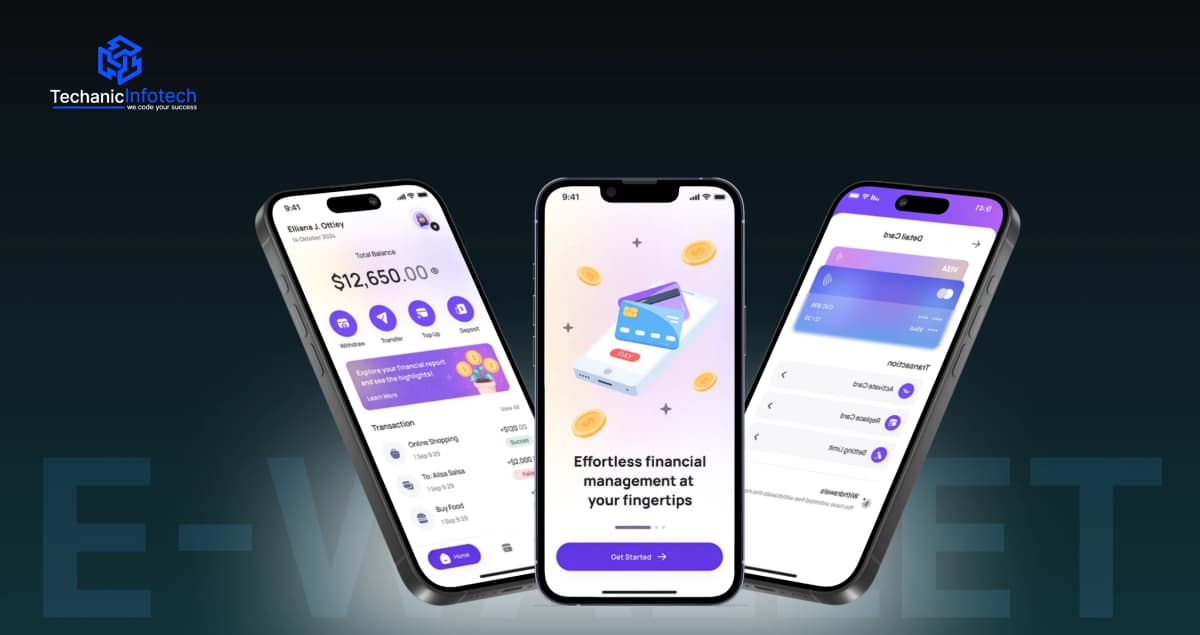
EWallet App Development
How Long Does It Take to Develop an eWallet App? Timeline Explained
December 15, 2025
December 15, 2025
Developing an eWallet app is such a complex process that usually contains multiple phases where each one requires proper attention to detail and an in-depth understanding of both technology and user experience.
The eWallet app development time depends on multiple factors like features, platforms, and integration complexity. The timeline for the eWallet app ranges from a few months to a year, where the process goes through multiple stages.
Here, we will explore the key phases of the digital wallet app development, factors that influence its development time, tips for speeding up the digital wallet app development timeline, and where to get help in boosting the development process.
Developing an eWallet app usually contains multiple phases where each is critical to ensuring the app’s success, security, and usability.
Meanwhile, the app development process includes proper integration with payment systems, rigorous testing, and ongoing improvements with more updated phases.
The following are the phases and their time consumption that one should consider in process of eWallet app development.
The first phase of the digital wallet app development usually focuses on market research. It usually involves identification of the targeted audience, understanding the competitors, and also analysing the trends in eWallet.
By conducting surveys, user interviews, and competitor analysis where developers get the ability to identify the key features as per user expectations, whether it's about ease of use, security, and speed.
This phase helps define the scope of the application and also its unique value propositions. This allows developers to prioritize the functions that easily meet the market requirements.
In this phase, the development team works closely with stakeholders to define the app’s core features and functionalities.
Detailed requirements are gathered to outline essential eWallet app features such as user authentication, transaction history, peer-to-peer transfers, security measures, and integration with third-party services.
This phase also includes establishing technical specifications, such as the preferred development platforms (iOS/Android) and payment gateway options.
Feature prioritization is key, ensuring the development focuses on the most important functionalities while considering budget and digital wallet app development time constraints. The outcome is a comprehensive requirements document that guides the design and development.
The UI/UX design phase is critical for defining the user experience and interface. Designers create wireframes, prototypes, and visual designs that focus on a seamless and intuitive user journey.
The user interface (UI) should align with the brand and be visually appealing, while the user experience (UX) should prioritize ease of navigation and accessibility.
During this phase, designers will also create interactive prototypes to test with real users and refine based on feedback, which can consume lots of time.
The overall process of eWallet app design requires 2-4 weeks, depending on the sudden changes and complexity faced during the development process.
The architecture and backend development phase is the backbone of the app. Developers design the server structure, databases, and APIs that support app functionalities.
Security is a key focus during this phase, as the app will handle sensitive financial data. This includes implementing encryption, secure user authentication, and safe data storage.
Backend development also includes setting up payment gateway integrations and ensuring smooth data communication between the frontend and backend.
Well-defined architecture is essential to ensure scalability, reliability, and performance, allowing the app to handle increased traffic as it grows.
In this phase, the mobile app is built based on the designs and architecture. Frontend developers work on coding the user interface and implementing functionality like transaction processing, notifications, and settings.
Mobile app development involves integration with the backend APIs for user login, transaction history, and real-time updates.
It’s important to test on different devices and OS versions (iOS, Android) to ensure compatibility. Developers also focus on optimizing performance to ensure fast loading times and smooth navigation.
This phase to create a mobile app usually takes the longest, as it involves both coding and extensive testing for bugs and compatibility.
Integrating payment gateways is a crucial step in eWallet development, enabling users to make transactions securely.
In this phase, developers integrate platforms like Stripe, PayPal, or local payment processors. This includes setting up secure transaction flows, handling different currencies, and ensuring compliance with security standards (PCI-DSS).
Testing is done to ensure that the payment process works seamlessly for both users and merchants, covering scenarios like refunds, failed transactions, and transaction history updates.
Testing and quality assurance (QA) ensure that the app is free from bugs, performs well, and provides a secure environment for users.
This phase includes functional testing to verify that all features work as intended, regression testing to ensure updates don’t break existing functionality, and load testing to see how the app handles heavy traffic.
Security testing is also critical, especially when dealing with sensitive financial data. User acceptance testing (UAT) is conducted to gather feedback from a group of real users. QA ensures the app is stable, secure, and ready for launch.
The final phase focuses on preparing for the app’s public release, including the process of creating marketing materials, submitting to the App Store and Google Play, and ensuring compliance with each platform’s guidelines.
Developers and product managers check the final version of the app for any last-minute issues, such as crashes or performance glitches.
After approval, the app is officially launched, and users can begin downloading and using it.
Post-launch, the team monitors the app for feedback, performance issues, or bugs, and provides timely updates to enhance user experience and fix any issues that arise.
eWalleta app development time is usually influenced by multiple factors, from the complexity of the features, the platform, and the expertise of the developers.
Meanwhile, eWallet app development companies have their own dynamic development process, with certain factors playing a more significant role in the overall eWallet app development timeline than others.
Below are some primary factors that influence the development time for an eWallet app.
The features and complexity of the app are among the most critical factors that impact development time.
A basic eWallet app may offer functions such as user registration, balance checking, and transaction history that usually require less effort and time.
A more advanced app might include features like peer-to-peer payments, bill payments, integration with loyalty programs, cryptocurrency support, multi-currency wallets, or advanced analytics.
The more advanced and intricate the features, the longer the development time will be.
The choice of platform significantly affects eWallet app development time. Deciding whether to develop for iOS, Android, or both (cross-platform) will impact the overall digital wallet app development timeline.
Building an app for both platforms often doubles the work in terms of development and testing, as the codebase, UI design guidelines, and device-specific considerations for each platform vary.
Developing for both platforms may involve writing separate codebases or using cross-platform tools like Flutter or React Native, which aim to streamline the process but still may require platform-specific adjustments.
Top eWallet apps rely on third-party integrations for functionality like payment gateways, banking APIs, or even chat functionalities.
The complexity and number of integrations can substantially increase development time, especially if integration with external services is not straightforward.
Testing these integrations also requires careful attention to ensure smooth user experiences and compliance with legal standards.
Security is also paramount when handling financial transactions, requiring the implementation of robust encryption methods, multi-factor authentication (MFA), and secure APIs.
The app needs to undergo thorough security audits, vulnerability assessments, and penetration testing to mitigate potential risks.
The development team will spend additional time focusing on these aspects, ensuring the app is both secure and compliant with financial regulations.
Delays are common when working with legal compliance, as regulations may change and require rapid adjustments.
The expertise and experience of the development team play a critical role in determining how quickly an eWallet app is built.
A highly skilled team with experience in fintech, mobile app development, security protocols, and payment systems can streamline the process, implement best practices, and avoid common pitfalls.
On the other hand, if the development team is less experienced or lacks specific knowledge, this can lengthen the development process.
Testing is a critical part of the development lifecycle and can often be a time-consuming process. The development team needs to test each feature for functionality, performance, security, and user experience.
This includes testing across multiple devices and operating systems (iOS/Android), ensuring compatibility and resolving device-specific bugs.
In the case of eWallet apps, security testing is especially important to ensure that user data and transactions are safe from potential threats like hacking and data breaches.
Start by focusing on essential functionalities and avoid overloading the app with unnecessary features in the initial phase.
Opt for frameworks like React Native or Flutter to build apps for both iOS and Android simultaneously, reducing development time.
Use third-party SDKs or APIs for common tasks like payment gateway integration, identity verification, and fraud detection instead of developing them from scratch.
Break the app into smaller, manageable modules. This allows parallel development and testing of different features, speeding up the overall process.
Use an Agile methodology with iterative sprints to quickly adapt to changes and release frequent updates, instead of waiting for a full, final version.
Develop low-fidelity prototypes early to get feedback and refine UI/UX before coding. This reduces time spent on rework.
Understand the necessary legal and security regulations early to avoid delays during the review and approval stages.
Maintain clear communication and collaboration between developers, designers, and stakeholders to minimize bottlenecks and delays.
Technaic Infotech is a leading eWallet app development company` that works by following the agile methodology, which allows for faster iteration, early user feedback, and continuous improvement throughout the development cycle.
This ensures that essential features are prioritized, and the app can be launched promptly with room for enhancements in subsequent updates.
The team at Technaic Infotech brings extensive experience in payment gateway integrations, regulatory compliance, and security measures, ensuring that the app is both secure and fully compliant with financial regulations.
By leveraging cross-platform development tools like React Native and Flutter, they can develop for both iOS and Android simultaneously, further speeding up the process.
The development of an eWallet application is generally a process containing multiple phases, from careful planning to attention to every detail, design, development, security, and many more.
From conducting market research to deployment, every phase of this process plays an important role in ensuring the app development process is completed in less time.
Usually, the overall process can take several months to years as multiple strategies play a supportive role in reducing the overall digital wallet app development timeline.
The timeline for eWallet app development typically ranges from 4 to 8 months, depending on the complexity of the features, platform choice, and third-party integrations involved.
Key features include user registration, transaction history, peer-to-peer payments, multi-factor authentication, and payment gateway integration for secure transactions.
Yes, eWallet apps can support multi-currency wallets, enabling users to hold and transfer funds in various currencies seamlessly.
Security is ensured through encryption, secure APIs, multi-factor authentication, and compliance with PCI-DSS standards for handling sensitive financial data.
Yes, third-party services such as payment gateways, identity verification, and fraud detection can be easily integrated into the eWallet app for enhanced functionality.


Abhishek Jangid is the CEO of Techanic Infotech, with extensive experience in mobile app and web development. He specializes in helping businesses turn innovative ideas into scalable digital solutions through strategic planning and modern technology.