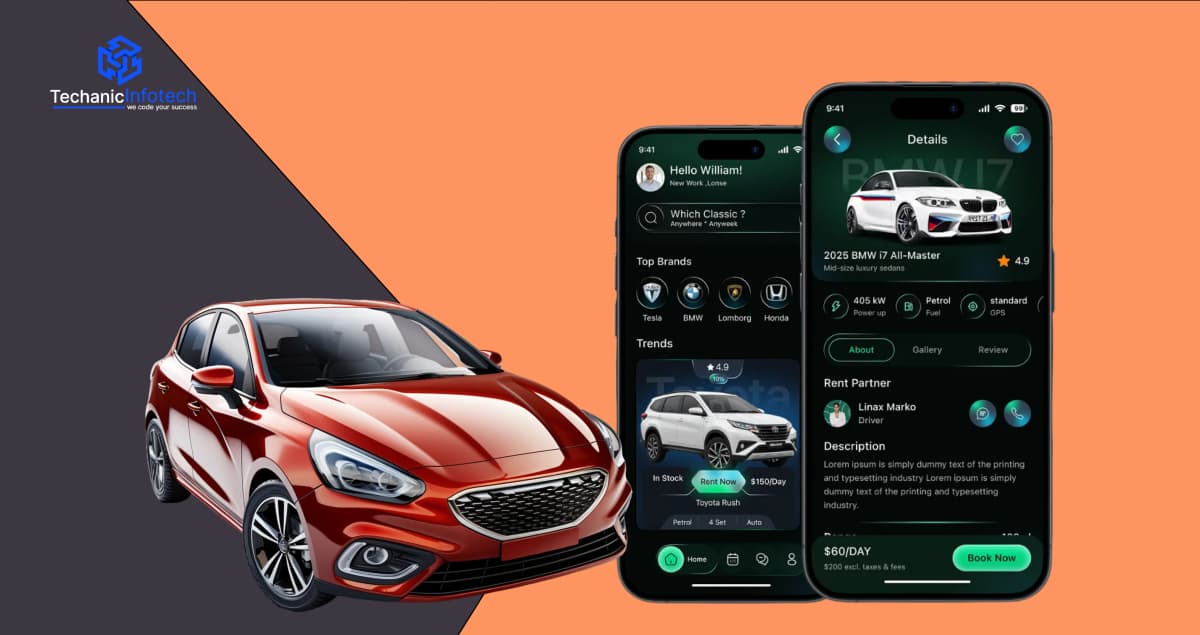
Car rental apps generate revenue by connecting users with vehicles through digital platforms that simplify booking, payments, and fleet management.
These apps monetize through multiple streams such as daily rental charges, commission fees, subscriptions, add-on services, and partnerships.
By leveraging mobile technology, GPS tracking, and data analytics, car rental apps reduce operational friction while maximizing asset utilization.
The growing demand for flexible mobility, urban transportation alternatives, and contactless services has further strengthened their earning potential.
Whether operating as aggregators, peer-to-peer platforms, or fleet-owned services, car rental apps are now scalable digital businesses capable of generating consistent profits when backed by the right business model and technology strategy.
The car rental app business is growing rapidly due to rising urban mobility needs, smartphone adoption, on-demand convenience, flexible pricing models, and travelers’ preference for seamless, contactless transportation solutions.
Consumers increasingly prefer flexible, short-term transportation over car ownership.
Car rental apps meet this demand by offering instant access to vehicles, reducing long-term financial commitments while supporting modern, on-demand lifestyles in urban and semi-urban regions.
Global tourism and corporate travel continue to expand, increasing demand for short-term vehicle rentals.
Car rental apps provide travelers with convenience, transparent pricing, and location-based availability, making them a preferred alternative to traditional rental counters.
Car ownership comes with recurring expenses such as insurance, mobile app maintenance, fuel, and depreciation.
Rental apps remove these financial and operational burdens, offering cost-effective, flexible vehicle access, particularly appealing to occasional drivers, urban residents, and users seeking hassle-free mobility.
Widespread smartphone usage and affordable internet access enable users to book cars anytime, anywhere.
This digital accessibility has accelerated adoption and allowed rental platforms to scale rapidly across multiple markets.
Top car rental app features like GPS tracking, AI-based pricing, digital payments, and keyless entry enhance user experience and operational efficiency.
These innovations reduce costs and increase trust, driving faster business growth.
The sharing economy prioritizes access over ownership by maximizing underutilized assets.
Peer-to-peer car rental apps empower individuals to earn income from idle vehicles, rapidly expanding supply, reducing capital expenditure, and creating a scalable, cost-efficient mobility ecosystem.

Car rental apps use diverse business models such as pay-per-use, subscription plans, peer-to-peer sharing, corporate leasing, and commission-based marketplaces to serve different customer needs and maximize revenue.
The app connects users with multiple rental service providers and earns revenue through commissions on each booking.
This low-asset model allows rapid scaling without owning vehicles or managing fleets directly.
Companies own and manage their own vehicles, earning income through daily, weekly, or monthly rental fees.
While capital-intensive, this model offers higher control over quality, pricing, and customer experience.
Private car owners list their vehicles on the platform, allowing the app to earn commissions per booking.
This asset-light approach minimizes inventory costs, scales rapidly, increases geographic coverage, and offers users a wider variety of vehicles at competitive prices.
Users pay a recurring monthly or annual fee for vehicle access, often with usage limits or bundled benefits.
This model delivers predictable revenue, strengthens customer loyalty, simplifies budgeting for users, and suits individuals requiring consistent, ownership-free transportation.
The platform partners with businesses to supply vehicles for employees, contractors, or logistics operations.
Long-term agreements generate stable, high-value revenue, lower acquisition costs, and position the app as a reliable mobility partner for enterprise needs.
A hybrid approach combines multiple revenue models, such as owned fleets, P2P listings, and subscriptions.
This diversification maximizes utilization, balances risk, adapts to demand fluctuations, and creates resilient, scalable income streams across customer segments.
The cost ranges from $20,000 to $120,000, influenced by app complexity, features, mobile app technology stack, security requirements, integrations, and scalability needs across different business models.
UI/UX design focuses on creating an intuitive, visually appealing interface that ensures smooth navigation, seamless booking, and effortless interactions.
A well-crafted design improves user retention, encourages repeat usage, and maximizes conversion rates, making it a vital investment for success.
This covers building the user-facing app, admin dashboards, APIs, server logic, and database management.
Complexity rises with features like real-time vehicle availability, dynamic pricing algorithms, fleet tracking, and data synchronization, directly impacting development time and overall cost to build a car rental app.
Incorporating GPS tracking, payment gateways, push notifications, analytics dashboards, and third-party API integrations enhances app functionality.
Customization, security, and smooth interoperability increase development complexity, but these features significantly improve user experience and operational efficiency.
Developing the app across multiple platforms expands reach to a wider audience but increases costs.
Cross-platform frameworks can reduce expenses while maintaining performance, whereas native apps offer better speed, reliability, and user experience at a higher investment.
Rigorous testing ensures app stability, performance under load, security compliance, and bug-free operation across devices.
High-quality QA reduces post-launch issues, enhances customer satisfaction, and prevents costly maintenance, making it a critical step in getting answers for queries like how to develop a car rental app.
Ongoing maintenance includes software updates, bug fixes, server scaling, and security enhancements.
Regular improvements ensure the app remains stable, secure, and scalable, accommodating growing user demand and extending the app’s lifecycle for sustained profitability.
Car rental app profitability is affected by challenges such as high mobile app development costs, vehicle maintenance, competitive pricing pressure, regulatory compliance, demand fluctuations, customer acquisition expenses, and technology maintenance requirements.
Launching a car rental app requires significant upfront capital, including fleet acquisition, app development, marketing, and operational setup.
Without a clear monetization strategy, these costs can delay profitability, making financial planning and phased investment critical for sustainable growth.
Cars in a fleet require ongoing maintenance, regular servicing, and eventual replacement due to depreciation.
Failure to manage these costs efficiently can rapidly reduce profit margins, particularly in fleet-based models, highlighting the importance of preventive maintenance and lifecycle management strategies.
The car rental industry is intensely competitive, with both global and local players vying for customers through pricing, convenience, and service quality.
Businesses must focus on differentiation, branding, and customer experience to maintain market share and long-term viability.
Compliance with local transportation regulations, licensing requirements, and insurance policies varies across regions.
Navigating these legal complexities increases operational costs and requires dedicated resources to avoid fines, legal risks, or interruptions in service.
Safety incidents, fraudulent bookings, or data breaches can severely damage an app’s reputation.
Investing in secure payment systems, customer verification, insurance coverage, and safety protocols is essential, though it adds to operational expenses.
Bookings are influenced by seasonal travel trends, holidays, and economic conditions.
Inconsistent demand can affect revenue stability, making it vital to diversify income streams, employ dynamic pricing strategies, and plan fleet utilization accordingly.
A car rental app’s real-life earnings depend on user base size, pricing strategy, fleet utilization, location coverage, partnerships, and operating costs, with successful platforms generating steady revenue and long-term profitability.
Aggregator and peer-to-peer car rental apps earn a commission on every booking, typically between 10% and 30%.
With growing user bases and high booking volumes, this model provides consistent monthly revenue and scales efficiently with platform growth.
Fleet-based apps generate revenue by charging per-day rental fees, usually ranging from $30 to $150 per vehicle.
Pricing varies depending on location, vehicle type, seasonality, and demand, allowing operators to optimize income through dynamic pricing strategies.
Monthly or annual subscription plans provide predictable, recurring revenue while enhancing customer loyalty.
Even a modest subscriber base of a few thousand users can generate significant cash flow, improve financial stability, and reduce dependency on fluctuating daily rentals.
Offering optional add-ons like insurance upgrades, GPS devices, child seats, fuel packages, or premium services boosts the average order value.
These extra services enhance customer satisfaction while significantly increasing profitability per booking without high operational costs.
Long-term contracts with businesses, travel agencies, or event organizers create substantial, predictable income.
These partnerships often require fewer marketing efforts and streamline operations, potentially generating six-figure annual revenue while ensuring stable fleet utilization.
In-app advertising, sponsored promotions, and strategic brand partnerships generate additional passive income streams.
These opportunities leverage the app’s user base without major infrastructure investment, creating scalable revenue beyond core rental operations.

Techanic Infotech is a trusted car rental app development company with proven expertise in building scalable, secure, and high-performance car rental applications.
Our team combines deep industry knowledge, modern technologies, and user-centric design to deliver solutions that drive real business growth.
We follow best practices aligned with E-E-A-T principles, ensuring technical excellence, transparency, and long-term reliability.
From MVP development to enterprise-grade platforms, we offer end-to-end services including UI/UX design, backend development, API integration, testing, and post-launch support.
With a focus on cost efficiency, faster time-to-market, and customized solutions, Techanic Infotech helps businesses launch profitable car rental apps with confidence.
Car rental apps have transformed the mobility industry by offering flexible, cost-effective, and technology-driven transportation solutions.
Their ability to generate revenue through multiple business models—such as aggregators, subscriptions, and peer-to-peer platforms—makes them attractive digital investments.
While development costs typically range between $20,000 and $120,000, strategic planning, the right features, and a reliable development partner can significantly improve return on investment.
However, profitability depends on managing challenges like competition, regulatory compliance, and operational costs.
By leveraging data analytics, automation, and customer-centric design, businesses can scale efficiently and build long-term trust.
As urbanization and shared mobility continue to grow, car rental apps remain a high-potential business opportunity for entrepreneurs and enterprises alike.
A car rental app can earn from a few thousand to millions annually, depending on location, business model, user base, pricing strategy, and operational efficiency.
Hybrid models combining fleet ownership with peer-to-peer listings are often most profitable due to diversified revenue streams and reduced risk.
Yes, aggregator and peer-to-peer models earn commissions without owning vehicles, significantly lowering capital investment and operational costs.
Most car rental apps reach profitability within 12–24 months, depending on market demand, pricing strategy, and customer acquisition costs.
The right partner ensures scalability, security, performance, and faster time-to-market, directly impacting user experience and long-term profitability.


Abhishek Jangid is the CEO of Techanic Infotech, with extensive experience in mobile app and web development. He specializes in helping businesses turn innovative ideas into scalable digital solutions through strategic planning and modern technology.