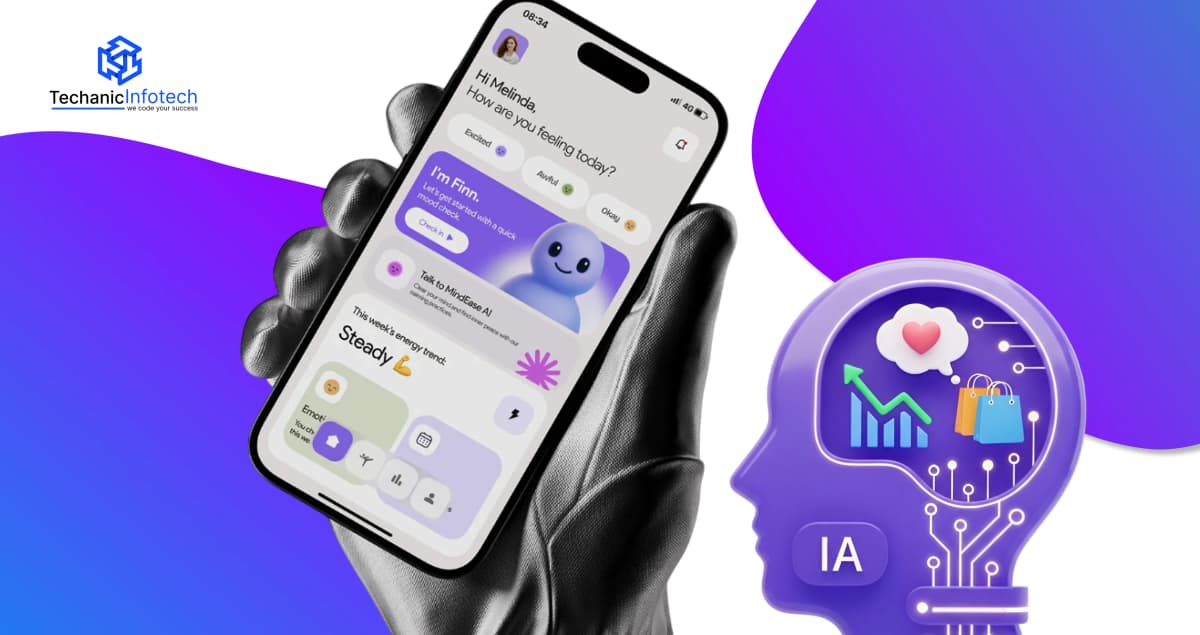
Developing an AI therapy app isn’t just another tech project; it’s a chance to create a tool that genuinely helps people manage stress, anxiety, or everyday mental health challenges.
Before jumping into AI therapy app development, it’s important to understand how users interact with digital mental-health tools and what kind of support they expect.
Your app needs to combine empathy, accuracy, and privacy while staying simple enough for anyone to use.
From choosing the right AI model to designing features that feel human and supportive, each step plays a key role in building trust.
With the right approach, you can create an app that feels personal, safe, and truly helpful in someone’s daily routine.
Building an AI therapy app starts with grounding your idea in real-world demand. Users expect tools that feel supportive, trustworthy, and responsive, just like talking to a real helper.
Before diving into therapy app development or choosing AI models, you need to understand how fast this space is growing and what people are already downloading and relying on today.
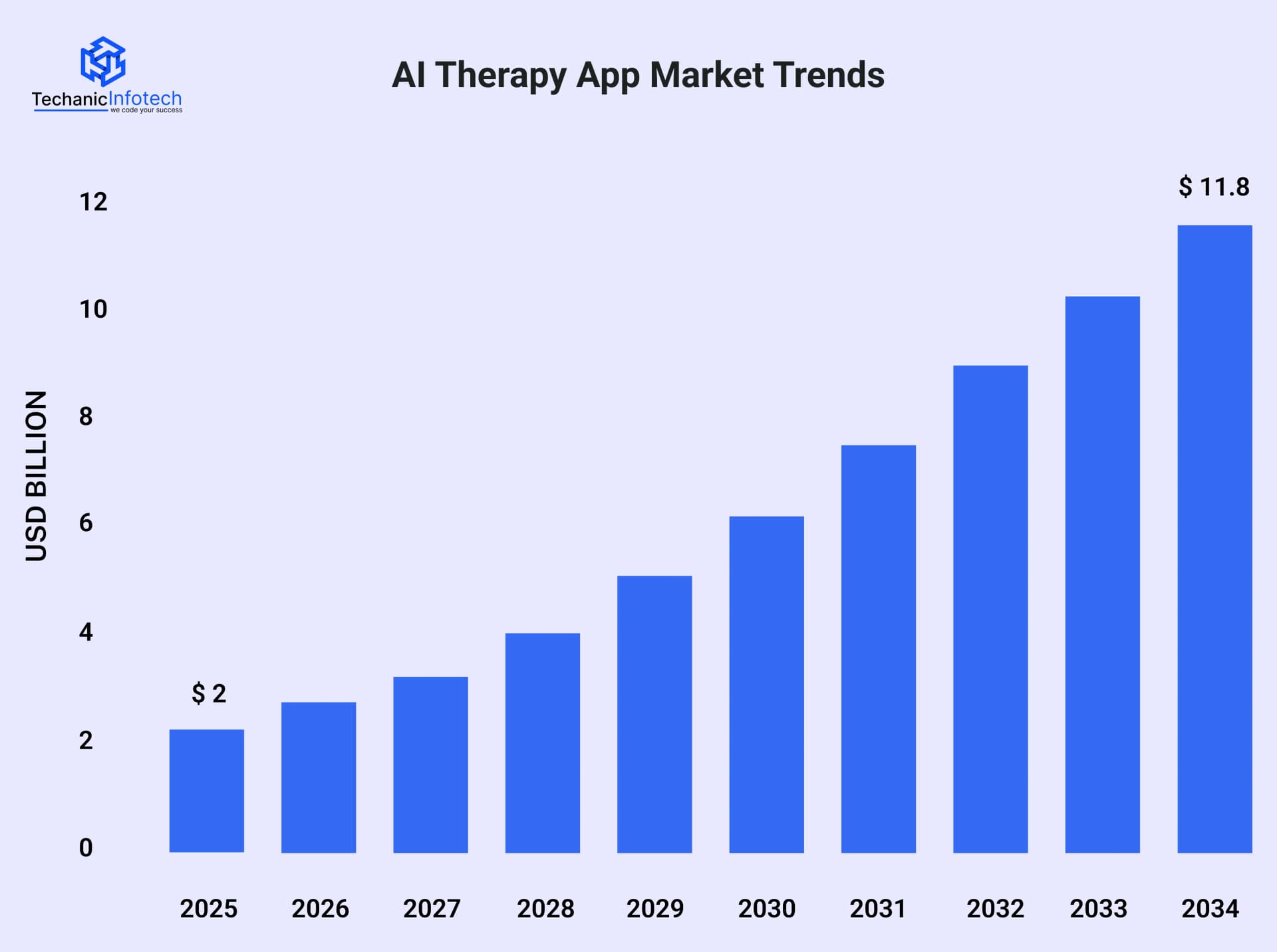
The AI mental health market reached about $2 billion in 2025 and is growing rapidly year-over-year.
This segment is projected to hit $11.8 billion by 2034 with a ~24% compound annual growth rate.
About 22% of U.S. adults currently use AI therapy apps for mental health support.
The broader mental health apps market is expected to exceed $17.5 billion by 2030.
34% of mental health apps now include AI-based therapy features like chatbots and conversational support.
AI therapy apps and traditional therapy apps serve similar goals, but they work in very different ways.
As AI app development advances, automated tools can offer quick, accessible support, while traditional apps focus on human connection.
Understanding these differences helps you decide which approach fits your users’ needs.
|
Factor |
AI Therapy App |
Traditional Therapy App |
|
Support Type |
Automated, AI-driven responses |
Licensed human therapists |
|
Availability |
24/7 instant access |
Scheduled sessions only |
|
Cost |
Generally lower or subscription-based |
Higher session-based fees |
|
Personalization |
Data-driven, adaptive insights |
Human-led, emotionally nuanced |
|
Scalability |
Easily supports large user bases |
Limited by therapist capacity |
|
Crisis Handling |
Guided protocols, not real intervention |
Trained professionals for emergencies |
AI mental health app development has opened the door to multiple therapeutic tools, each serving users in unique ways.
Some focus on conversation, others on tracking or structured methods, shaping today’s digital care landscape.
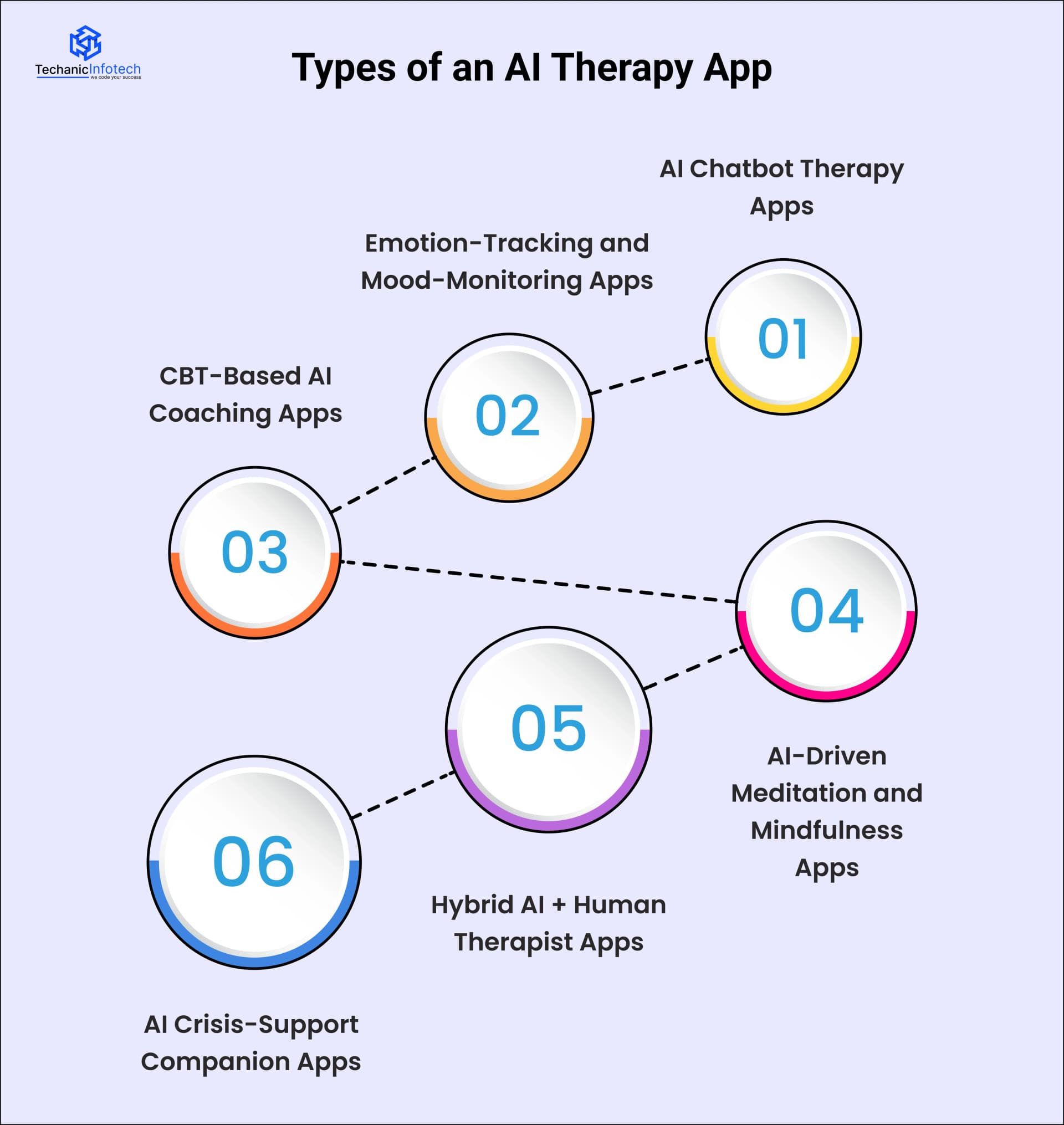
These apps use conversational AI to guide users through supportive dialogue that feels natural and approachable.
An AI-powered therapy app helps people process emotions, reduce stress, and build healthier habits through daily check-ins, reflective questions, and personalized coping suggestions.
These tools analyze mood patterns through text entries, voice tone, or behavior data.
An AI mental wellness app identifies emotional trends and offers insights that help users understand triggers, strengthen self-awareness, and make healthier mental-health decisions over time.
Built on Cognitive Behavioral Therapy principles, these apps deliver structured lessons, journaling prompts, and thought-reframing exercises.
AI personalization tailors each activity, helping users break negative thought cycles and build practical coping skills they can use every day.
These apps use AI to customize breathing exercises, guided meditations, and relaxation sessions based on a user’s stress level or mood.
They help people unwind, stay grounded, and practice mindfulness in a way that feels personal and responsive.
This model blends automated check-ins and mood tracking with direct access to licensed therapists.
AI handles routine support while humans address deeper emotional needs, creating a more scalable, reliable, and holistic mental-health experience.
These apps offer grounding tools, safety plans, and calm guidance during moments of emotional distress.
As part of thoughtful minimum viable product development, they provide immediate stabilization techniques and quick access to crisis hotline resources while reminding users they’re not a replacement for emergency services.
A successful AI therapy app needs more than smart algorithms. Strong AI therapy app features create an experience that feels supportive, intuitive, and safe, helping users trust the app and rely on it daily.
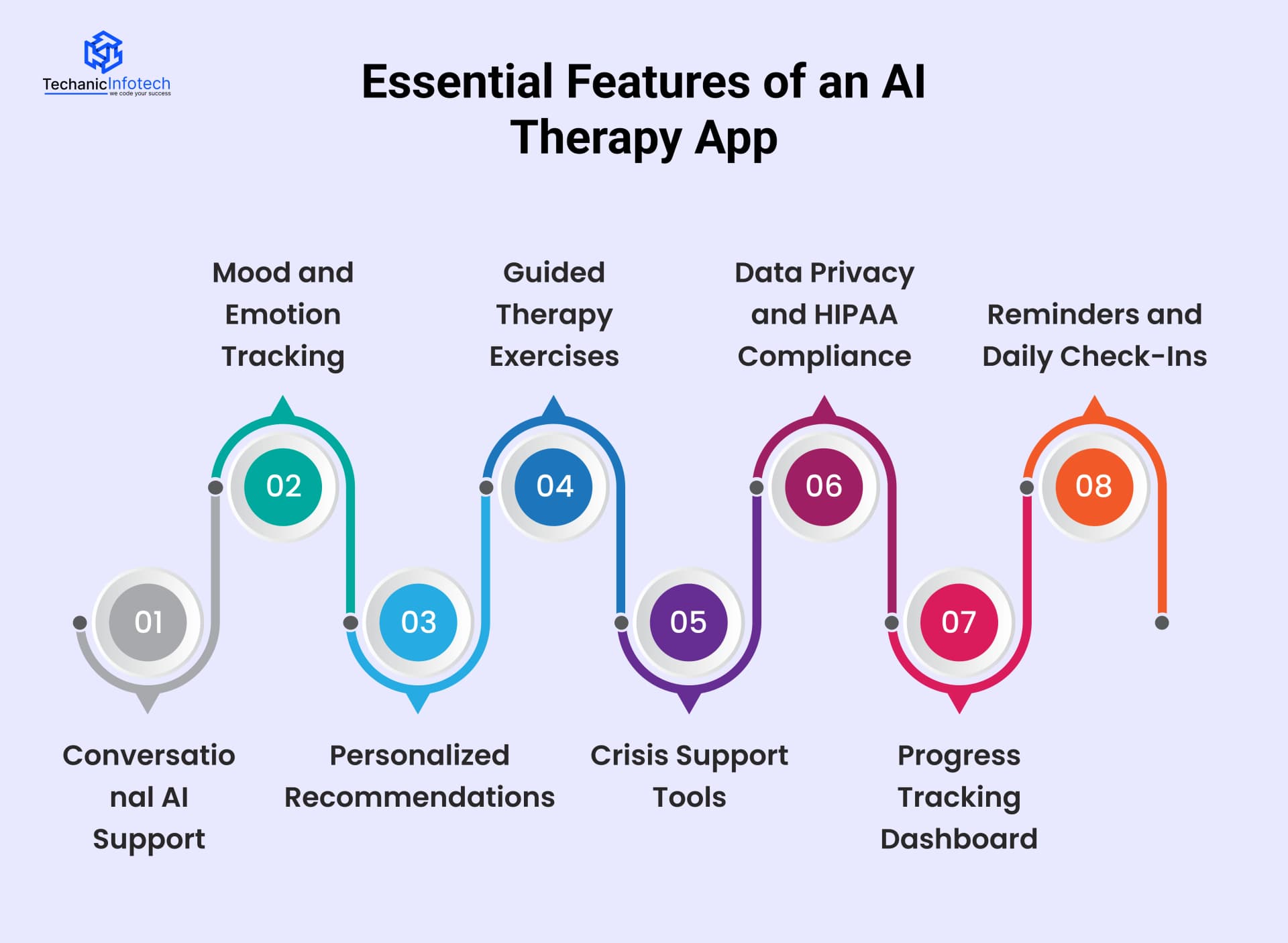
A responsive AI chat system that feels natural and empathetic.
It guides users through emotions, offers coping tips, and adapts to their mood, creating a supportive, human-like experience.
Tools that track daily moods, behavior patterns, or thought trends.
These mobile app features help users understand emotional triggers while enabling smarter, more personalized mental-health insights.
AI-driven suggestions based on user data, mood shifts, and past behavior.
These recommendations guide meditation, journaling, and coping strategies tailored to each individual’s unique mental-health needs.
Structured activities inspired by CBT, DBT, or mindfulness practices.
These exercises support AI therapy app development by helping users build emotional resilience, reduce stress, and strengthen healthier thought patterns consistently.
Grounding exercises, SOS resources, and quick links to crisis hotlines.
These features provide immediate emotional support while emphasizing that emergencies require human, professional intervention.
Strong encryption, secure data storage, and privacy protections.
These safeguards align with mobile app development trends focused on user safety, ensuring confidential mental-health information stays protected.
Clear visuals showing emotional trends, completed activities, and personal growth.
This dashboard helps users see improvement, stay motivated, and track how their mental-health journey evolves.
Automated nudges that encourage habit-building, from journaling to breathing exercises.
Consistent check-ins support AI healthcare app development goals by keeping mental-wellness routines integrated into everyday life.
AI therapy apps make mental health support easier to access, offering personalized guidance, round-the-clock help, and tools that fit real everyday life.
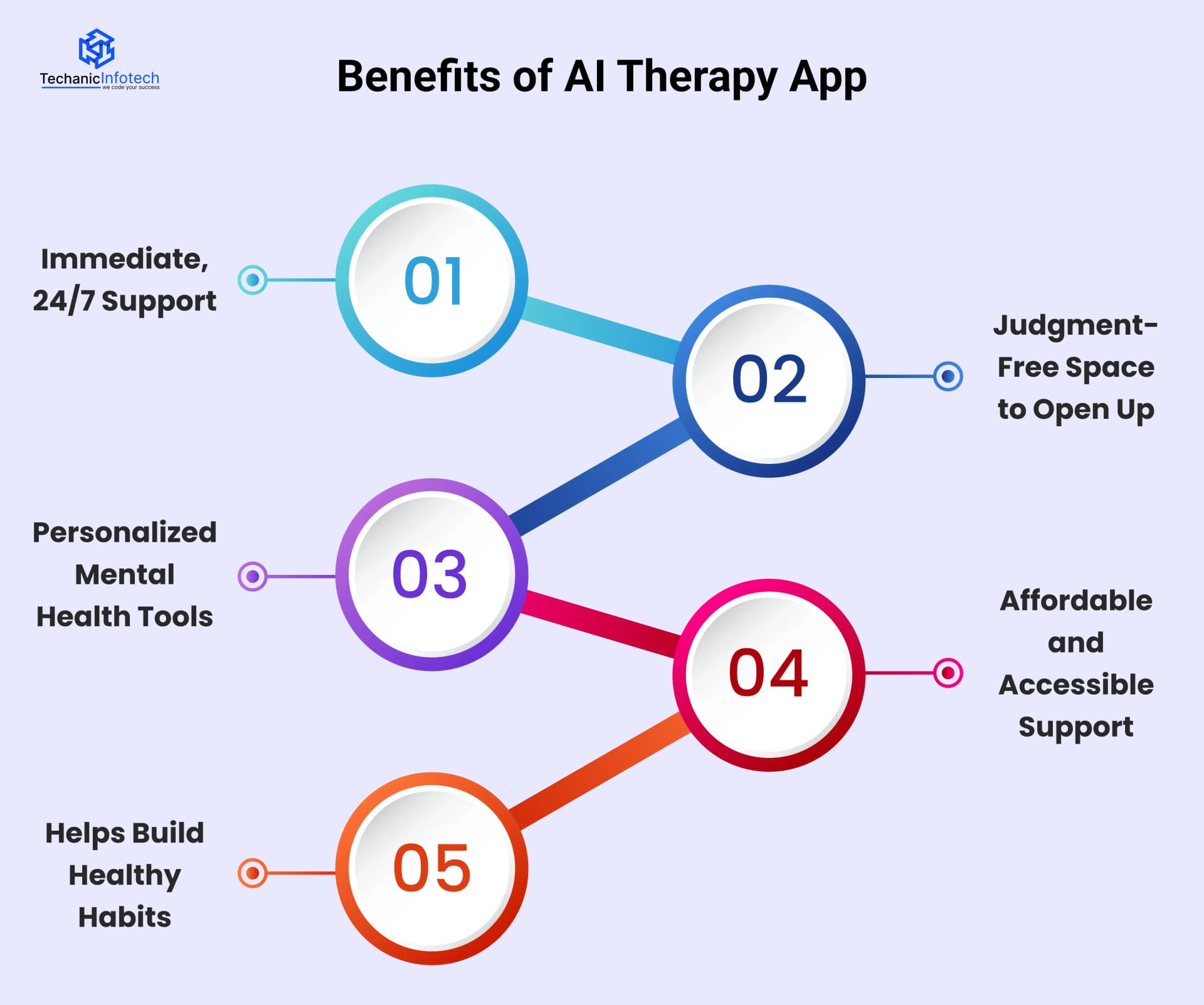
AI therapy apps offer instant help anytime, giving users quick guidance during stressful moments.
There’s no waiting, scheduling, or delays just fast emotional support when life feels overwhelming.
Users can express feelings freely without fear of embarrassment.
The AI creates a safe, private space where people share thoughts more honestly, helping them explore emotions with comfort and privacy.
AI adjusts recommendations based on mood, patterns, and responses.
Users get customized exercises, coping strategies, and reminders tailored to their emotional needs, helping them stay consistent and supported daily.
AI therapy apps reduce cost barriers by offering affordable mental health assistance.
This makes support available to users who may struggle to afford traditional therapy or need supplemental daily guidance.
With daily check-ins, mood tracking, and practical exercises, AI therapy apps help users form emotional wellness habits.
Consistent routines and reminders make long-term progress easier to maintain and measure.
The cost to build an AI therapy app typically ranges from $10,000 to $60,000+, and this fits within today’s broader mobile app development cost expectations.
Pricing varies based on features, AI complexity, security, and the development team you choose.
|
Cost Factor |
Estimated Cost Range |
Description |
|
Basic App Design |
$3,000–$8,000 |
UI/UX for screens, layouts, and user flows. |
|
AI Model Integration |
$5,000–$15,000 |
Adding NLP models, training data, and conversational logic. |
|
Core Features Development |
$8,000–$20,000 |
Chat, mood tracking, exercises, recommendations, dashboards. |
|
Advanced AI Personalization |
$6,000–$14,000 |
Mood analysis, tailored insights, behavior prediction. |
|
Backend Development |
$5,000–$15,000 |
APIs, databases, authentication, and server architecture. |
|
HIPAA-Ready Security Setup |
$4,000–$12,000 |
Encryption, secure storage, audit logs, and compliance work. |
|
Mobile App Development (iOS/Android) |
$10,000–$30,000 |
Platform-specific builds or cross-platform development. |
|
Third-Party API Integrations |
$2,000–$7,000 |
Payment gateways, analytics, chatbot APIs, cloud tools. |
|
Testing & QA |
$3,000–$7,000 |
Functional tests, AI accuracy testing, bug fixing. |
|
Deployment & Maintenance |
$3,000–$8,000 |
App store launch, updates, ongoing support, and AI tuning. |
Therapy app development with AI requires a clear plan, thoughtful design, and a strong focus on user safety.
Each step helps shape an app that feels supportive, trustworthy, and genuinely helpful in everyday mental-health routines.
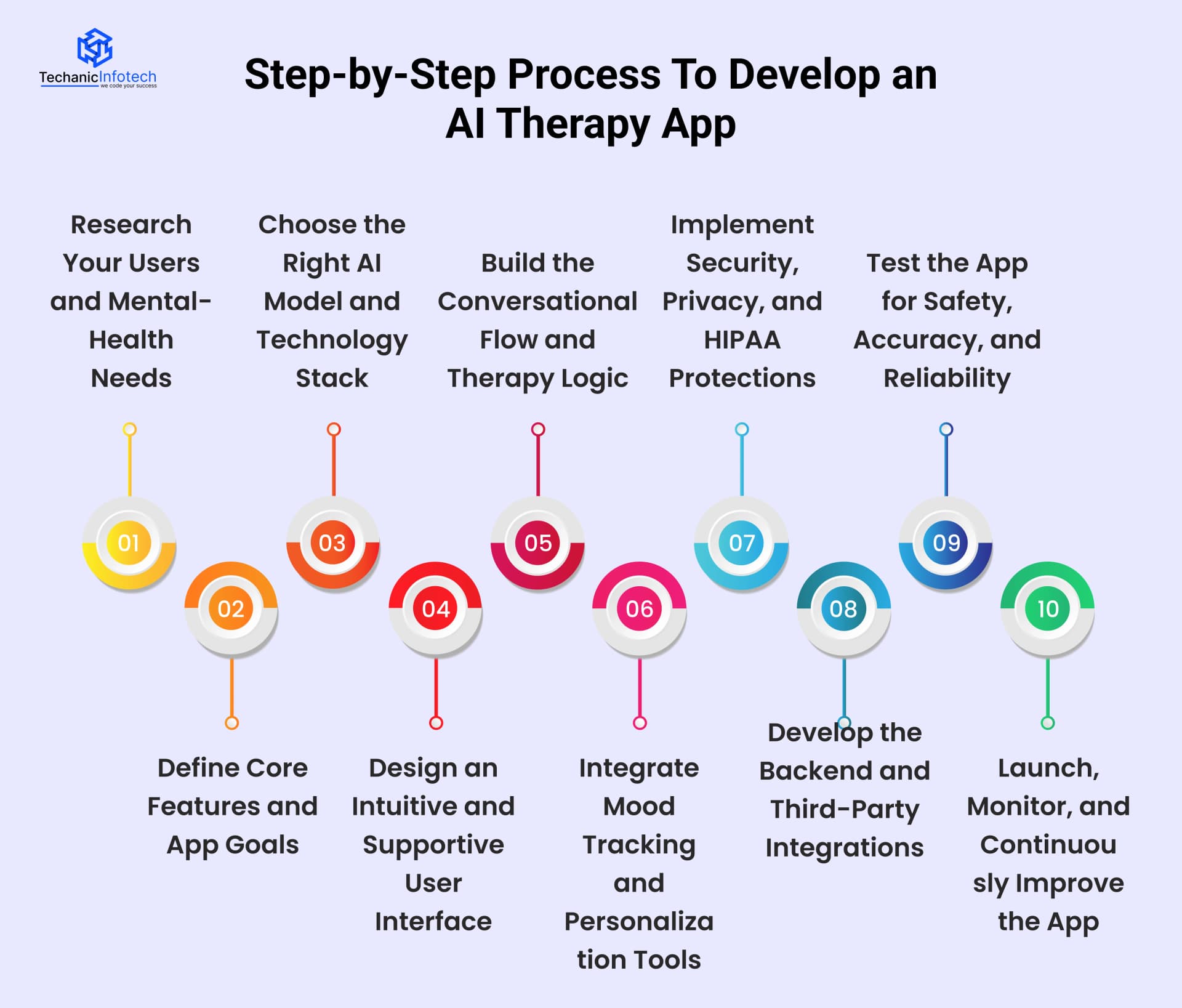
Start by understanding who you’re building for and what emotional challenges they face.
Strong mental health chatbot app development begins with real user insights, guiding your app’s tone, features, and AI behavior from the very start.
Clarify what your platform will deliver: conversation support, mood tracking, guided exercises, or all three.
This foundation helps streamline AI counseling app development and prevents unnecessary features that complicate the user experience.
Select AI tools for natural conversation, emotion detection, or personalization. Pair them with a reliable backend and a scalable infrastructure.
A mobile app tech stack guide ensures you choose frameworks that support long-term growth.
Craft a UI that feels calm, friendly, and easy to navigate.
A mobile app design guide helps you create layouts and flows that reduce overwhelm, making the experience comforting for users seeking emotional support.
Develop structured prompts, coping strategies, and therapeutic pathways.
Strong AI therapy app development ensures conversations feel empathetic, clear, and helpful without stepping into areas that require licensed professionals.
Add systems that gather mood entries, behavior patterns, and usage insights.
These tools help your app deliver smarter recommendations and more meaningful emotional guidance tailored to every user’s mental-health journey.
Protecting mental-health data is essential. Use encryption, secure storage, and compliance practices to safeguard sensitive information.
Clear security planning also helps you understand the overall therapy app development cost and long-term maintenance needs.
Build APIs, authentication, databases, and cloud systems that power your app.
A well-planned mobile app development timeline ensures each integration from analytics to payment systems supports scalability and a smooth user experience.
Test every feature to ensure the AI responds safely, conversations feel appropriate, and tools operate smoothly.
Secure AI therapy app development requires refining responses, fixing bugs, and validating emotional accuracy before launch.
Release your app, collect user feedback, and study behavior patterns.
Ongoing updates strengthen conversations, refine features, and support long-term growth as real users shape your improvement roadmap.
Developing an AI therapy app becomes much smoother when you partner with a team that understands both technology and mental-health user needs.
Techanic Infotech, a trusted mobile app development company, brings the expertise required to build secure, empathetic, and scalable digital wellness solutions.
Their team focuses on creating AI-driven features that feel human, supportive, and easy to use while ensuring your app meets industry standards for privacy, compliance, and performance.
From planning the AI architecture to designing user-friendly screens and integrating smart recommendation systems, Techanic Infotech guides you through every step.
With the right strategy and technical precision, they help you launch an AI therapy app that users can rely on for real, everyday emotional support.
AI therapy app development is opening new doors for accessible, supportive, and user-friendly mental-health care.
By combining smart AI technology with thoughtful design, you can create an app that genuinely helps people manage stress, track emotions, and build healthier habits.
The key is focusing on empathy, privacy, and long-term reliability factors that determine whether users feel safe and supported.
With the right development partner and a clear strategy, your app can deliver real value from the first interaction to everyday use.
As demand for digital mental-health tools continues to grow, now is the ideal time to invest in building an AI-powered solution that truly makes a difference in people’s lives.
Most AI therapy apps take three to six months to build, depending on features, AI complexity, and platform choices. More advanced personalization, HIPAA compliance, and backend integrations can extend the timeline, especially if you’re aiming for a highly polished first release.
Core features include conversational AI support, mood tracking, guided therapy exercises, crisis resources, progress dashboards, and strong privacy protections. These tools ensure the app feels supportive, personalized, and safe for users seeking everyday emotional guidance and mental-health support.
Yes, when built responsibly. Safety requires strong data protection, clear boundaries that avoid clinical claims, accurate AI responses, and emergency guidance. With proper testing and compliance, AI therapy apps can offer reliable support without replacing licensed mental-health professionals.
Costs typically range from $10,000 to $60,000, depending on design, features, AI capabilities, and security needs. Adding advanced personalization, HIPAA-level protections, or cross-platform builds may increase the budget but also enhance overall user trust and long-term value.
AI can support users with guidance, emotional check-ins, and coping tools, but it cannot replace licensed therapists. Human expertise is essential for diagnosis, treatment, and crisis care. AI works best as a helpful companion in someone’s mental-health routine, not a substitute.


Bharat Sharma is the CTO of Techanic Infotech, bringing deep technical expertise in software architecture, mobile app development, and scalable system design. He leads the engineering team with a strong focus on innovation, performance, and security.