
Understanding the Magento development cost in 2026 is important for businesses planning to launch or scale an online store. From small startups to large enterprises, the cost to build a Magento store can vary based on features, design, and overall project scope.
Many businesses struggle to estimate the right Magento development budget because it depends on multiple technical and business factors.
This guide explains the cost of building an Magento based platform in a clear and practical way.
You’ll get insights into the expenses, key factors, and a detailed Magento development cost breakdown. We also cover essential Magento features and pricing to help you plan a realistic budget without surprises.
Magento is a powerful and flexible eCommerce platform used to build scalable online stores. It allows businesses to create fully customized shopping experiences with advanced product management, secure payment options, and multi-store capabilities.
Magento supports both small and enterprise-level businesses, making it suitable for growing brands. With strong performance, high security, and the ability to handle large product catalogs, Magento remains a preferred choice for businesses that need long-term scalability and control over their online operations.
Highly customizable platform for unique business needs
Scales easily as traffic and product range grow
Supports multi-store, multi-language, and multi-currency setups
Strong security features for safe transactions
Large extension marketplace for added functionality
SEO-friendly structure for better search visibility
Integrates smoothly with third-party tools and services
Ideal for both B2B and B2C eCommerce models
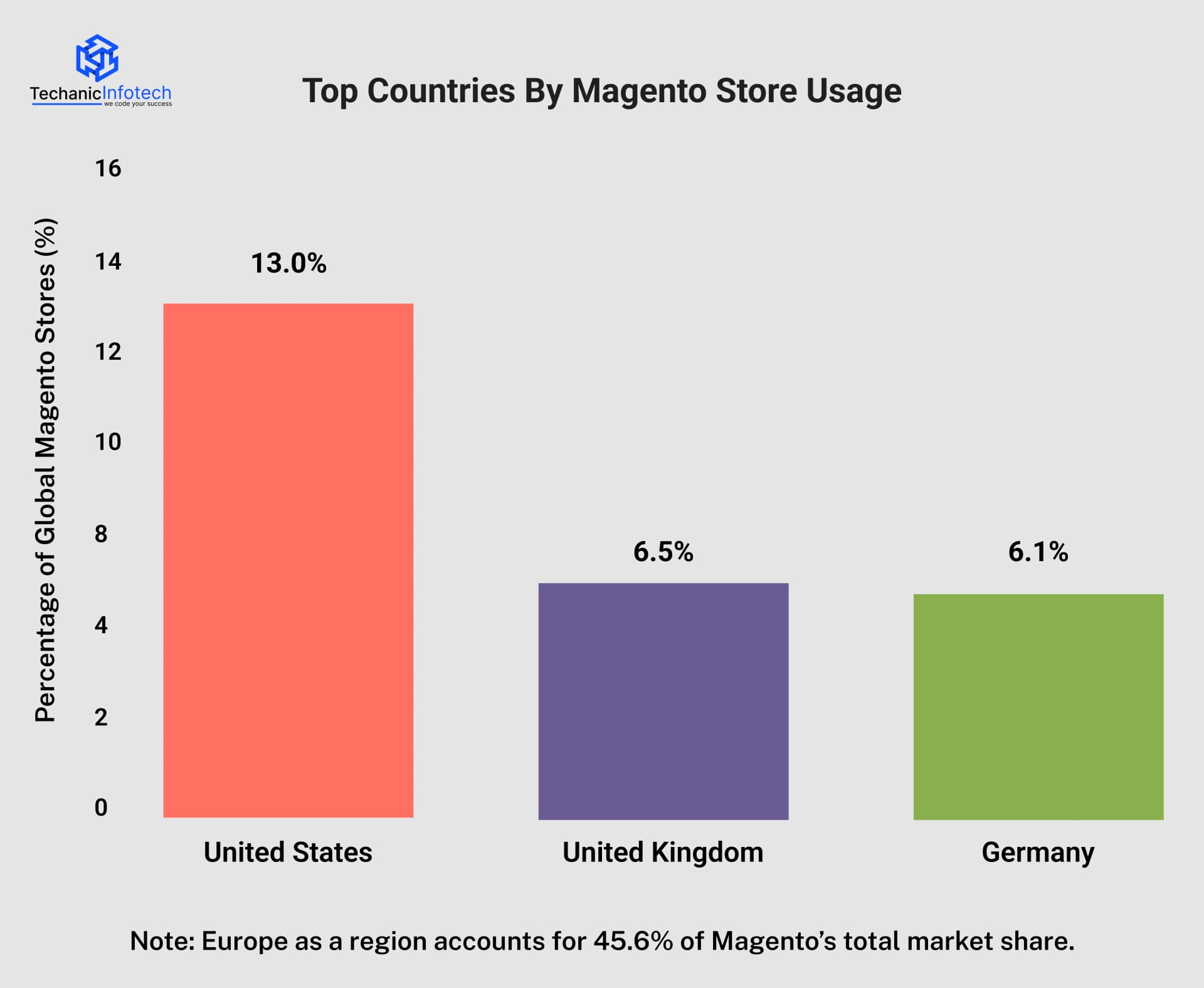
Magento continues to be among the top eCommerce platforms in 2026, holding roughly 7–8% of the global eCommerce CMS market and ranking in the top five platforms used worldwide.
Even with competition from Shopify and WooCommerce, Magento remains a preferred choice for complex and enterprise-level eCommerce solutions, thanks to its flexibility and customization options.
Magento’s ecosystem includes thousands of developers and extensions, which allows businesses to tailor stores to specific needs, a major advantage over rigid SaaS platforms.
Brands with large product catalogs, multi-store setups, or advanced workflows benefit most from Magento’s open architecture, making the investment worthwhile if scalability matters.
While initial costs may be higher than simpler alternatives, Magento’s robust infrastructure and feature depth make it a future-proof choice for growing online stores with complex needs.
The cost to build a Magento website can vary widely based on the size of your store, the features you need, and how complex the project is. On average, the cost to build a Magento store ranges from $6,000 to $90,000. This broad range exists because every business has different goals, technical needs, and growth plans.
For a basic Magento store with a ready-made theme, standard product pages, and simple checkout functionality, the Magento eCommerce development cost usually starts around $6,000 to $12,000. These projects are suitable for small businesses or startups that want to launch quickly with limited customization.
Mid-level projects often fall between $15,000 and $40,000. This range typically includes custom design, advanced product filters, third-party integrations, and performance optimization. At this stage, businesses need a clearer Magento development budget to balance features and long-term scalability.
Large or enterprise-level stores can cost anywhere from $45,000 to $90,000. These projects involve complex workflows, custom features, multi-store setups, and higher security requirements. When planning your budget, it’s important to consider not just development but also the ongoing expenses of Magento store development, such as maintenance and updates.
Understanding these cost ranges helps businesses plan smarter and avoid unexpected spending.
When planning a Magento project, many businesses ask why pricing varies so much from one store to another. The truth is that Magento development pricing depends on several practical factors, not just the platform itself. Understanding these elements helps you set a realistic budget and avoid surprises later.
Below are the key factors that directly influence the Magento eCommerce development cost in 2026.
|
Factor |
Average Cost Impact |
Estimated Cost Range |
|
Project Size & Complexity |
High |
$6,000 – $30,000+ |
|
Custom Design vs Ready-Made Themes |
Medium to High |
$1,500 – $12,000 |
|
Features & Functional Requirements |
High |
$3,000 – $25,000+ |
|
Third-Party Integrations |
Medium |
$1,000 – $15,000 |
|
Development Team Location |
Medium to High |
$20 – $150/hour |
The size and complexity of your project play a major role in determining the cost to create a Magento store.
A small store with a limited number of products and basic pages requires fewer development hours. In contrast, a large eCommerce website with thousands of products, advanced search filters, and custom workflows needs more time and expertise.
Complex features like multi-store setups, role-based access, or custom checkout flows increase the eCommerce app development process. As complexity grows, so do testing, performance optimization, and security requirements, which adds to the overall Magento development cost in 2026.
Design choices have a direct impact on Magento eCommerce development pricing. Using a ready-made Magento theme is more budget-friendly and faster to launch. These themes work well for businesses that want a clean mobile app design without heavy customization.
On the other hand, a fully custom design offers better branding and user experience but increases costs. Custom layouts, animations, and responsive design adjustments require more design and development time. While this raises the upfront cost to build an eCommerce, it can improve conversions and brand value in the long run.
The features you include largely define your Magento development cost breakdown. Basic stores usually need standard features like product catalogs, carts, and payment gateways. These keep eCommerce website development costs manageable.
Advanced requirements such as AI-based product recommendations, custom pricing rules, loyalty programs, or complex shipping logic increase development time. The more unique your feature set, the higher the expenses of Magento store development. Choosing only essential features during the initial launch can help control costs.
Most Magento stores rely on third-party tools for payments, shipping, analytics, CRM, or marketing automation. Each integration adds to the Magento development pricing factors because developers need time to configure, test, and secure these connections.
Simple integrations are usually affordable, but complex or custom integrations can increase the budget. Licensing fees for paid tools should also be considered as part of the ongoing expense, not just the initial build cost.
Where your development team is located significantly affects cost. Developers in regions like the USA typically charge higher hourly rates, while teams in countries like India offer more cost-effective pricing.
This doesn’t mean lower quality, many businesses choose offshore teams to reduce the cost to develop a Magento store while maintaining high standards. The key is choosing a team with proven Magento experience, clear communication, and reliable support.
The Magento development cost in 2026 varies greatly depending on the type of project you’re planning. A small business store, a growing mid-scale eCommerce website, and an enterprise-level Magento solution all have different technical needs, timelines, and budgets.
Understanding these differences helps businesses plan the right budget and choose features wisely.
|
Project Type |
Best For |
Estimated Cost Range |
|
Small Business Magento Store |
Startups & small businesses |
$6,000 – $15,000 |
|
Mid-Scale eCommerce Website |
Growing online businesses |
$20,000 – $40,000 |
|
Enterprise-Level Magento Solution |
Large brands & enterprises |
$45,000 – $90,000 |
A small business Magento store is ideal for startups or local businesses launching their first online presence. These projects usually include a ready-made theme, basic product listings, standard checkout, and essential payment gateways.
Since customization is limited, the cost to create a Magento store at this level remains affordable. This option works well for businesses that want to go live quickly and upgrade features later as they grow.
Mid-scale Magento projects are designed for growing businesses with higher traffic and more complex needs. These stores often require custom UI/UX design, advanced filters, third-party integrations, and performance optimization.
At this stage, Magento eCommerce development pricing increases because the platform must support scalability, better user experience, and smoother backend operations. Businesses in this category usually plan a more structured Magento budget.
Enterprise-level Magento solutions are built for large brands handling high traffic, multiple stores, and complex workflows. These projects involve custom development, multi-language and multi-currency support, ERP or CRM integrations, and advanced security measures.
Due to the scale and complexity, the Magento eCommerce development cost is significantly higher, but it delivers long-term stability and performance.
Below is a clear, practical table showing common Magento features, what each one does, and the average cost impact. These estimates help you understand how individual features contribute to the overall Magento development cost breakdown in 2026.
|
Feature |
Short Description |
Average Cost (USD) |
|
Custom UI/UX Design |
Fully customized store design aligned with brand identity |
$2,000 – $8,000 |
|
Responsive Design |
Optimized experience across mobile, tablet, and desktop |
$800 – $2,500 |
|
Product Catalog Management |
Handling products, categories, attributes, and filters |
$500 – $2,000 |
|
Advanced Search & Filters |
Smart search, layered navigation, and sorting options |
$1,000 – $3,500 |
|
Checkout Customization |
Simplified or custom checkout flow |
$1,200 – $4,000 |
|
Payment Gateway Integration |
Integration with Stripe, PayPal, Razorpay, etc. |
$500 – $2,500 |
|
Shipping & Tax Configuration |
Custom shipping rules and tax calculations |
$600 – $2,000 |
|
Multi-Store Setup |
Manage multiple stores from a single backend |
$2,000 – $6,000 |
|
Multi-Language & Currency |
Support for global customers |
$1,500 – $5,000 |
|
Third-Party API Integrations |
CRM, ERP, marketing, or analytics tools |
$1,000 – $7,000 |
|
Performance Optimization |
Speed, caching, and load-time improvements |
$1,500 – $5,000 |
|
Security Enhancements |
SSL, secure admin, and data protection |
$800 – $3,000 |
|
SEO Optimization |
URL structure, metadata, and SEO settings |
$700 – $2,500 |
|
Admin Panel Customization |
Custom backend workflows and dashboards |
$1,000 – $4,000 |
|
Maintenance & Support (Annual) |
Updates, bug fixes, and monitoring |
$1,500 – $6,000 |
Choosing the right hiring model plays a big role in the overall Magento store development cost in 2026. Each option comes with its own pricing structure, management effort, and level of reliability.
Below is a simple breakdown to help you decide what fits your Magento development budget best.
|
Hiring Model |
Best For |
Estimated Cost Range |
Key Considerations |
|
Freelancers |
Small projects & startups |
$20 – $60/hour |
Lower cost, limited support |
|
In-House Team |
Large enterprises |
$60,000 – $150,000/year |
High control, higher long-term cost |
|
Magento Development Company |
Growing & enterprise businesses |
$6,000 – $90,000/project |
Expertise, support, scalability |
Freelancers are often chosen by startups and small businesses with limited budgets. They usually charge hourly or project-based rates and work well for small Magento tasks or basic store setups. While freelancers can reduce the expense, managing timelines, communication, and long-term support can be challenging. Availability may also be inconsistent for ongoing maintenance.
An in-house Magento team offers full control over development and communication. This model works best for large businesses with ongoing development needs. However, salaries, infrastructure, training, and benefits significantly increase the cost. For many businesses, this option requires a higher long-term commitment compared to external teams.
Hiring a Magento development company provides access to experienced developers, designers, and project managers under one roof. While upfront costs may be higher than freelancers, this model ensures better quality, timely delivery, ongoing website maintenance and support. It’s a balanced choice for businesses that want reliability without managing an internal team.
When planning your Magento website it’s important to look beyond the initial build cost. Magento is a powerful platform, but it also comes with ongoing expenses that keep your store secure, fast, and reliable. These recurring costs are a key part of the total Magento eCommerce development cost in 2026.
|
Ongoing Cost |
What It Covers |
Average Annual Cost |
|
Hosting & Infrastructure |
Cloud hosting, server resources, backups |
$1,200 – $6,000 |
|
Maintenance & Support |
Bug fixes, updates, performance checks |
$1,500 – $6,000 |
|
Security & Updates |
Security patches, SSL, monitoring |
$800 – $3,000 |
Magento requires strong hosting to handle traffic, product catalogs, and checkout processes smoothly. Shared hosting is usually not enough. Most businesses choose cloud or managed Magento hosting for better performance and scalability. As your store grows, hosting and infrastructure costs can increase due to higher traffic and storage needs.
Regular maintenance ensures your store runs smoothly without bugs or downtime. This includes fixing issues, updating extensions, improving performance, and providing technical support. Skipping maintenance may reduce short-term costs, but it often leads to higher expenses of Magento store development later due to unexpected issues.
Magento releases regular security patches and updates to protect stores from vulnerabilities. Applying these updates is critical to avoid data breaches and downtime. Security costs also include SSL certificates, backups, and monitoring tools, all of which are essential for a safe eCommerce environment.
Magento is a powerful eCommerce platform, but smart planning is essential to keep the expense under control. If you are a startup or an established business, the right decisions at each stage can help you reduce the cost to build a Magento store without compromising quality or performance.
Below are practical cost-saving tips that actually work.
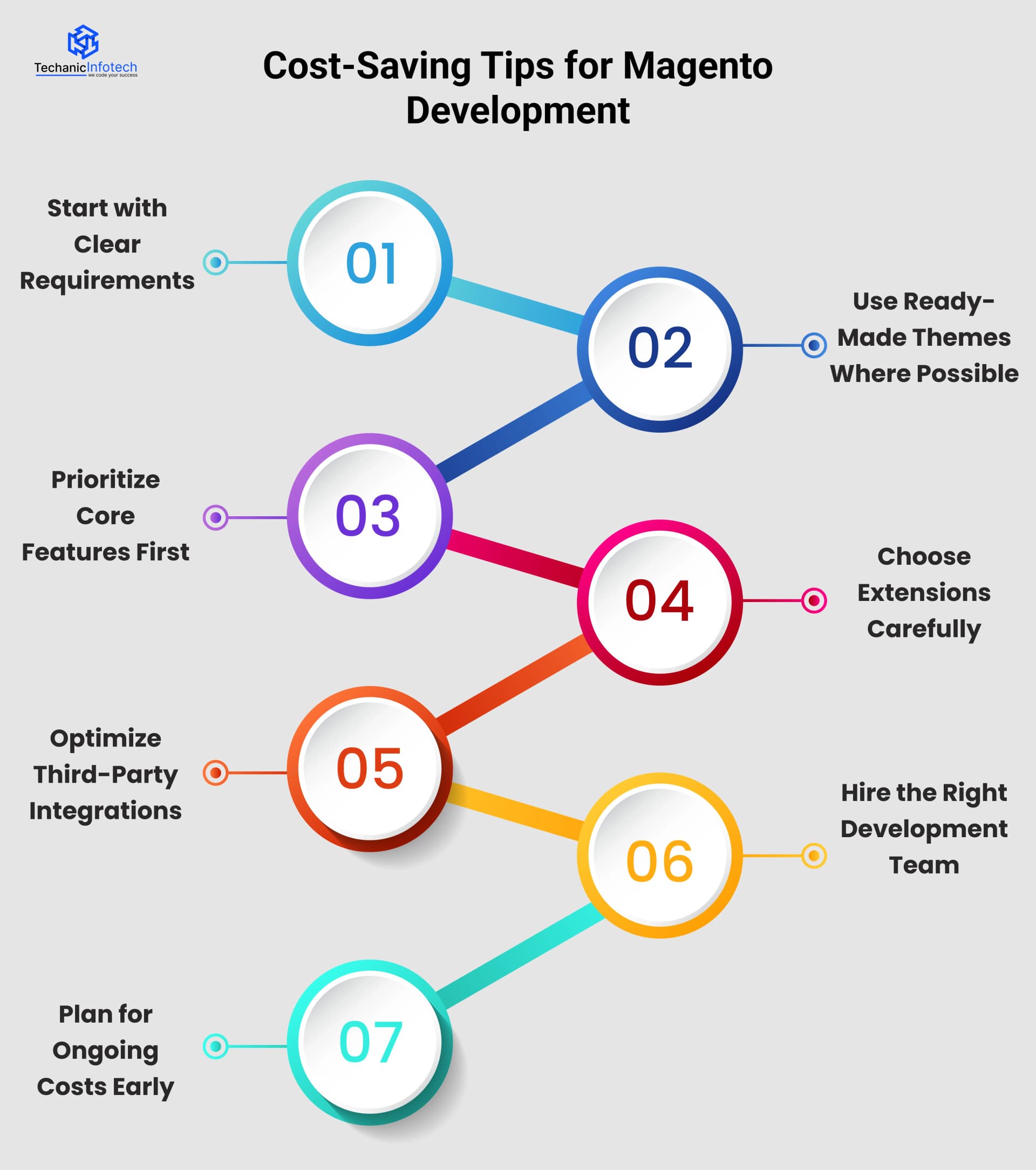
One of the biggest reasons projects go over budget is unclear planning. Before development begins, define your business goals, target audience, and essential eCommerce app features.
This avoids last-minute changes that increase the cost. A well-defined scope helps teams estimate timelines accurately and keeps your Magento development budget on track.
Custom designs look great but come at a higher price. If you’re launching your first store, a high-quality ready-made Magento theme can significantly reduce Magento eCommerce development pricing. These themes are tested, responsive, and easier to customize later as your business grows.
Not every feature is needed at launch. Focus on must-have functionalities such as product listings, checkout, and payments. Advanced features can be added later. This phased approach lowers the initial Magento development cost breakdown and spreads expenses over time.
Magento has a large extension marketplace. While free extensions save money, poorly built ones can cause performance or security issues. Investing in reliable extensions can reduce long-term expenses of Magento store development by preventing future fixes and downtime.
Integrations with payment gateways, CRMs, or shipping tools can raise costs quickly. Choose only essential integrations and avoid custom solutions unless necessary. This keeps Magento development pricing factors manageable.
Choosing an experienced Magento development company may cost more upfront, but it often saves money in the long run. Skilled teams avoid errors, reduce rework, and deliver scalable solutions. Offshore teams can also help lower the cost to build a Magento store while maintaining quality.
Maintenance, hosting, and security updates are recurring costs. Planning these from the start helps avoid sudden expenses later and keeps your cost predictable.

Techanic Infotech helps businesses build high-performing Magento stores without unnecessary costs or complexity.
With hands-on experience in Magento and Adobe Commerce, the team focuses on scalable architecture, clean code, and business-ready features. From planning and UI/UX design to development, integrations, and ongoing support, every step is handled with clarity and transparency.
Our mobile app development company works closely with clients to understand goals and create solutions that fit the right development budget. By following best practices and smart development strategies, they help reduce the overall Magento eCommerce development cost while ensuring performance, security, and long-term growth.
Understanding the Magento development cost in 2026 helps businesses plan better and avoid unexpected expenses.
From project size and features to hiring models and ongoing costs, every decision impacts the final budget. While the cost to build a Magento store may seem higher compared to simpler platforms, Magento offers flexibility, scalability, and long-term value for growing businesses.
By choosing the right features, development team, and cost-saving strategies, businesses can control their Magento eCommerce development cost without compromising quality. With proper planning and a clear Magento development budget, Magento remains a strong and future-ready investment for brands looking to scale their eCommerce presence.
The average Magento development cost in 2026 ranges from $6,000 to $90,000, depending on project size, features, customization level, and the development team you choose
The average Magento development cost in 2026 ranges from $6,000 to $90,000, depending on project size, features, customization level, and the development team you choose
Magento offers advanced customization, scalability, and enterprise-level features. These capabilities require more development effort, which increases the Magento ecommerce development cost compared to simpler platforms.
Magento offers advanced customization, scalability, and enterprise-level features. These capabilities require more development effort, which increases the Magento ecommerce development cost compared to simpler platforms.
Yes. Using a ready-made theme, basic features, and a phased development approach can significantly reduce the cost to build a Magento store, especially for small businesses.
Yes. Using a ready-made theme, basic features, and a phased development approach can significantly reduce the cost to build a Magento store, especially for small businesses.
Apart from development, businesses should budget for hosting, maintenance, security updates, paid extensions, and ongoing support. These are common expenses of Magento store development.
Apart from development, businesses should budget for hosting, maintenance, security updates, paid extensions, and ongoing support. These are common expenses of Magento store development.
Yes. Development team location is a major Magento development pricing factor. Teams in regions like India generally offer lower rates compared to the USA or Europe.
Yes. Development team location is a major Magento development pricing factor. Teams in regions like India generally offer lower rates compared to the USA or Europe.
Magento is worth it for small businesses planning long-term growth. While the initial Magento development budget may be higher, it offers flexibility and scalability as the business expands.
Magento is worth it for small businesses planning long-term growth. While the initial Magento development budget may be higher, it offers flexibility and scalability as the business expands.
A basic Magento store can take 6–8 weeks, while mid-scale or enterprise projects may take 3–6 months, depending on complexity and features.
A basic Magento store can take 6–8 weeks, while mid-scale or enterprise projects may take 3–6 months, depending on complexity and features.


Abhishek Jangid is the CEO of Techanic Infotech, with extensive experience in mobile app and web development. He specializes in helping businesses turn innovative ideas into scalable digital solutions through strategic planning and modern technology.