Key Takeaways
Pet care apps centralize health records, reminders, and schedules, helping owners manage vaccinations, medications, and daily needs more efficiently.
Built-in booking features simplify scheduling grooming, walking, and vet services with real-time availability, secure payments, and user reviews.
Tele-vet chats and communication tools improve accessibility, offering quick professional guidance without unnecessary clinic visits.
Regular updates, security improvements, and maintenance ensure app reliability, boosting user trust and long-term engagement.
Thoughtfully planned features like reminders, trackers, and service integrations enhance overall user experience and make pet care more convenient.
Pet care is evolving fast, and 2026 is shaping up to be a huge year for digital solutions that make life easier for pet parents.
From on-demand vet consultations to AI-powered health tracking, today’s users expect convenience, clarity, and real value in every tap. That’s where pet care app development comes in.
Building a modern pet app isn’t just about features; it’s about creating a smooth, trustworthy experience that helps owners care for their pets with confidence.
In this guide, we’ll break down what goes into planning, designing, and launching a pet care app that stands out in a competitive market. If you're aiming to build something truly useful in 2026, you’re in the right place.
Pet care mobile app development is entering a high-growth phase as more U.S. pet owners rely on digital tools for health tracking, grooming, and vet support.
In 2026, developers have a major opportunity to build smarter, more personalized pet experiences powered by AI and real-time data.
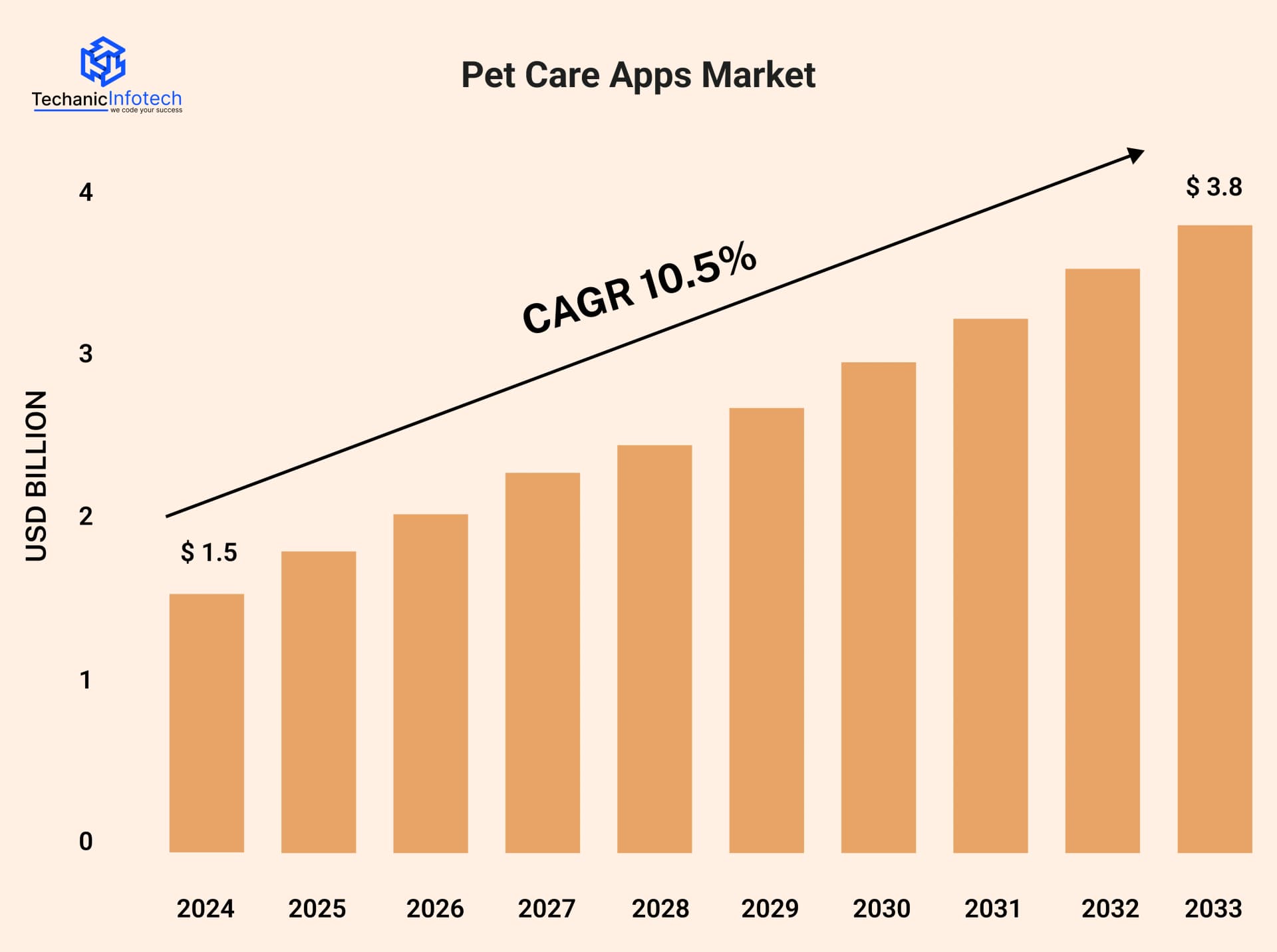
The pet care apps market was USD 1.5B in 2024 and is expected to reach USD 3.8B by 2033, with a 10.5% CAGR (2026–2033).
Apps focused on pet services and care make up roughly 50% of market revenue today.
65% of urban pet owners prefer mobile apps for booking vet visits and grooming.
Subscription-based pet services are expanding at around 18% CAGR.
The pet sitting app segment alone is projected to reach $3.6 B by 2033.
Pet care technology is expanding fast, and 2026 brings a wide range of digital solutions designed to support health, training, safety, and everyday pet routines.
Each app type serves a unique purpose for modern pet owners.
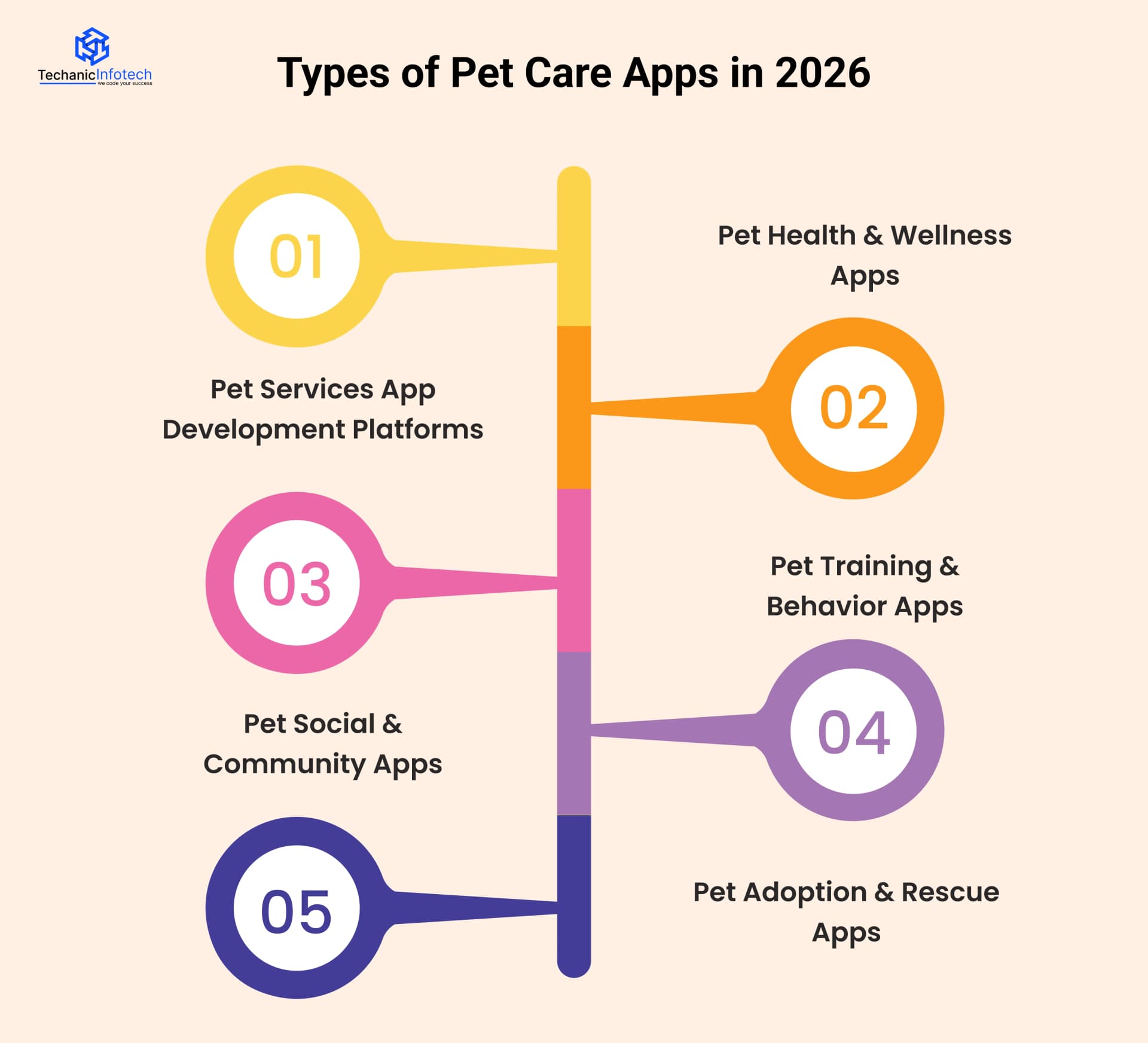
These apps track vaccinations, medications, diet, and activity levels. Many now use AI to detect early health issues and sync with smart collars for real-time insights.
These connect owners with groomers, pet sitters, walkers, and trainers. Users can book appointments, compare prices, and manage services through a single, streamlined dashboard.
Training apps offer guided lessons, behavior tracking, and video-based tutorials. They help owners reinforce good habits and address common behavioral challenges more consistently.
These apps let pet owners share photos, find playdates, and join local pet communities. They often feature location-based groups and user-generated tips.
Adoption apps match potential owners with shelters and rescues. Users can browse profiles, learn about breed needs, and start the adoption process directly through the platform.
Pet care apps make daily routines easier, helping owners manage health, training, and services in one place. These tools offer convenience, clarity, and peace of mind for busy pet parents in 2026.
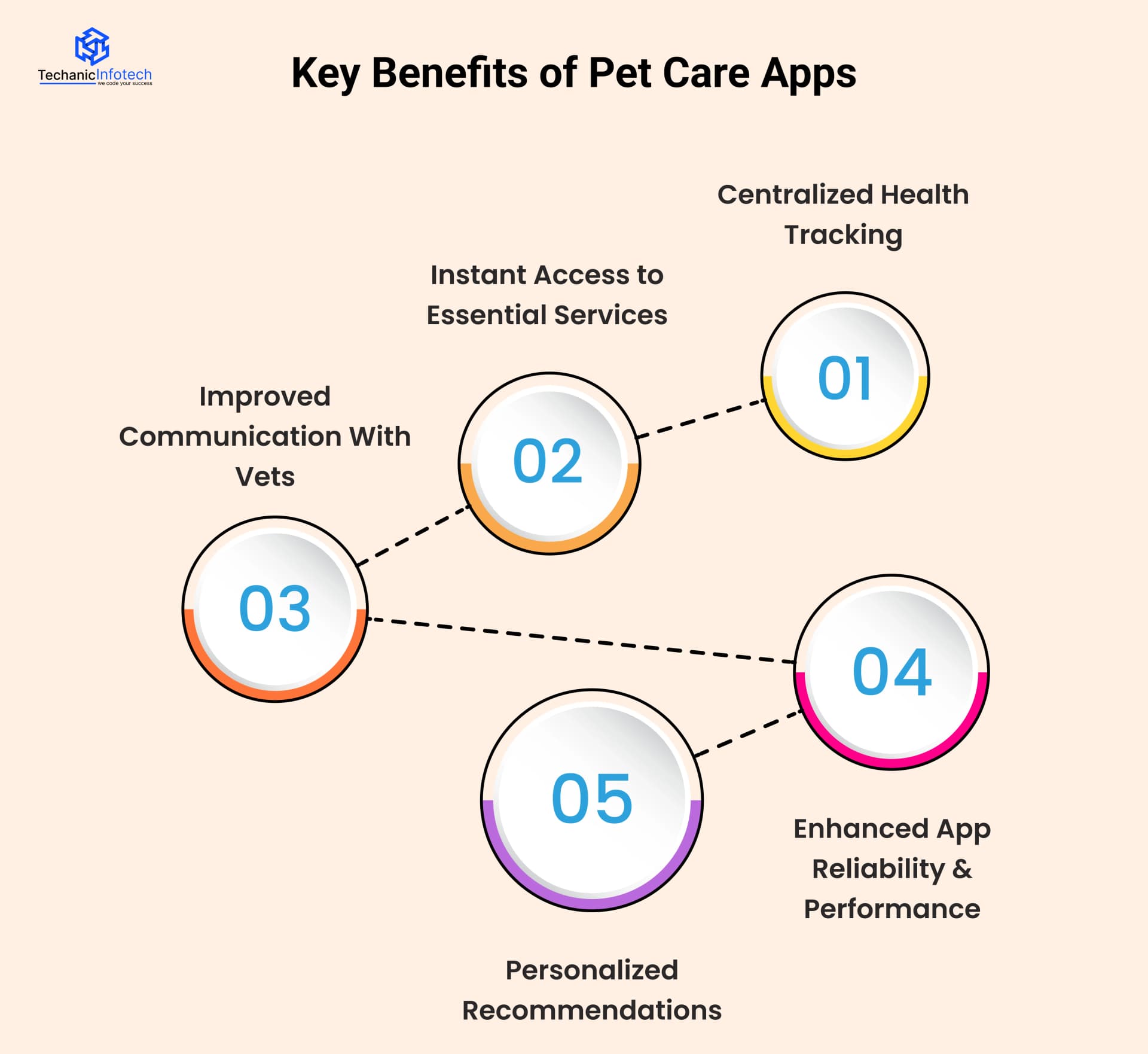
A strong pet care app development guide ensures owners can store vet records, vaccination dates, and medication reminders in one hub, making pet health management simple, organized, and stress-free.
Pet owners can quickly book grooming, walking, or vet visits. With real-time availability, secure payments, and reviews, apps streamline everyday tasks and remove the hassle of calling or scheduling manually.
Tele-vet chats, symptom checkers, and follow-up reminders make professional help more accessible. Owners can get reliable guidance without unnecessary clinic visits, saving time and reducing anxiety for both pet and parent.
A strong mobile app maintenance strategy keeps the app fast, secure, and consistently updated. This improves user trust, reduces glitches, and ensures long-term engagement.
Apps analyze behavior, breed needs, and health trends to deliver tailored tips on diet, training, and wellness. These custom insights help owners make smarter decisions for their pets’ long-term care.
Building a modern pet care app means focusing on tools that truly help owners manage daily routines.
Strong pet care app features create a smooth experience, making care, scheduling, and communication easier for every pet parent.
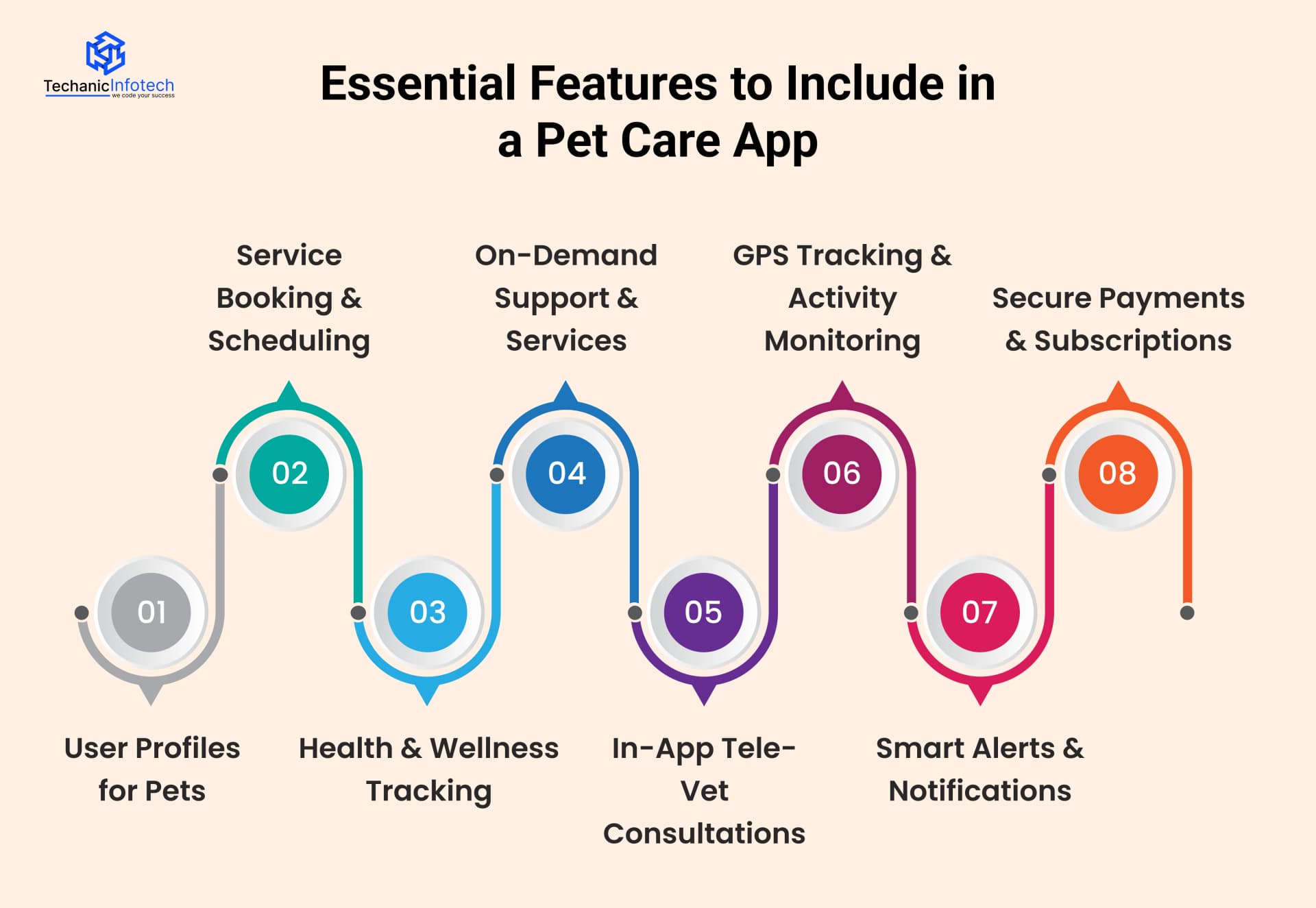
Detailed pet profiles store age, breed, medical history, and daily needs. This helps the app deliver accurate insights while keeping every important detail organized and easy to access.
A simple booking system is essential for modern mobile app features. It lets owners schedule grooming, walking, training, or vet visits instantly, with reminders that keep routines consistent.
Charts, reminders, symptom logs, and medication schedules help owners stay proactive about health. This feature builds trust by offering clear visibility into each pet’s long-term wellness patterns.
With on-demand pet care app development, users can request sitters, walkers, or emergency help anytime. Real-time matching ensures fast service when owners need convenient support.
Built-in video calls, chat options, and file sharing let owners talk to licensed vets without clinic visits. It’s a practical solution for quick questions, follow-ups, or minor health concerns.
Location tracking helps owners see where their pets are during walks or outdoor play. Activity insights also support better fitness routines and safer day-to-day care.
With evolving mobile app development trends, smart alerts keep users informed about health reminders, appointment updates, or service confirmations, delivering timely guidance without overwhelming the user.
Integrated payment gateways allow quick checkout for services, products, or memberships. Secure processing builds trust while making routine transactions fast, simple, and reliable.
A successful pet care app development project starts with a clear roadmap.
Each step shapes how well the app serves pet owners, from planning and design to smart features and long-term updates. The process below keeps everything organized, efficient, and user-focused.
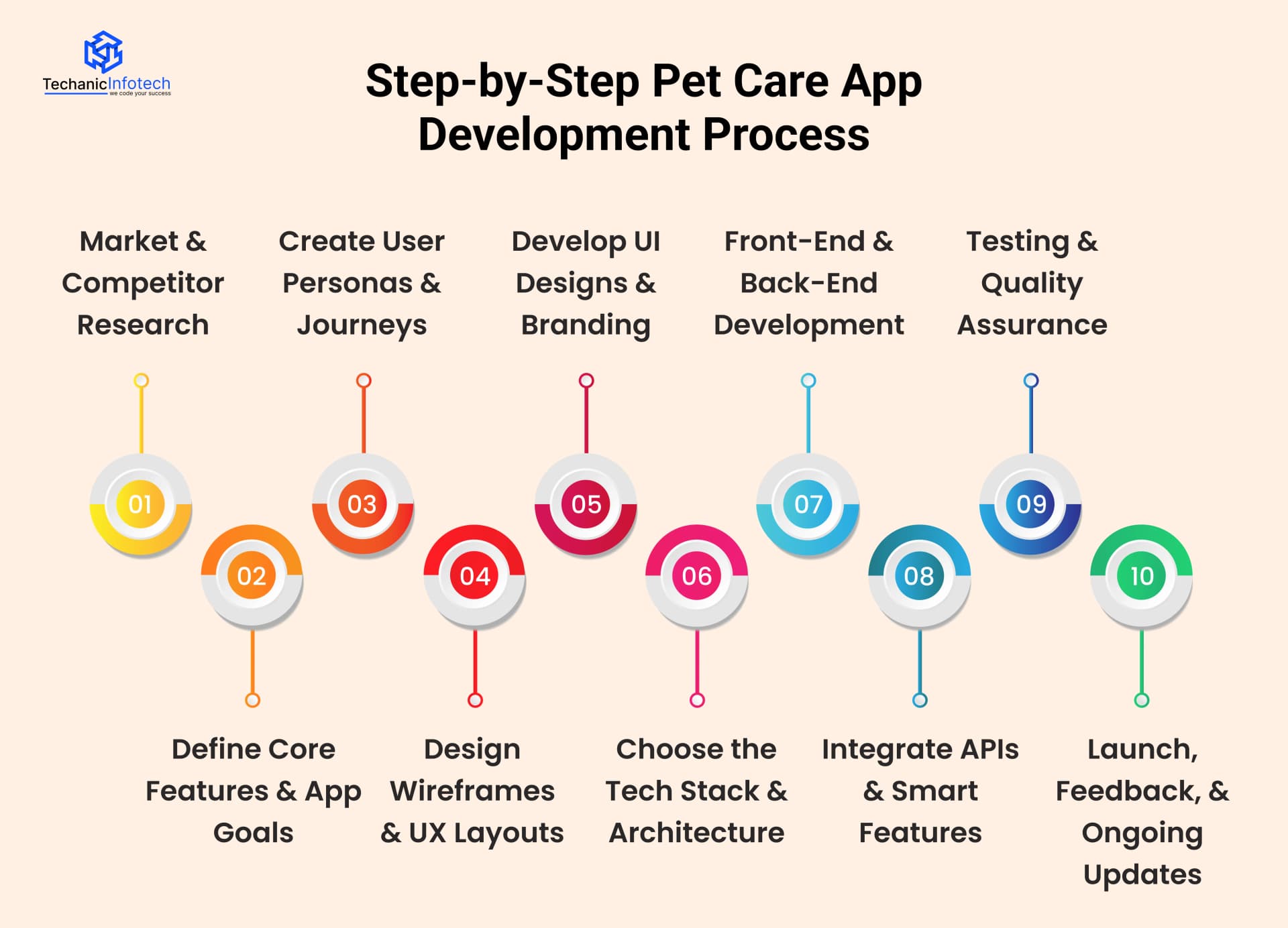
Begin by studying pet care app trends in 2026 to understand what users expect and how the industry is evolving. This helps you identify opportunity gaps, strengthen your strategy, and build an app that fits real market demand.
When outlining your app’s purpose, consider how each feature ties into your overall plan and projected pet care app development cost. Clear goals keep scope controlled and ensure every feature adds genuine value.
Build detailed personas to understand pet owners’ daily routines and digital habits. These insights guide better navigation and help map user journeys that feel smooth, predictable, and supportive across every major app action.
Wireframes set the visual foundation and user flow. Following a solid mobile app design guide ensures each screen is clean, intuitive, and aligned with modern usability standards, reducing confusion and friction for new users.
Once UX is defined, visual designers create engaging screens. With a clear pet care app development timeline, you can structure milestones for branding, color selection, typography, and design refinement without rushing critical stages.
Selecting the right backend, database, and frameworks is crucial. A strong mobile app tech stack guide helps you choose scalable technologies that support performance, integrations, and long-term app growth.
Developers build out the interface and server logic while choosing a pet care app monetization model that fits your goals.
Integrating subscriptions, bookings, or micro-payments early ensures the business side functions smoothly at launch.
Add GPS, payments, tele-vet tools, and notifications. A reliable pet care app tech stack ensures these features run efficiently, support real-time interactions, and elevate the overall user experience
Thorough QA checks for bugs, slow screens, broken interactions, or confusing flows. Testing ensures everything works properly on different devices so pet owners get a consistent, dependable experience every time.
Publish the app, monitor feedback, and plan future improvements. Aligning updates with your mobile app development timeline helps maintain quality, add new features, and keep your app competitive as user needs evolve.
The average mobile app development cost for a pet care platform in 2026 ranges from $20,000 to $130,000, depending on features, design complexity, and tech stack.
Understanding each cost component helps teams budget accurately and plan a realistic development roadmap.
|
Development Element |
Description |
Estimated Cost (USD) |
|
Discovery & Research |
Market analysis, user personas, feature planning |
$3,000–$8,000 |
|
UI/UX Design |
Wireframes, branding, user flows, interface design |
$4,000–$15,000 |
|
Core Feature Development |
User profiles, bookings, health tracking |
$12,000–$40,000 |
|
Advanced Features |
GPS, tele-vet, AI insights, smart alerts |
$10,000–$35,000 |
|
Admin Panel Development |
Dashboard for managing users, services, and data |
$5,000–$20,000 |
|
Backend Development |
Database, APIs, security, server architecture |
$8,000–$30,000 |
|
Mobile App Development |
iOS/Android builds, integrations, logic |
$12,000–$35,000 |
|
QA Testing |
Bug fixes, performance testing, usability checks |
$3,000–$12,000 |
|
Deployment |
Store submission, setup, and configuration |
$1,000–$3,000 |
|
Maintenance (1st Year) |
Updates, patches, minor feature improvements |
$4,000–$12,000 |
Partnering with experts in pet care app development gives you a competitive edge in a fast-growing market.
A skilled team brings strategy, precision, and industry experience to build a reliable, user-friendly app that pet owners can trust.
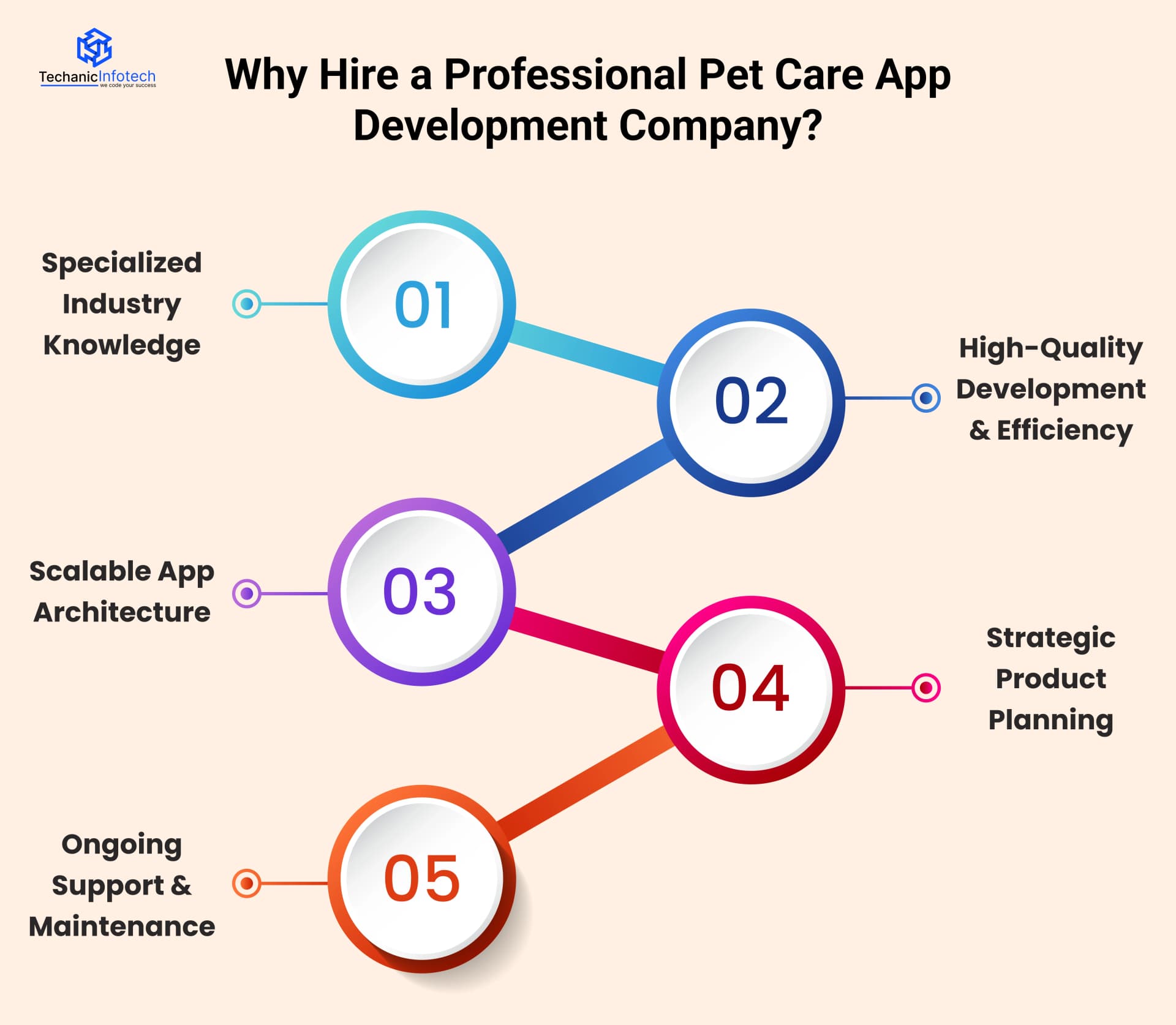
A professional team understands pet owner behavior, trending features, and user expectations.
Their experience helps you create a smarter, more competitive app that aligns with real market needs and long-term growth goals.
Top agencies follow proven workflows, ensuring fewer errors and faster delivery.
Their background in pet care mobile app development helps them build reliable features and deliver a smooth, intuitive experience for your users.
Professionals build with future growth in mind. They use scalable frameworks, clean code, and flexible infrastructure so your app can easily expand with new features, higher traffic, or additional services.
A seasoned team helps define features, roadmap, and priorities—especially during minimum viable product development.
This reduces risk, improves launch speed, and ensures you invest only in features users actually want.
Professional companies offer continuous updates, bug fixes, security enhancements, and performance improvements.
This long-term support ensures your app stays stable, secure, and competitive as the pet care industry evolves.
The pet tech industry is evolving quickly, and building a successful app requires clear planning, the right features, and a strong focus on user experience.
As you move forward with pet care app development, remember that every detail, from security to design play a role in attracting and retaining loyal users.
Pet owners want convenience, trust, and intuitive tools that make caring for their pets easier. When your app delivers all three, it stands out in a crowded market and builds long-term value for your business.
By investing in quality technology, thoughtful strategy, and ongoing improvement, you’re setting the foundation for an app that supports real needs and grows alongside the future of digital pet care.
A pet care app helps owners manage health records, book services, track wellness, and access tele-vet support. It simplifies pet routines and offers quick, convenient tools for everyday care.
A standard pet care app takes 3–6 months to develop, depending on features, design complexity, integrations, and testing. Advanced apps with AI or real-time services may require more time.
Must-have features include profiles, scheduling, health tracking, tele-vet support, GPS tracking, payments, reminders, and emergency help. These tools create a smooth experience and offer real value to pet owners.
Costs generally range from $20,000 to $130,000 based on design, features, platform choices, and integrations. Adding advanced capabilities like AI or live tracking increases overall investment.
Yes. Common revenue options include subscriptions, service commission, in-app purchases, ads, and premium features. Choosing the right monetization model helps the app grow while delivering consistent user value.


Bharat Sharma is the CTO of Techanic Infotech, bringing deep technical expertise in software architecture, mobile app development, and scalable system design. He leads the engineering team with a strong focus on innovation, performance, and security.