Auction App Development
Real-Time Bidding App Development: How Live Auctions Work on Mobile
April 27, 2026
April 27, 2026
Real-time bidding apps deliver fast, interactive auction experiences by enabling instant bid updates, improving user engagement, transparency, and overall platform efficiency in mobile-driven environments.
A strong feature set, including live notifications, secure payments, and a scalable backend, plays a crucial role in ensuring the smooth performance and long-term success of bidding platforms.
The development process requires careful planning, from market research to deployment, with the right tech stack and design approach to support real-time functionality and seamless user experience.
Costs can range from $8,000 to $80,000 depending on complexity, features, and scalability needs, making proper budgeting essential for building a high-performing application.
Addressing challenges like latency, security, and scalability with best practices ensures reliable performance, helping businesses build trustworthy and competitive real-time bidding apps.
Ever wondered how live auctions happen instantly on your phone without delays or confusion?
Mobile technology has transformed traditional bidding into fast, interactive digital experiences.
At the core of this shift is real-time bidding app development, which enables users to place, track, and win bids within seconds.
These apps rely on seamless data syncing, secure transactions, and intuitive interfaces to keep users engaged.
In this guide, we’ll break down how live auctions function on mobile devices, explore the key features behind successful bidding apps, and highlight the technologies that make real-time bidding smooth, reliable, and scalable for modern users.
Real-time bidding (RTB) powers instant, automated auctions where advertisers compete for digital space within milliseconds, making mobile auctions faster, smarter, and highly targeted for better user engagement and revenue growth.
RTB uses automated systems to buy and sell ad impressions in milliseconds, similar to stock exchanges. This speed allows mobile apps to deliver highly relevant ads instantly, improving user experience and advertiser efficiency.
The global RTB market is expected to grow from $14.37 billion in 2023 to $39.61 billion by 2030, driven by rising demand for targeted mobile advertising and programmatic solutions.
With mobile devices dominating digital access, RTB continues to scale across industries. The market is expected to hit $80.91 billion by 2035, driven by app-based bidding and programmatic technologies.
Real-time bidding app development helps businesses create fast, engaging auction platforms where users can bid instantly. It improves user experience, boosts revenue opportunities, and brings efficiency to modern mobile-based auction ecosystems.
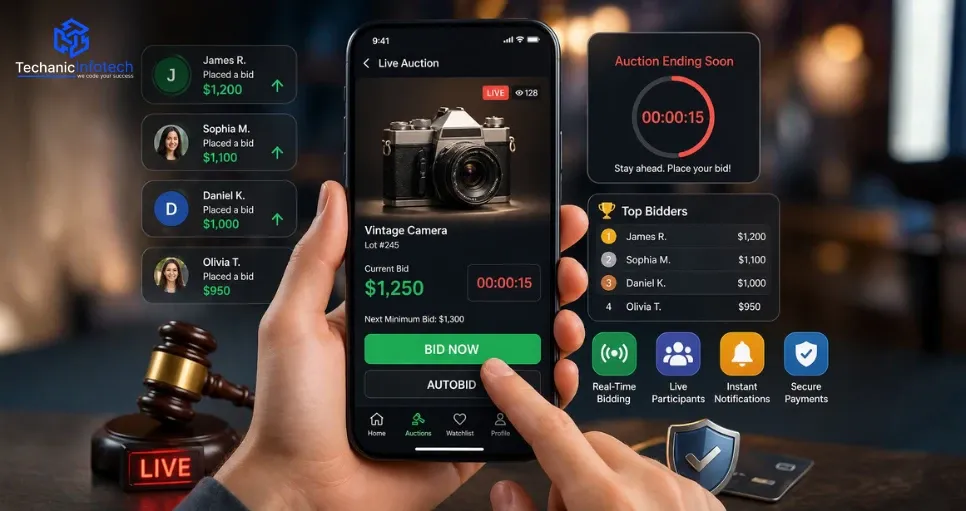
Real-time bidding apps power every live auction app by enabling instant bid placement and updates. Users see changes in real time, making auctions faster, more transparent, and reliable across mobile devices.
Interactive features like live notifications, countdown timers, and instant alerts keep users actively involved. This consistent engagement encourages repeat participation and helps businesses build long-term user loyalty.
With competitive bidding happening in real time, sellers often secure better pricing outcomes. More active users and quicker auctions drive higher conversions and help maximise overall revenue potential.
A strong real-time bidding platform can handle thousands of users and bids simultaneously without lag. This scalability allows businesses to expand into new markets and manage growing demand with ease.
These apps collect valuable user behaviour and bidding data instantly. Businesses can analyse trends, refine pricing strategies, and make smarter decisions to enhance user experience and overall auction performance.
A successful app relies on smart features that drive speed, trust, and engagement. With real-time bidding app development, these core elements ensure smooth auctions, strong performance, and a seamless mobile experience for users.
A powerful engine is essential in car auction app development, processing multiple bids instantly without delays. It ensures fair competition, accurate updates, and reliable performance during high-traffic live auction sessions.
Push notifications are crucial for any live auction mobile app, keeping users updated on bids, outbids, and deadlines. These instant alerts boost engagement and help users act quickly during ongoing auctions.
A secure payment system supports multiple methods with strong encryption. It ensures safe transactions, builds user trust, and enables smooth deposits, withdrawals, and final payments within the app.
A clean, intuitive design is key for a WebSocket auction app, ensuring real-time data flows smoothly without lag. Easy navigation and clear actions improve usability and keep users engaged throughout the bidding process.
Analytics tools track user behaviour, bidding patterns, and auction performance. Businesses can use these insights to optimise pricing strategies, improve listings, and make better data-driven decisions.
A scalable backend handles high traffic and multiple bids simultaneously. It ensures consistent performance, reduces downtime, and supports business growth as the platform expands to larger audiences.
This feature allows admins to manage listings, monitor auctions, and control bidder activity efficiently. It simplifies operations and ensures smooth handling of multiple auctions running at the same time.
Building a scalable auction platform starts with a clear roadmap. In real-time bidding app development, each step ensures performance, security, and smooth user experiences across fast-paced mobile bidding environments.
Understanding your audience and competitors is key when building a live auction mobile app. This stage defines goals, features, and revenue models, helping create a strong foundation for a successful product.
Identifying must-have features like live bidding, notifications, and secure payments ensures the app meets user expectations. It keeps development focused while supporting long-term scalability and performance.
A clean and intuitive design improves user engagement and simplifies navigation. Well-planned layouts ensure users can easily browse, bid, and interact without confusion during fast-paced auctions.
Selecting the right mobile app tech stack ensures scalability, speed, and reliability. Technologies like cloud infrastructure and real-time protocols support seamless performance across devices and high user traffic.
A strong backend powers data handling, bidding logic, and server communication. It plays a critical role in online auction development. by ensuring smooth operations, fast processing, and real-time updates without lag.
Frontend development focuses on creating responsive and interactive user interfaces. It ensures smooth navigation, fast load times, and consistent performance across different screen sizes and devices.
Partnering with a reliable mobile app development company helps integrate secure payment systems. This ensures safe transactions, multiple payment options, and a seamless checkout experience for users.
Testing ensures the app performs well under real conditions. A WebSocket auction app requires thorough checks for speed, accuracy, and stability to deliver reliable real-time bidding experiences.
Launching the app involves publishing it on platforms like iOS and Android. A strategic rollout helps attract early users, build traction, and ensure a smooth introduction to the market.
Regular updates keep the app secure, fast, and competitive. Continuous improvements based on user feedback help enhance features, fix issues, and maintain long-term performance and engagement.
Building a real-time bidding app typically costs between $8,000 and $80,000, depending on features, complexity, and scalability. Proper budgeting across development stages helps ensure performance, security, and a smooth user experience.
|
Component |
Estimated Cost (USD) |
Description |
|
Market Research & Planning |
$2,000 – $5,000 |
Includes competitor analysis, audience research, and defining business goals. |
|
UI/UX Design |
$3,000 – $8,000 |
Covers wireframes, prototypes, and user-friendly interface design. |
|
Frontend Development |
$8,000 – $20,000 |
Builds the user-facing side of the app with smooth navigation and design. |
|
Backend Development |
$10,000 – $25,000 |
Handles server logic, database management, and real-time bidding processes. |
|
Real-Time Bidding Engine |
$8,000 – $18,000 |
Core feature enabling instant bid updates and live auction functionality. |
|
Payment Gateway Integration |
$2,000 – $6,000 |
Ensures secure transactions with multiple payment options. |
|
API Integration |
$2,000 – $7,000 |
Connects third-party services like notifications, analytics, and payments. |
|
Testing & QA |
$3,000 – $8,000 |
Identifies bugs, ensures performance, and improves app reliability. |
|
Deployment & Launch |
$1,000 – $3,000 |
Covers app store setup, configuration, and release process. |
|
Maintenance & Updates (Annual) |
$5,000 – $15,000 |
Ongoing improvements, bug fixes, and feature updates post-launch. |
Building a real-time bidding app comes with technical and operational challenges. Addressing these issues with smart strategies ensures better performance, stronger security, and a seamless user experience in competitive mobile auction environments.
Managing instant bid updates across thousands of users can cause delays or inconsistencies. Ensuring accurate, real-time data flow is critical for fair and smooth auction experiences.
Best Practice: Use WebSockets or real-time protocols to maintain instant data sync and reduce latency across all connected devices.
Traffic spikes during live auctions can disrupt the mobile app development timeline and impact performance. Apps must scale efficiently to handle growing users and bidding activity without crashes.
Best Practice: Implement cloud-based infrastructure with auto-scaling to manage peak loads efficiently and maintain consistent performance.
A live auction app handles sensitive user data and transactions, increasing security risks. Protecting user information is essential to maintain trust and avoid financial or reputational damage.
Best Practice: Use end-to-end encryption, secure APIs, and compliance standards like PCI-DSS to safeguard user data and transactions.
Even minor delays in bid updates can frustrate users and affect fairness. Low latency is critical for maintaining real-time accuracy in competitive bidding environments.
Best Practice: Optimise server performance, use CDNs, and deploy edge servers closer to users to reduce latency and improve speed.
Transaction failures can interrupt auctions and reduce user trust. Smooth payment processing is essential to ensure successful bid completion and user satisfaction.
Best Practice: Integrate reliable payment gateways with backup options and real-time monitoring to prevent disruptions.
Fraudulent activities like fake bids can damage platform's credibility. Partnering with a trusted auction app development company helps implement strong security and monitoring systems.
Best Practice: Use AI-based fraud detection, user verification, and behaviour tracking to identify and block suspicious activities.
Complex interfaces or slow performance can drive users away. A smooth, intuitive experience is essential for retaining users and encouraging consistent participation.
Best Practice: Focus on clean UI/UX, fast loading speeds, and continuous improvements based on user feedback to enhance engagement.
Real-time bidding app development is transforming how auctions operate in a mobile-first world. By combining speed, transparency, and interactive experiences, these apps create highly engaging platforms for users and profitable opportunities for businesses.
From understanding core features to managing challenges and optimising costs, every step plays a crucial role in building a successful bidding app.
With the right technology, scalable infrastructure, and user-focused design, businesses can deliver seamless live auction experiences that stand out in a competitive market.
As mobile usage continues to grow, investing in a well-built real-time bidding app can drive long-term growth, stronger user engagement, and increased revenue potential.
A real-time bidding app allows users to place instant bids on items through a mobile platform. It updates bids live, creating a fast, competitive, and transparent auction experience for users.
The app uses real-time technologies like WebSockets to update bids instantly. Users place bids, the system processes them immediately, and all participants see updates without delays during the auction.
Key features include a real-time bidding engine, live notifications, secure payment integration, user-friendly interface, analytics dashboard, and scalable backend to ensure smooth performance and engagement.
The cost typically ranges from $8,000 to $80,000, depending on features, design complexity, development team, and scalability requirements for handling real-time auction traffic.
Development time usually ranges from 3 to 6 months, depending on app complexity, features, and the mobile app development timeline planned for design, testing, and deployment stages.
Technologies like WebSockets, cloud computing, APIs, and secure payment gateways are commonly used to ensure real-time updates, scalability, and seamless performance across devices.
They use encryption, secure APIs, user authentication, and compliance standards like PCI-DSS to protect user data, prevent fraud, and ensure safe financial transactions within the app.
Yes, with scalable cloud infrastructure and optimised backend systems, these apps can manage thousands of users and bids simultaneously without affecting performance or speed.
Common challenges include managing real-time data, ensuring low latency, handling traffic spikes, preventing fraud, and maintaining secure payment systems throughout the auction process.
It helps increase user engagement, improve transparency, boost revenue, and create competitive mobile auction platforms that align with growing demand for fast, interactive digital experiences.


Bharat Sharma is the CTO of Techanic Infotech, bringing deep technical expertise in software architecture, mobile app development, and scalable system design. He leads the engineering team with a strong focus on innovation, performance, and security.