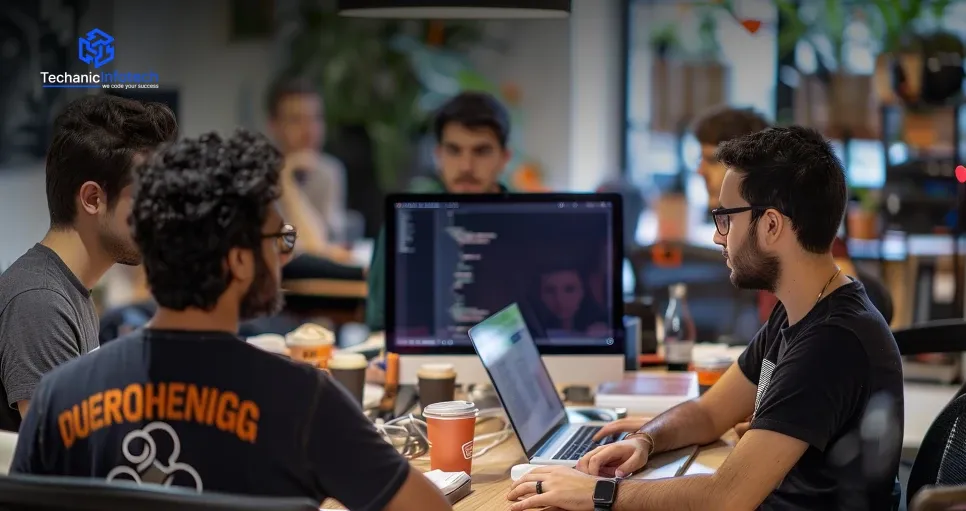
Hiring a full-stack developer for $2500 can be a practical option for startups, small businesses, or MVP projects with clearly defined goals.
While this budget may not secure a senior developer for long-term engagement, it can still deliver meaningful results when managed effectively.
Typically, you can expect a developer to handle basic frontend and backend tasks, build a simple web application, fix bugs, or enhance an existing product.
The key lies in setting realistic expectations, prioritizing essential features, and working with developers from cost-effective regions.
With proper planning, clear communication, and a focused scope, $2500 can go a long way in bringing your idea to life without compromising on quality.
Choosing the right full-stack developer requires balancing technical expertise and problem-solving ability.
A skilled developer should efficiently manage both frontend and backend while adapting to modern technologies and workflows.
A full-stack developer must be proficient in frontend technologies like HTML, CSS, and JavaScript.
Knowledge of frameworks such as React or Vue helps create responsive, interactive user interfaces that enhance user experience and engagement.
Backend skills are essential for handling databases, APIs, and server logic.
Familiarity with Node.js, Python, or PHP ensures the developer can build scalable systems and manage data processing effectively across applications.
Understanding databases like MySQL, PostgreSQL, or MongoDB is crucial.
Developers should design efficient schemas, optimize queries, and ensure data integrity, which directly impacts application performance and reliability.
Experience with Git allows developers to track code changes, collaborate with teams, and manage deployments efficiently.
It ensures smooth workflows and reduces the risk of losing important code during mobile app development cycles.
A strong developer should be able to debug issues, optimize performance, and find efficient solutions.
Analytical thinking helps in overcoming technical challenges and delivering stable, high-quality applications.
Clear communication is vital when working remotely or in teams.
Developers must understand requirements, provide updates, and collaborate effectively to ensure project success within budget and timeline constraints.
The cost of hiring a full-stack developer varies widely based on several critical factors. Understanding these influences enables businesses to allocate budgets effectively and select the most suitable development expertise.
A developer’s experience plays a crucial role in determining the mobile app development cost, including the hiring of developers. Junior developers are more budget-friendly but often require supervision and training.
Senior developers command higher rates due to their deep expertise, efficiency, and ability to independently handle complex, high-stakes projects with precision.
The complexity of a project significantly impacts overall development costs. Basic websites with minimal functionality are relatively inexpensive.
Advanced applications involving multiple integrations, real-time features, secure payment gateways, and custom dashboards demand more time, expertise, and financial investment.
Geographical location is a major pricing determinant. Developers based in regions like Asia or Eastern Europe typically offer more competitive rates.
Those in North America or Western Europe charge premium prices due to higher living costs and market demand.
The choice of mobile app technology stack directly affects development costs.
Specialized or in-demand technologies such as modern frameworks, cloud platforms, and scalable architectures often require highly skilled developers.
They charge higher rates compared to those working with more traditional or basic tools.
Tight deadlines can significantly increase costs.
Projects requiring rapid delivery often involve extended working hours or reprioritization of tasks, leading developers to charge premium rates to accommodate urgent timelines without compromising quality.
Freelancers generally offer cost-effective solutions with flexibility, whereas agencies provide comprehensive services, structured workflows, and reliability at a higher cost.
In-house developers, while expensive, ensure long-term consistency and dedicated focus.
Hiring within a limited budget requires smart strategies.
By focusing on efficiency, scope control, and the right hiring channels, you can successfully find a capable developer within $2500.
Clearly articulate the project’s core objectives and must-have mobile app features.
Eliminate non-essential elements to prevent scope creep, enabling the developer to deliver high-quality, impactful results efficiently within your $2,500 budget.
Freelancers often provide expert-level work at a fraction of agency costs.
Platforms like Upwork and Fiverr connect you with highly skilled developers who can deliver professional-grade solutions without exceeding your financial limits.
Geographic location significantly influences developer rates.
Talented professionals from regions such as India, Eastern Europe, or Southeast Asia frequently offer exceptional quality at a fraction of the cost of developers in North America or Western Europe.
Maximize efficiency by using templates, frameworks, and pre-existing components instead of building everything from scratch.
This approach reduces development time and expenses while still producing functional, polished, and visually appealing applications.
Focus on delivering a lean MVP with only the most essential, high-impact features.
This strategy allows for rapid launch, real-world user testing, and iterative improvements without overspending upfront.
Divide the project into clearly defined milestones and release payments upon completion.
This approach ensures accountability, maintains tight budget control, reduces risk, and motivates developers to consistently deliver high-quality work on time.
Strategically allocating a $2,500 budget ensures maximum efficiency and output.
Thoughtful distribution across planning, development, testing, deployment, and mobile app maintenance guarantees that every critical aspect of your project is covered effectively.
Allocate around $300 for planning, requirement analysis, and wireframing. This foundational phase clarifies project objectives and reduces miscommunication.
It also provides the developer with clear specifications, ensuring a smooth and efficient MVP development process from the very start.
Dedicate approximately $700 to building a polished, responsive, and user-friendly interface.
This covers implementing mobile app design elements, ensuring cross-device responsiveness, and enhancing user experience, which directly impacts engagement and satisfaction for your application’s end-users.
Invest about $800 in backend development, including server setup, database integration, and API creation.
This portion ensures your application operates securely, processes data efficiently, and delivers scalable, high-performance functionality to support core operations.
Set aside $300 for comprehensive mobile app testing, debugging, and performance optimization.
This ensures your application is stable, error-free, and functions smoothly, providing users with a seamless experience while minimizing post-launch technical issues.
Budget roughly $200 for hosting, domain registration, and deployment tasks.
Proper allocation here guarantees your application is live, accessible, and fully functional online, ensuring a professional launch without unexpected technical difficulties.
Reserve around $200 as a buffer for unexpected issues or minor post-launch updates.
This contingency allows quick fixes, small improvements, and performance tweaks without exceeding your overall $2,500 budget, maintaining application stability and user satisfaction.
Hourly rates for full-stack developers differ worldwide due to experience, local demand, and living costs.
Understanding these regional variations helps businesses hire cost-effectively without compromising quality, technical expertise, or project timelines.
Developers in the US and Canada typically charge between $60 and $150 per hour due to high demand and elevated living costs.
They offer extensive expertise, handle complex projects with precision, and adhere to top-tier coding standards, though smaller budgets like $2,500 may be challenging to accommodate.
In countries such as Germany, the UK, and France, full-stack developers generally charge $50 to $120 per hour.
They deliver reliable, high-quality solutions with strong technical knowledge and professional practices, making them suitable for medium to high-budget projects, but still relatively costly for small-scale startups.
Regions like Ukraine, Poland, and Romania offer rates ranging from $25 to $70 per hour.
Developers here combine affordability with advanced skills, follow modern development standards, and are experienced in delivering robust, scalable applications, making them ideal for startups or mid-budget projects.
Full-stack developers in India often charge between $15 and $40 per hour.
Despite these affordable rates, professionals maintain high technical competence, delivering quality work on schedule.
Companies like Techanic Infotech provide skilled developers who offer reliable, cost-effective solutions, making India a preferred destination for budget-conscious businesses seeking maximum value without compromising on expertise.
In countries like the Philippines, Vietnam, and Indonesia, hourly rates typically range from $20 to $50.
Developers provide solid technical skills at competitive prices, making them well-suited for small to medium-sized projects that require reliable, collaborative, and cost-effective development.
Developers from Brazil, Argentina, and Mexico usually charge between $25 and $60 per hour.
Along with competitive pricing, their time zone alignment with North American clients facilitates communication, making Latin America an increasingly popular choice for remote, skilled development work.
Avoiding common hiring mistakes can save significant time, money, and frustration.
Being aware of these pitfalls helps ensure you select the right developer, maintain smooth workflows, and achieve high-quality results within your project scope and budget constraints.
Vague or incomplete project goals often lead to confusion, delays, and rework. Providing detailed, structured requirements, including feature specifications, timelines, and expected outcomes.
It ensures the developer clearly understands your expectations and can deliver accurate, efficient, and high-quality results.
Selecting the lowest-cost developer can compromise quality and lead to long-term issues.
It’s important to balance cost with proven experience, technical skills, and reliability, ensuring that the development work is efficient, scalable, and meets your project’s standards.
Failing to review a developer’s past projects can result in poor hiring decisions.
Always examine portfolios, references, and previous work to evaluate capabilities, expertise, and compatibility with your project requirements, ensuring they can deliver the desired outcomes effectively.
Poor communication creates misunderstandings, delays, and scope creep.
Establishing regular updates, clear channels, and prompt responses throughout the development process ensures alignment, transparency, and that any issues are addressed quickly, leading to a smoother project lifecycle.
Starting a project without a formal contract can lead to disputes, missed deadlines, or misaligned expectations.
Clearly define terms, deliverables, timelines, and payment schedules in writing to protect both parties and ensure accountability throughout the development process.
Expecting too many features or rapid delivery within a limited budget can overwhelm developers, causing burnout, delays, or incomplete work.
Maintain realistic expectations aligned with available resources, prioritizing core features to ensure quality delivery without compromising developer efficiency.
Hiring a full-stack developer within a $2500 budget is entirely possible when approached strategically.
By focusing on essential features, choosing cost-effective regions, and clearly defining project requirements, businesses can achieve impressive results without overspending.
Understanding the factors that influence developer costs, such as experience, location, and project complexity, helps in making informed decisions.
Additionally, avoiding common hiring mistakes ensures smoother collaboration and better outcomes. Budget allocation plays a critical role in maximizing value, allowing you to balance development, testing, and deployment effectively.
Ultimately, success lies in smart planning, clear communication, and realistic expectations, enabling you to build a functional and scalable product even with limited financial resources.
They can build a simple web application, handle basic frontend and backend tasks, fix bugs, or enhance an existing product efficiently within budget constraints.
HTML, CSS, JavaScript, backend languages like Node.js/PHP/Python, database management, Git, problem-solving, and communication for effective development and collaboration on small-scale projects.
Rates vary by region: $15–$40/hour in India, $25–$70/hour in Eastern Europe, $50–$120/hour in Western Europe, $60–$150/hour in North America, influencing project scope and duration.
Focus on MVPs, core features only, freelancers over agencies, pre-built frameworks, and milestone-based payments to maximize efficiency and control costs.
Avoid unclear requirements, choosing solely on price, skipping portfolios, poor communication, missing contracts, and overloading the developer beyond budget capacity.
Use milestone-based payments tied to deliverables, with a clear written agreement outlining scope, timelines, and responsibilities to ensure accountability and risk reduction.
Provide clear requirements, maintain frequent communication, track milestone progress, and prioritize essential features to ensure work is delivered efficiently and meets expectations.
Consider regions like India, Eastern Europe, or Southeast Asia, where developers offer strong skills at lower rates while maintaining project quality.
Focus on a lean MVP, use pre-built tools, hire from affordable regions, and maintain realistic deadlines with clear communication to achieve optimal results.


Abhishek Jangid is the CEO of Techanic Infotech, with extensive experience in mobile app and web development. He specializes in helping businesses turn innovative ideas into scalable digital solutions through strategic planning and modern technology.