Job Portal App Development
How to Create a Job Portal Like Indeed: A Complete Development Guide
January 23, 2026
January 23, 2026
The rapid growth of digital recruitment has made Indeed app development and job portal app development highly profitable business opportunities.
Companies across industries are shifting toward online job portal app development to streamline hiring and connect employers with qualified candidates efficiently.
Building a job portal app like Indeed requires careful planning, robust technology, and user-centric design.
From employer dashboards to AI-powered job matching, modern recruitment platforms demand advanced functionality and seamless performance.
Whether you are a startup, enterprise, or development company, understanding the development process is essential.
This guide covers everything from features and development steps to cost, challenges, and best practices, helping you confidently invest in Indeed job portal app development.
A successful job portal like Indeed requires essential job portal app features that enhance usability, engagement, and recruitment efficiency.
The following functionalities ensure a seamless experience for both job seekers and employers.
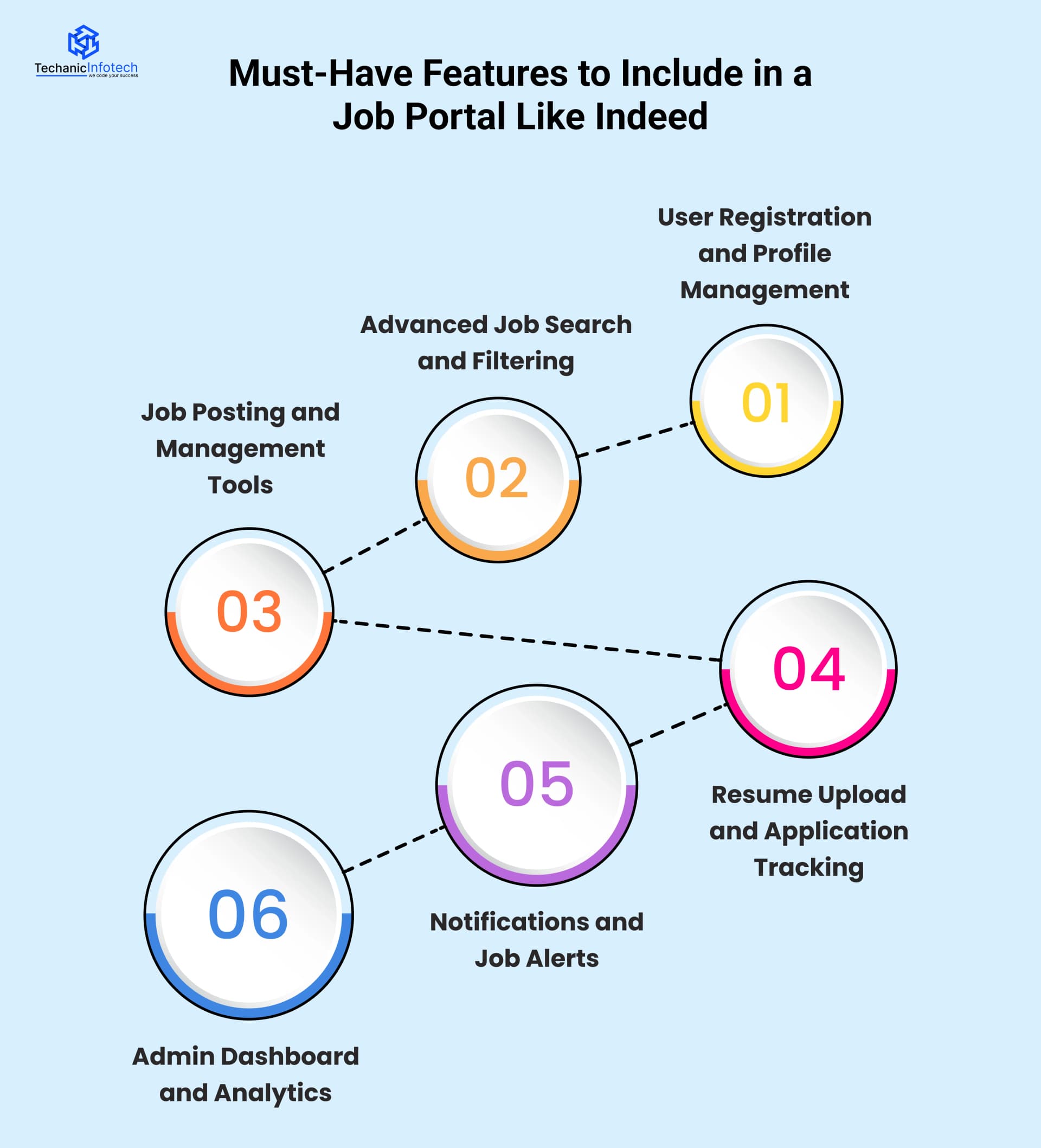
User accounts allow job seekers and employers to manage personalized profiles.
Candidates can showcase skills and resumes, while employers manage company details and job listings.
Streamlined registration enhances accessibility and user trust. Well-structured profiles improve matching accuracy, benefiting both parties.
This feature supports expertise-driven hiring decisions, improving overall engagement and search visibility.
Advanced search functionality enables users to find relevant jobs efficiently.
Filters such as location, experience, salary, and job type reduce search time and improve satisfaction.
Accurate search algorithms demonstrate technical expertise and enhance usability.
Effective filtering improves engagement metrics, which positively influence SEO performance and Google indexing.
Employers require efficient tools to create, edit, and manage job postings.
A structured job management system improves recruitment workflows and reduces hiring delays.
Clear job descriptions also enhance search engine visibility. This feature reflects platform authority by enabling professional hiring practices and improving employer retention.
Resume upload and application tracking improve transparency and efficiency. Candidates can monitor application status while employers review applications systematically.
This organized process builds user trust and reduces friction. A smooth application flow increases conversions and aligns with Google’s user-first content principles.
Automated alerts notify users about relevant jobs, application updates, and recruiter responses.
Timely communication improves engagement and retention. Personalized alerts enhance user experience and demonstrate platform reliability.
Active user engagement is a strong indicator of helpful content and platform relevance.
An admin dashboard allows platform owners to manage users, content, and performance metrics.
Analytics provide actionable insights into user behavior and trends. Data-driven improvements demonstrate expertise and authority.
Effective moderation and reporting ensure content quality and platform integrity, supporting long-term SEO success.
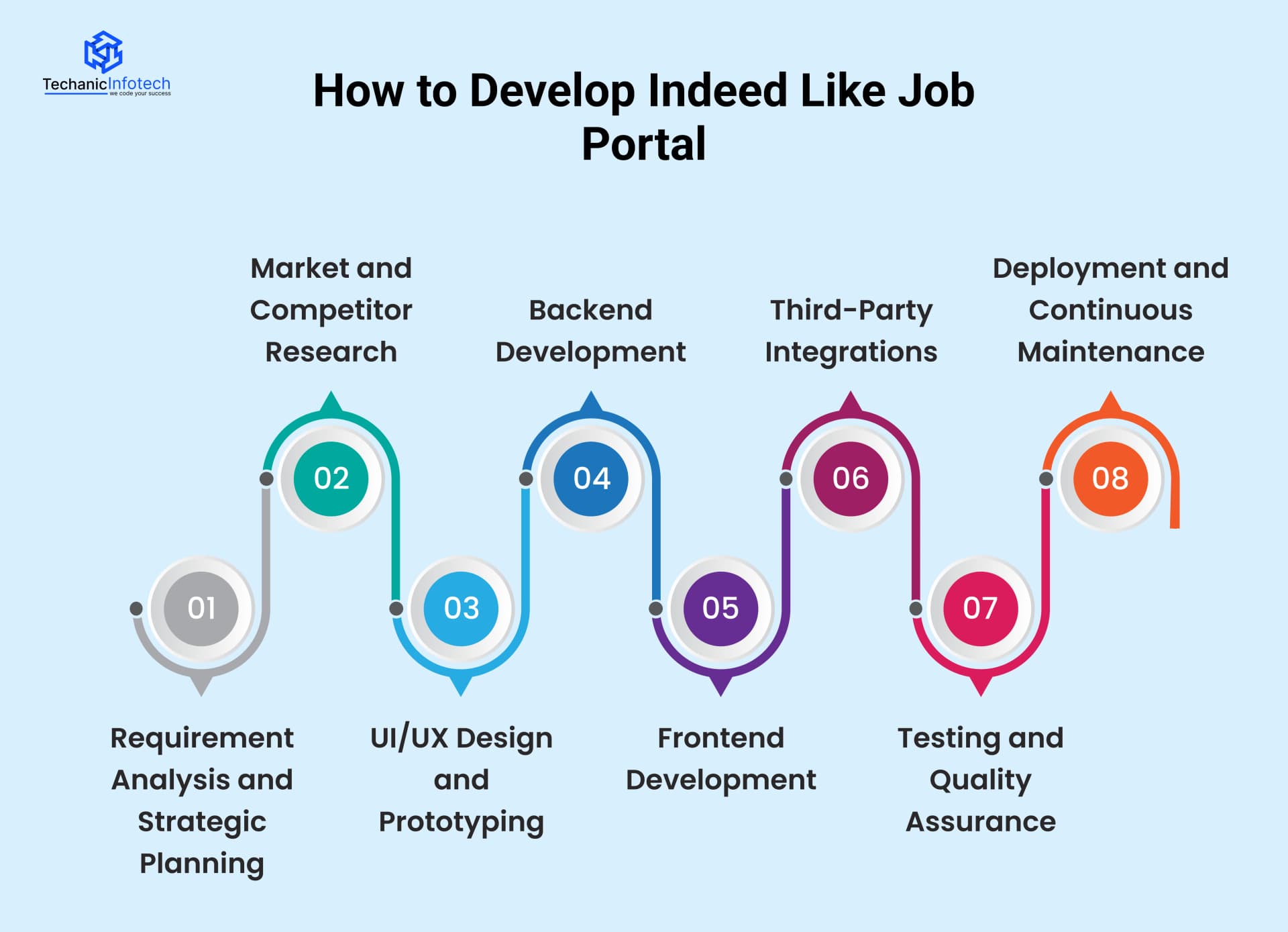
Developing a job portal requires a systematic approach, from planning and market research to design, development, and deployment.
Following a step-by-step process and job portal development guide ensures a scalable, user-friendly, and feature-rich platform that meets both job seekers’ and employers’ needs.
This foundational step defines goals, target users, features, and technical requirements.
Clear planning reduces development risks and ensures alignment with business objectives. Well-documented requirements demonstrate professionalism and expertise.
Strategic planning improves development efficiency and ensures the final product meets real user needs.
Analyzing competitors helps identify best practices, gaps, and opportunities. Market research ensures the platform offers unique value.
Understanding user pain points enhances content relevance and differentiation.
This research-driven approach strengthens authority and improves the platform’s positioning in search results.
Designing intuitive wireframes and prototypes by following the proper job portal app design guide ensures usability before development begins. User feedback improves design accuracy.
A well-designed interface enhances accessibility and engagement. Strong UI/UX signals expertise and improves behavioral SEO metrics such as dwell time and interaction rates.
Backend systems manage data, authentication, job listings, and applications. Secure and scalable backend architecture ensures reliability and performance.
Choosing the right technologies reflects technical expertise. A robust backend supports seamless user interactions and long-term scalability.
Frontend development brings designs to life using responsive and accessible technologies.
Clean, fast-loading interfaces improve user experience and search engine performance.
Consistent design implementation enhances credibility and usability across devices.
Integrations such as payment gateways, email services, and analytics tools enhance functionality.
Reliable third-party tools save AI-powered job portal development time and improve accuracy. Proper integration ensures secure data flow and professional operations.
Comprehensive testing identifies bugs, performance issues, and security vulnerabilities. Quality assurance ensures reliability and usability.
A thoroughly tested platform reflects professionalism and builds user trust. Error-free experiences align with Google’s quality standards.
After deployment, ongoing monitoring ensures performance, security, and relevance. Regular updates improve features and fix issues.
User feedback guides continuous improvement. Long-term maintenance demonstrates commitment, authority, and trustworthiness, key factors for sustainable SEO success.
Creating a job portal like Indeed requires careful planning and strategy.
The following are the key considerations helpful in FlexJobs-like app development by ensuring the platform is reliable, engaging, and market-ready.
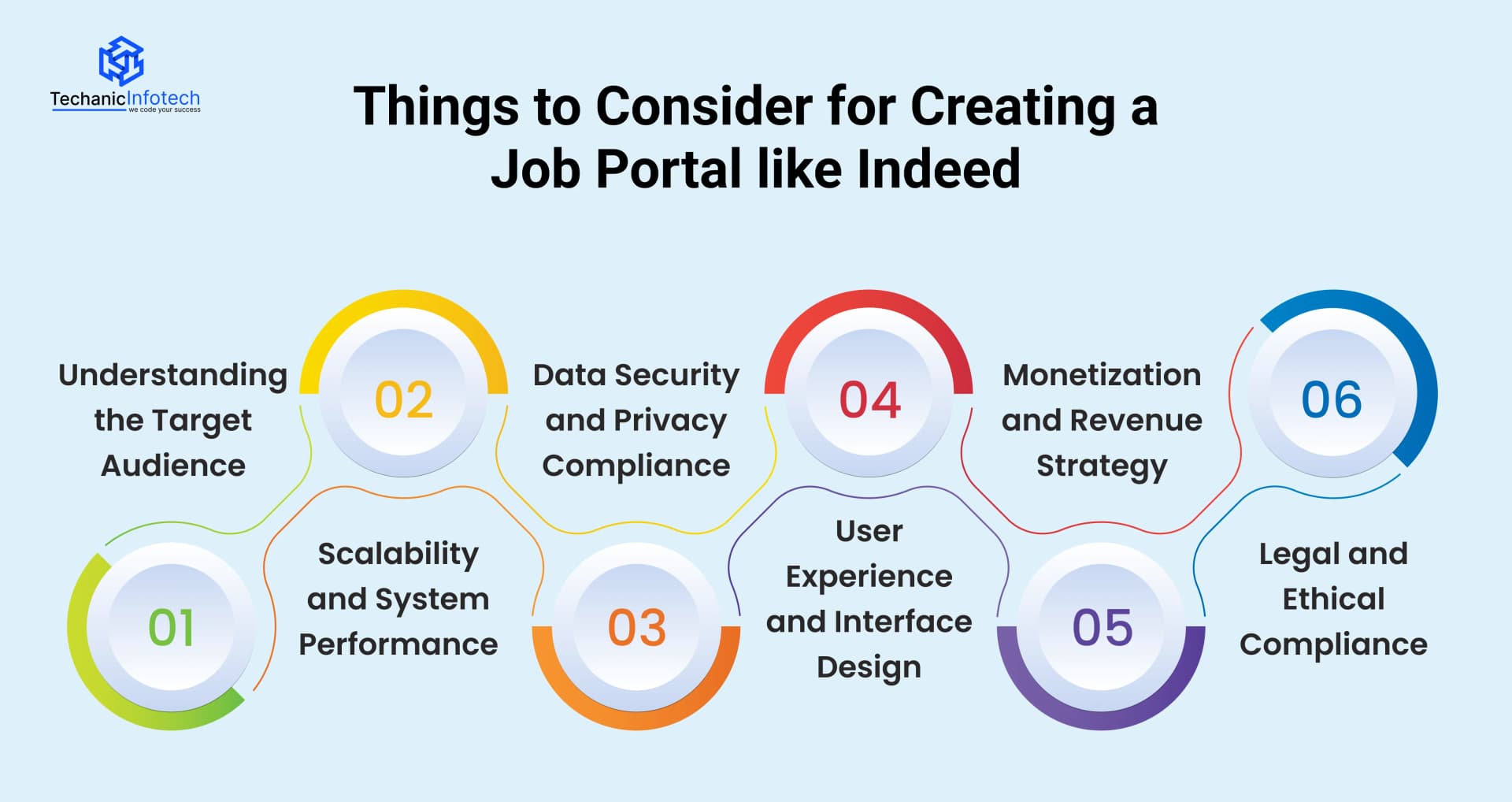
A successful job portal begins with a clear understanding of its users, including job seekers, employers, and recruiters.
Each group has unique expectations, such as ease of job discovery or efficient candidate management.
Conducting user research ensures the platform delivers relevant features and content.
Aligning design and functionality with real user needs improves trust, engagement, and credibility, which are essential signals for Google’s Helpful Content System and long-term platform success.
Job portals must be built with scalability in mind to accommodate increasing users, job postings, and application data.
Poor performance can negatively impact user experience and search engine rankings. Using scalable architecture, optimized databases, and cloud infrastructure ensures fast load times and reliability.
High-performing platforms demonstrate technical expertise and provide a positive user experience, aligning with SEO best practices and Google’s emphasis on user satisfaction.
Job portals process sensitive personal and professional information, making data security a top priority.
Implementing secure authentication, encryption, and compliance with data protection regulations enhances trustworthiness and reliability.
Secure platforms build user confidence and authority, fulfilling Google’s E-E-A-T principles while protecting the platform from legal and reputational risks.
User-friendly design plays a crucial role in engagement and retention. An intuitive interface helps users navigate job searches, applications, and postings efficiently.
Responsive design ensures accessibility across devices. A seamless experience reduces bounce rates and increases time on site, key SEO indicators.
Prioritizing usability demonstrates expertise and provides genuine value, supporting Google’s helpful content guidelines.
A clear monetization strategy ensures the platform’s sustainability without compromising user experience.
Common models include premium job listings, subscriptions, and advertising. Transparency in pricing builds trust with employers.
Monetization should enhance value rather than disrupt usability. Thoughtful revenue planning reflects business expertise and ensures the platform remains competitive, reliable, and scalable over time.
Compliance with employment laws, data protection standards, and ethical hiring practices is essential.
This includes equal opportunity policies, terms of service, and user agreements. Legal compliance protects both users and platform owners from disputes.
Demonstrating adherence to regulations strengthens authority and trust, reinforcing the platform’s credibility and alignment with Google’s quality and safety standards.
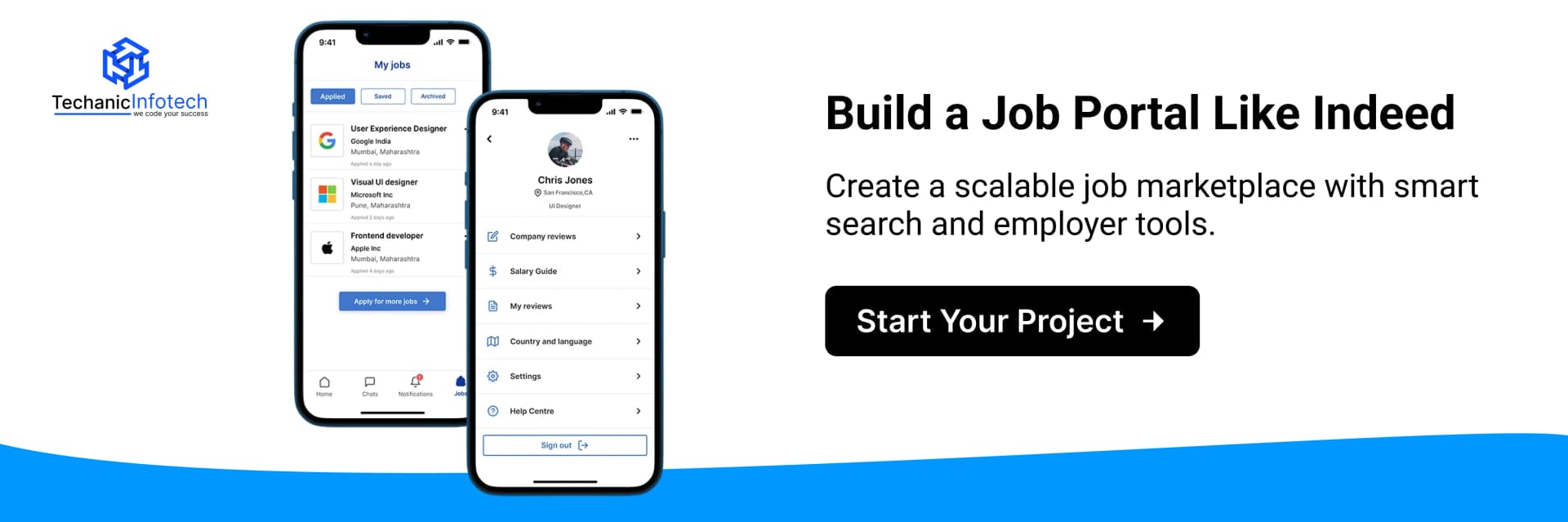
Building a job portal app like Indeed requires careful planning, robust features, and scalable technology.
The cost to build a job portal app varies based on complexity, platform, and integrations, ranging from $20,000 for a basic MVP to $120,000+ for advanced solutions.
A basic job portal is ideal for startups or small businesses validating their idea.
It includes essential features such as user registration, job posting, basic job search, resume upload, and a simple admin panel.
The design is usually template-based with minimal customization. Development focuses on core functionality rather than scalability or advanced automation.
This cost range is suitable for MVP development, allowing businesses to enter the market quickly while keeping initial investment low.
A standard job portal offers enhanced functionality and improved user experience.
It includes advanced search filters, job alerts, employer dashboards, application tracking, and payment integration for premium listings.
The UI/UX is more refined and mobile-responsive. Backend systems are moderately scalable to handle increased traffic.
This option is suitable for growing businesses aiming to monetize the platform and compete effectively while maintaining performance, security, and usability standards.
An advanced job portal is a fully scalable, enterprise-level solution similar to Indeed.
It includes AI-based job matching, resume parsing, real-time notifications, analytics dashboards, and high-level security compliance.
The system supports large user volumes, complex search algorithms, and seamless integrations.
Custom UI/UX, robust backend architecture, and performance optimization significantly increase development effort.
This cost range is ideal for businesses targeting large-scale operations and long-term growth.
The following table shows the factors that influence the cost of creating a job portal like Indeed.
|
Cost Factor |
Impact on Cost |
Estimated Price Allocation |
|
Feature Complexity |
High |
$4,000 |
|
UI/UX Design Level |
Medium–High |
$2,500 |
|
Platform Type |
High |
$3,000 |
|
Technology Stack |
Medium |
$1,500 |
|
Backend Scalability |
High |
$3,000 |
|
Third-Party Integrations |
Medium |
$1,500 |
|
Security & Compliance |
High |
$1,500 |
|
Development Team Location |
Medium |
$1,000 |
|
Testing & Quality Assurance |
Medium |
$1,000 |
|
Post-Launch Maintenance |
Medium |
$1,000 |
Techanic Infotech is a trusted job portal development company with proven expertise in Indeed clone app development and recruitment app development.
Our team specializes in building scalable, AI-driven job portals tailored to your business goals.
We focus on user-centric design, robust architecture, and seamless performance to deliver high-quality solutions.
From requirement analysis to deployment, Techanic Infotech follows a transparent and agile development approach.
We integrate advanced features such as AI-powered job matching, resume parsing, secure payments, and analytics dashboards. Our commitment to security, scalability, and innovation ensures long-term success.
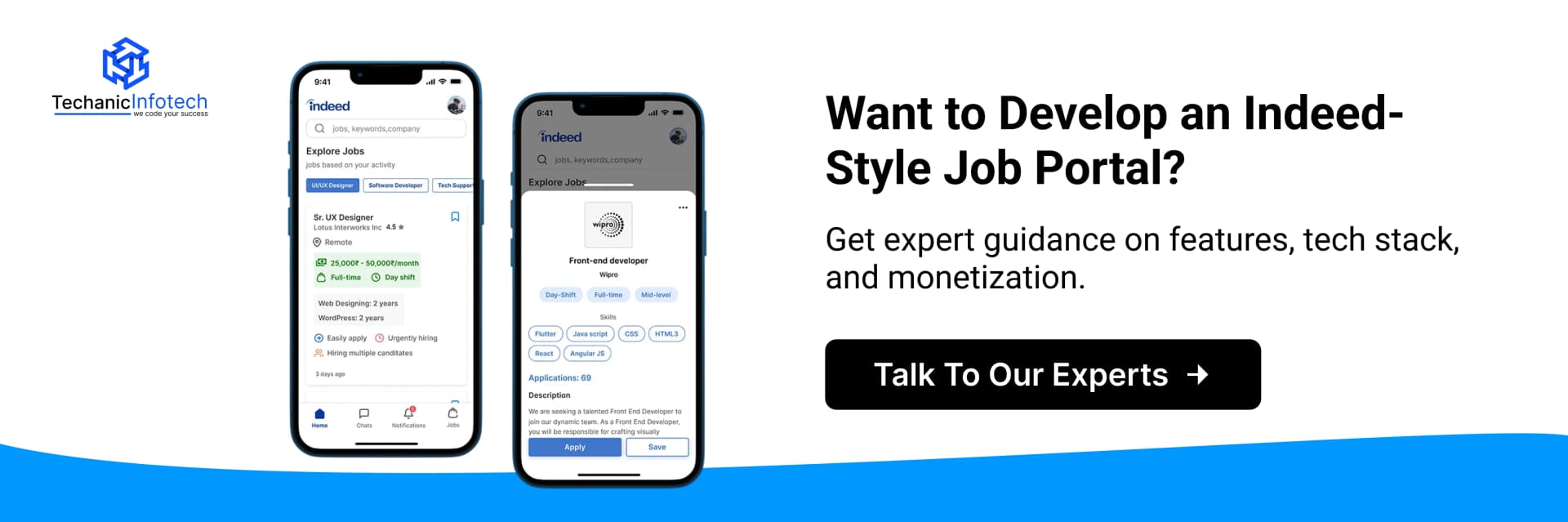
Building a job portal app like Indeed is a strategic investment in the future of digital recruitment.
With the right features, technology stack, and development partner, businesses can create scalable platforms that connect talent with opportunities efficiently.
From AI-powered matching to seamless employer dashboards, modern job portal app development goes beyond simple listings.
Understanding development costs, challenges, and best practices ensures informed decision-making and long-term success.
Whether you aim to launch a niche platform or compete with industry leaders, following a structured job portal development guide is essential.
By partnering with an experienced company like Techanic Infotech, you gain access to innovative solutions, technical expertise, and ongoing support.
A well-built job portal not only enhances hiring efficiency but also creates sustainable revenue opportunities in the growing recruitment technology market.
Developing a full-featured job portal app typically takes 4–8 months, depending on complexity, platforms, design, backend architecture, AI features, integrations, and team size.
The minimum cost for a basic job portal app starts at $20,000, covering essential features, simple UI/UX, basic backend, and limited scalability for MVP deployment.
Yes, AI can be integrated for job matching, candidate recommendations, resume parsing, and predictive analytics, improving user experience and increasing application-to-job relevance.
Job portal apps perform best on web, Android, and iOS platforms. Web ensures accessibility, while mobile apps improve engagement and real-time notifications for users on the go.
Job portals generate revenue through premium job postings, subscription plans, featured listings, targeted ads, recruitment services, and partnerships with employers or training providers.


Bharat Sharma is the CTO of Techanic Infotech, bringing deep technical expertise in software architecture, mobile app development, and scalable system design. He leads the engineering team with a strong focus on innovation, performance, and security.