Healthcare App Development
Ambulance Booking App Development: Features, Cost, Technology & Key Considerations
February 17, 2026
February 17, 2026
Developing an ambulance booking app requires clear planning, healthcare compliance, and strong technical architecture.
Start with market research to understand user needs and emergency response gaps. Define features like real-time GPS tracking, instant booking, multiple ambulance types, and secure payments.
Choose a scalable tech stack for Android and iOS platforms. Build separate panels for users, drivers, and administrators.
Integrate maps, notifications, and secure cloud storage. Ensure compliance with healthcare data regulations and local emergency laws.
An ambulance booking app is a digital platform that allows users to request emergency or non-emergency ambulance services through smartphones.
It connects patients with nearby ambulance providers in real time using GPS tracking. Users can select ambulance types such as Basic Life Support (BLS), Advanced Life Support (ALS), or ICU-equipped vehicles.
The app enables quick booking, fare estimation, digital payments, and live tracking of ambulance arrival. Hospitals and drivers receive instant notifications for faster response.
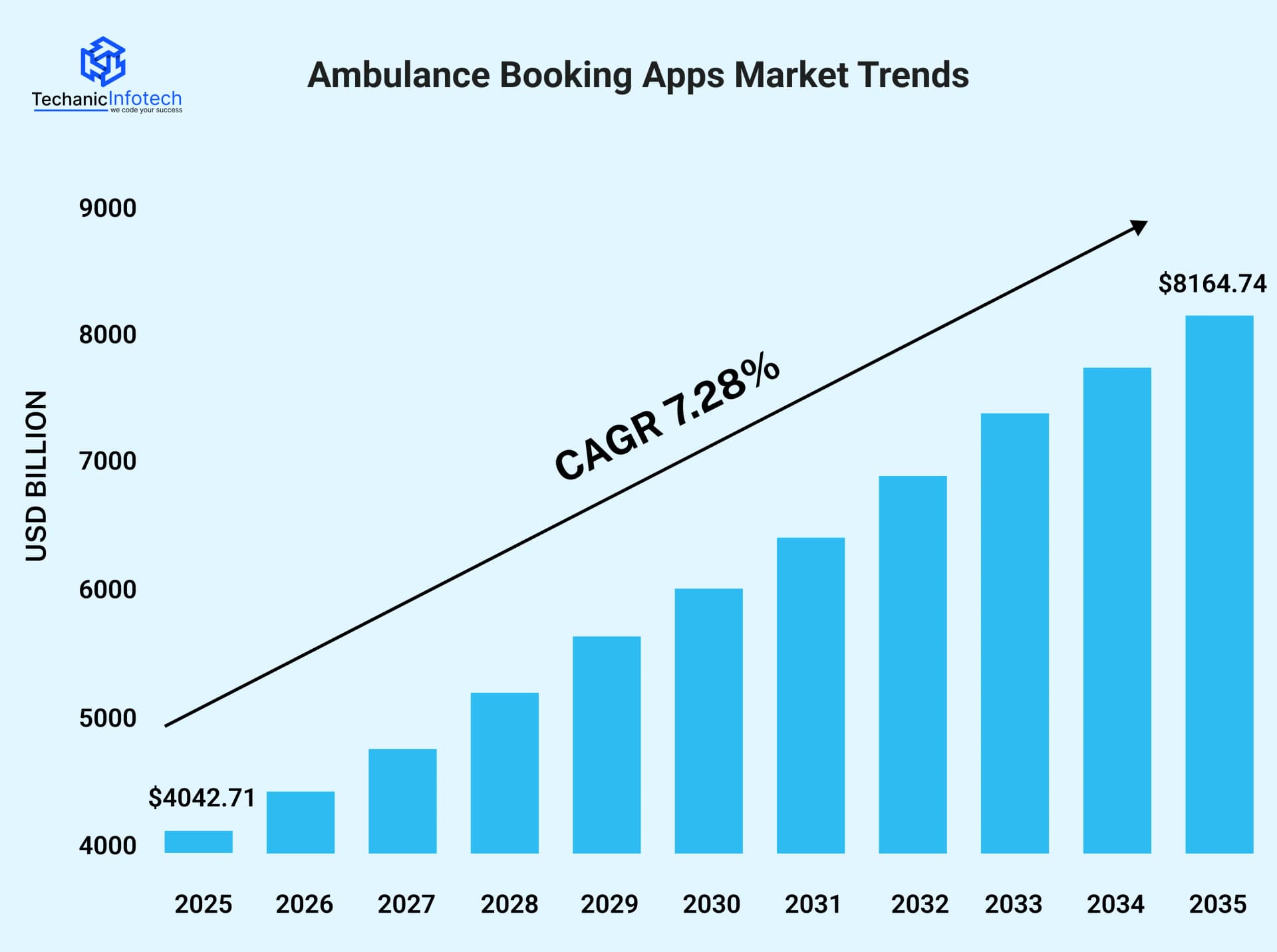
According to Market Research Future analysis, the Ambulance Market Size was valued at 3768.3 USD Million in 2024.
The Ambulance industry is anticipated to expand to USD 4042.71 Million in 2025, reflecting steady growth momentum.
The market is projected to reach USD 8164.74 Million by 2035, indicating substantial long-term expansion.
The industry is expected to register a compound annual growth rate (CAGR) of 7.28% during the forecast period 2025 - 2035, demonstrating consistent and sustained market growth.
Ambulance booking app development streamlines emergency medical services, offering mobile app features like real-time tracking and instant booking.
It also includes patient details management and seamless communication, ensuring faster response and improved healthcare accessibility.
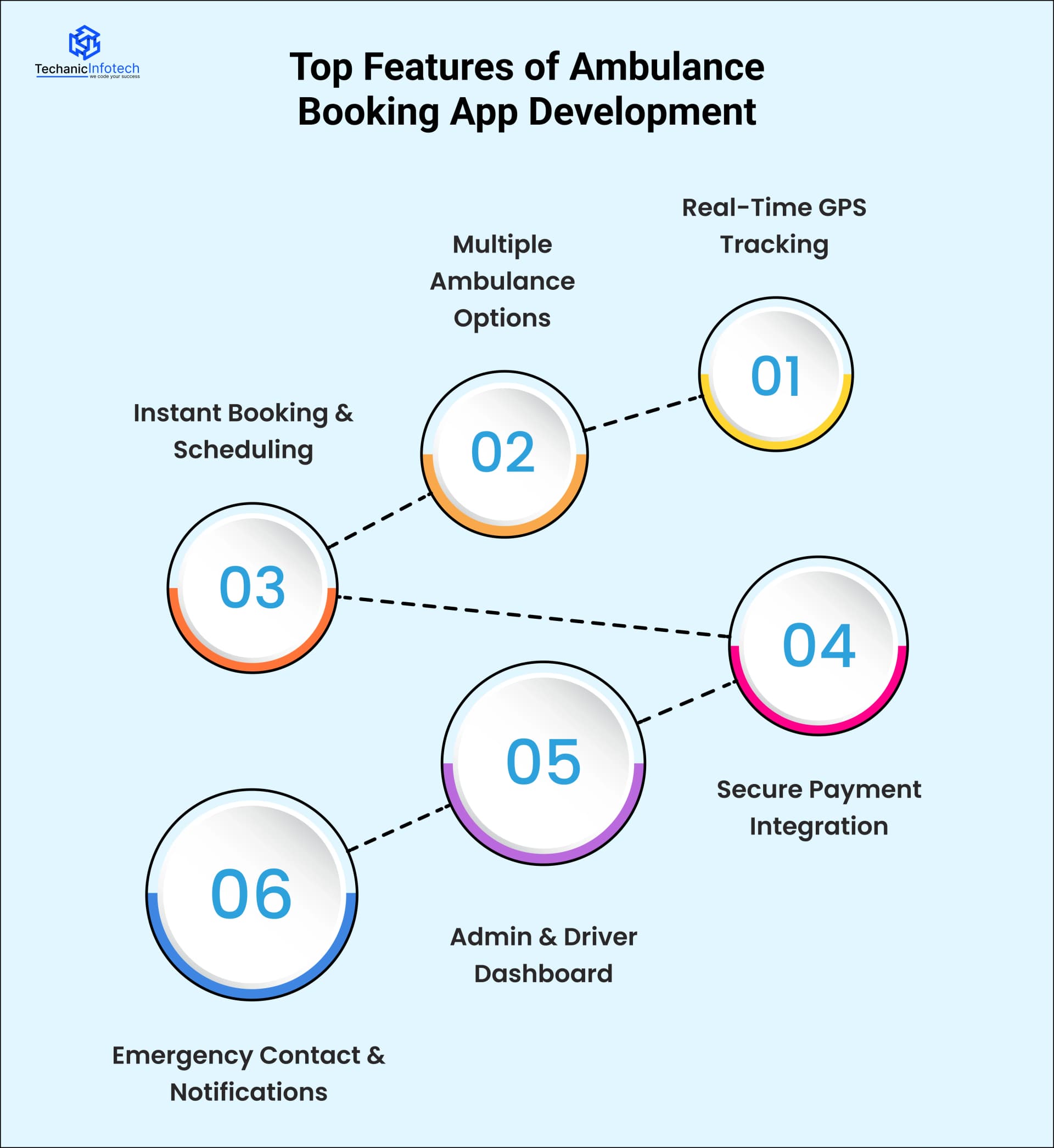
Real-time GPS tracking allows users to monitor ambulance location and estimated arrival time.
It improves transparency, reduces anxiety, and ensures faster emergency response. Integrated map navigation helps drivers choose optimal routes, avoiding traffic congestion.
The app should provide different ambulance categories such as BLS, ALS, ICU, and air ambulances. Users can select services based on medical condition and urgency.
Displaying equipment details, medical staff availability, and pricing ensures informed decisions and better emergency preparedness.
Users must be able to book ambulances instantly during emergencies or schedule non-emergency transfers in advance.
The system should confirm bookings immediately and notify drivers. A smooth booking process reduces response time and improves overall operational efficiency significantly.
Secure digital payment options, including cards, wallets, and UPI, improve convenience. Transparent fare calculation and digital invoices enhance trust.
Integration with reliable payment gateways ensures encrypted transactions and financial data protection for users and service providers.
A dedicated dashboard helps administrators manage fleet operations, track ambulances, and monitor performance analytics.
Drivers can receive trip requests, navigation routes, and patient details. This centralized control system streamlines operations and improves service quality.
The app should send instant alerts to hospitals and emergency contacts. Push notifications, SMS updates, and in-app calls improve communication.
Automated alerts ensure quick coordination, reducing delays and enhancing patient safety during emergencies.
Advanced AI features in an ambulance booking app enhance efficiency and patient care.
These include AI-based route optimization, predictive demand analysis, automated dispatch, and intelligent patient triage for faster, smarter emergency response.
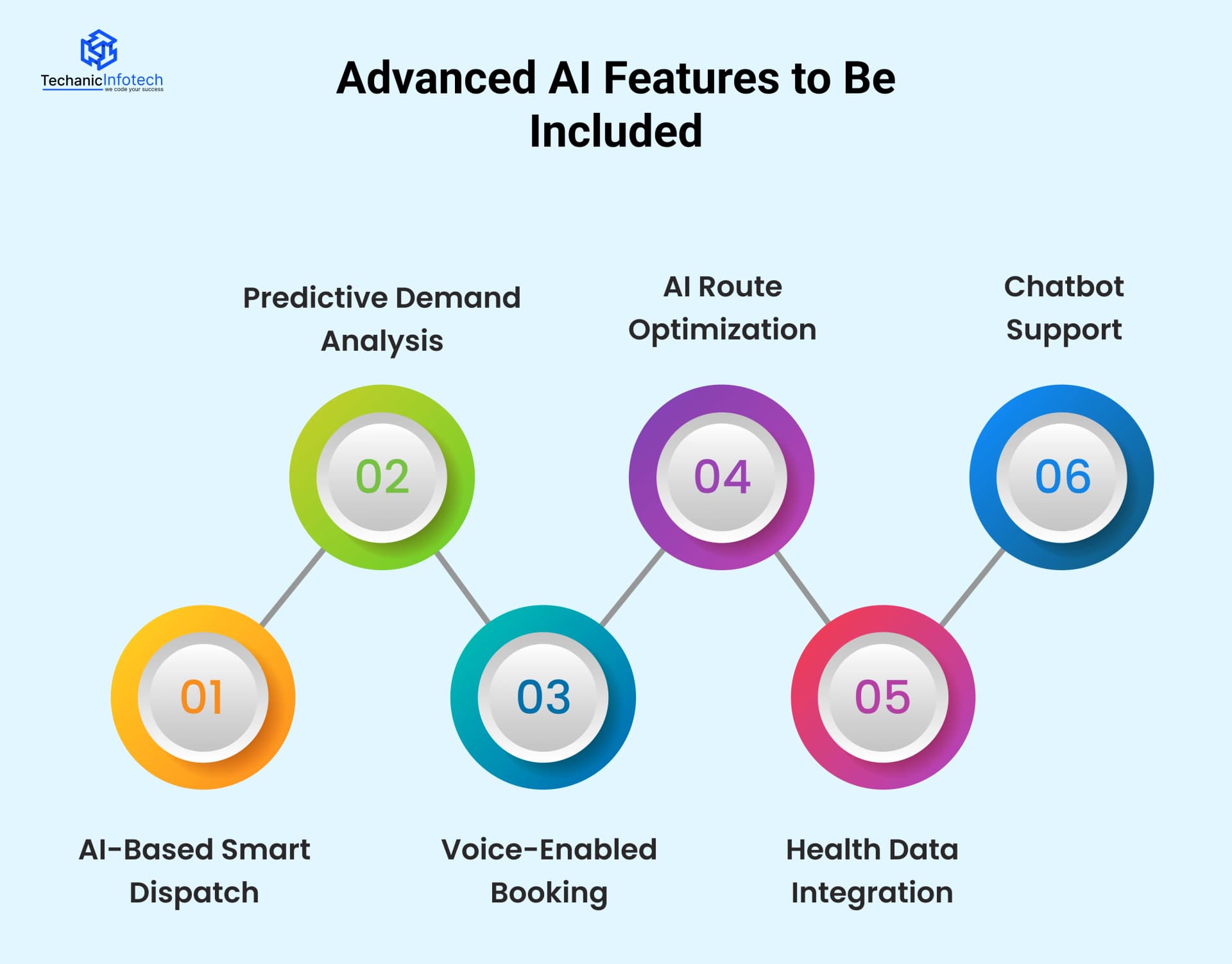
AI algorithms analyze location, traffic, and ambulance availability to assign the nearest suitable vehicle.
This reduces response time and optimizes fleet utilization. Smart dispatch ensures efficient resource allocation during peak emergencies.
AI analyzes historical emergency data to predict high-demand areas and peak hours. This helps ambulance providers position vehicles strategically.
Predictive insights improve preparedness, reduce waiting time, and enhance operational planning.
Voice assistants powered by AI allow users to book ambulances hands-free during emergencies.
This feature benefits elderly and disabled individuals. Natural language processing ensures accurate request understanding and faster booking confirmation.
AI-driven route optimization considers traffic, road conditions, and weather updates to select the fastest routes.
This ensures timely arrival at hospitals. Reducing travel time significantly increases survival rates in critical emergencies.
AI can analyze patient medical data shared through the app and alert hospitals in advance.
This prepares medical teams before patient arrival. Early information sharing enhances treatment efficiency and patient outcomes.
AI chatbots provide instant assistance for booking, pricing queries, and service information.
They operate 24/7, reducing dependency on manual support. Automated responses improve user experience and operational efficiency.
Effective ways to develop an ambulance booking app involve careful planning, choosing the right technology stack, and focusing on user-friendly mobile app design.
Key steps include integrating GPS tracking, secure patient data management, real-time notifications, and seamless payment options.
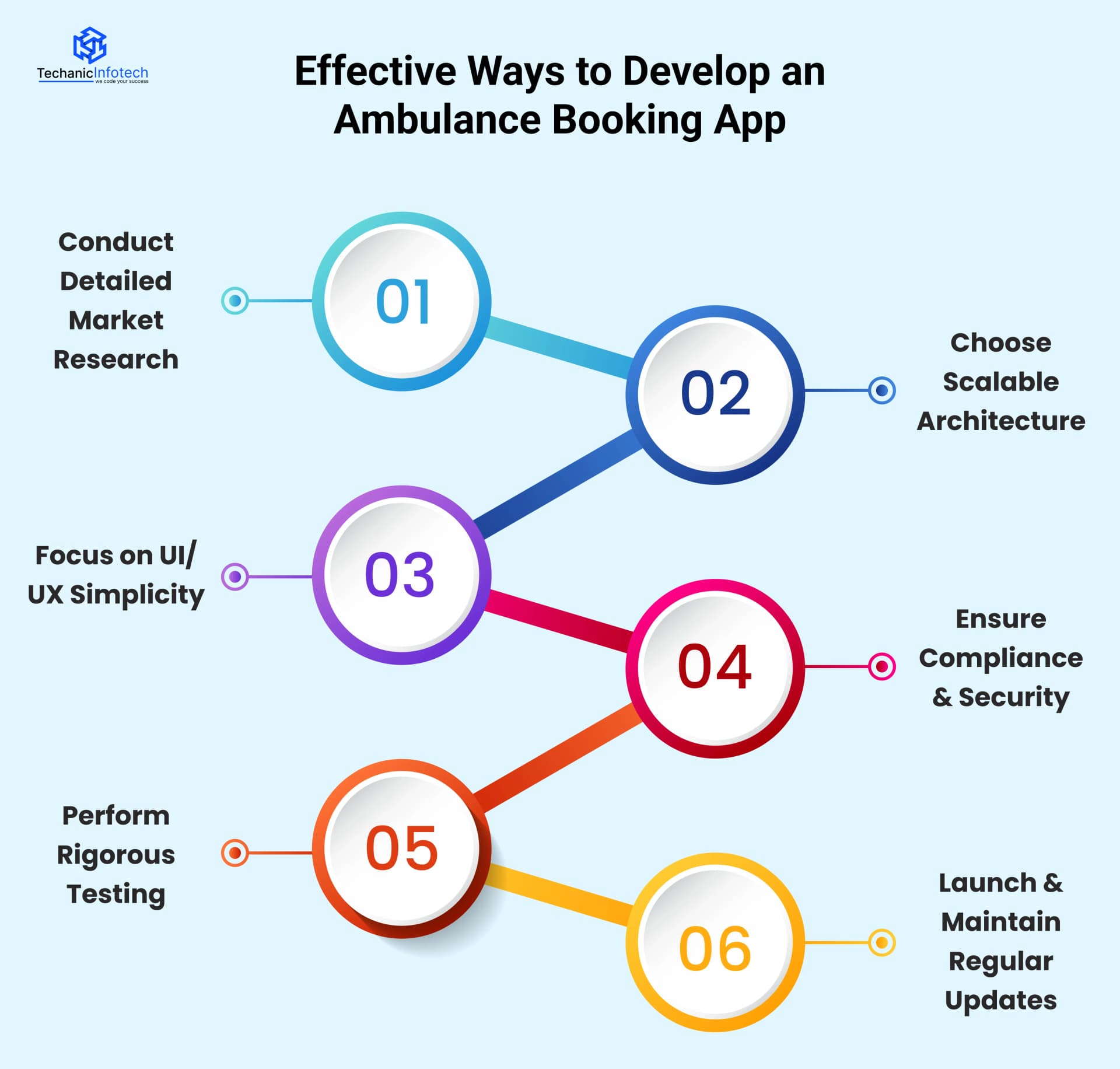
Thorough market research helps identify regional healthcare gaps, patient behavior patterns, and unmet emergency service needs.
This strategic insight ensures strong product-market fit, minimizes the need for minimum viable product development, and increases the likelihood of a successful launch.
Selecting a scalable architecture is critical for supporting increasing user demand and ambulance fleet expansion.
Cloud-based infrastructure enhances flexibility, data security, and system reliability.
A well-designed backend prevents crashes, ensures high availability, and maintains stable performance during peak emergency traffic periods.
Emergency applications must prioritize simplicity and intuitive navigation.
Clear call-to-action buttons, minimal booking steps, readable fonts, and accessible layouts enable users to request assistance quickly.
A streamlined interface reduces confusion, improves accessibility for all age groups, and enhances usability during high-stress situations.
Healthcare applications must comply with strict legal and data protection regulations.
Implement strong encryption, secure authentication mechanisms, and regulatory standards to safeguard sensitive patient information.
Robust security frameworks build user trust, prevent data breaches, and protect the organization from potential legal liabilities.
Comprehensive testing ensures reliability, security, and optimal performance before deployment. Conduct functional, usability, load, and security testing to identify vulnerabilities.
Simulating real emergency scenarios helps evaluate system responsiveness, ensuring smooth operation and consistent service delivery during high-pressure situations.
After launch, continuous monitoring and regular updates are essential for sustained success. Gather user feedback, resolve technical issues, and introduce feature enhancements.
Ongoing improvements strengthen performance, maintain competitiveness, adapt to evolving user needs, and ensure long-term operational stability.
The mobile app tech stack combines robust frontend, backend, and database technologies.
Common choices include React Native or Flutter for the app, Node.js or Django for the backend, Firebase or MongoDB for the database, and Google Maps API for real-time location tracking.
Frontend development can leverage cross-platform frameworks like Flutter or React Native to build consistent applications for both iOS and Android.
For higher performance and platform-specific optimization, native technologies such as Swift for iOS and Kotlin for Android are ideal.
These tools ensure responsive interfaces, smooth navigation, and seamless user experiences.
Backend EHR software development can be powered by robust technologies like Node.js, Python, or PHP to manage server-side operations efficiently.
These frameworks handle API integrations, authentication, business logic, and database interactions.
A scalable and well-structured backend architecture ensures reliability, fast response times, and uninterrupted performance during high-demand emergencies.
Databases such as MySQL, PostgreSQL, or MongoDB securely store user profiles, trip records, and real-time emergency data.
Cloud-hosted database solutions provide automated backups, redundancy, and scalability.
Efficient schema design and optimized queries ensure rapid data retrieval, supporting instant access to critical information during time-sensitive emergency requests.
Cloud platforms like AWS, Google Cloud, or Microsoft Azure provide reliable hosting, storage, and computing resources.
These services support scalability, high availability, and advanced security protocols.
Leveraging cloud infrastructure enables seamless expansion of ambulance networks while maintaining uptime, reliability, and strong performance under fluctuating traffic loads.
Integrating secure payment gateways such as Stripe or Razorpay enables seamless and protected online transactions.
Map services like Google Maps APIs provide accurate geolocation tracking, route optimization, and real-time navigation.
These API integrations enhance operational efficiency, improve transparency, and deliver a convenient, trustworthy experience for users.
Notification services such as Firebase Cloud Messaging enable real-time communication between the system and users.
Push notifications, SMS gateways, and in-app alerts keep patients informed about booking confirmations, ambulance dispatch status, and estimated arrival times.
Timely updates improve coordination, build trust, and enhance overall service reliability.
The mobile app development cost depends on features, platform (iOS/Android), design complexity, and development team location.
Typically, basic apps range from $10,000–$90,000, while advanced apps with AI and real‑time tracking can go $90,000+.
Following is the table contains app type, their key features, and estimated cost mentioned.
|
App Type |
Key Features |
Estimated Cost |
|
Basic App |
• User Registration • Ambulance Booking • GPS Tracking • Push Notifications • Basic Admin Panel |
$10,000-$20,000 |
|
Standard App |
• Payment Gateway Integration • Driver Panel • Admin Dashboard • Trip Scheduling • Reports & Analytics |
$20,000 – $40,000 |
|
Advanced App |
• AI-Based Dispatch System • Predictive Analytics • Advanced Reporting • Enhanced Security • Real-Time Data Monitoring |
$40,000 – $60,000 |
|
Enterprise App |
• Full Customization • AI Automation • IoT Ambulance Tracking • Telemedicine Integration • Multi-Location Management |
$60,000 – $90,000 |
|
Maintenance Cost |
• Regular Updates • Bug Fixes • Hosting & Server Costs • Security Patches • Compliance Upgrades |
15% – 20% of Total Development Cost |
A basic ambulance booking application includes core features such as user registration, ride booking, GPS tracking, and push notifications.
It is ideal for small ambulance operators or early-stage startups seeking a cost-effective digital presence.
A standard application includes advanced features such as payment gateway integration, a dedicated driver panel, an admin dashboard, trip scheduling, and reporting tools.
Designed for mid-sized healthcare providers, it offers improved UI/UX design and moderate scalability.
Additional integrations and customization increase mental health app development complexity and overall project cost.
An advanced ambulance app incorporates AI-based dispatch systems, predictive analytics, advanced reporting, and enhanced data security protocols.
High-level performance optimization, automation capabilities, and real-time analytics significantly increase development investment and technical requirements.
An enterprise-grade solution delivers full customization, AI-driven automation, IoT-enabled ambulance tracking, telemedicine integration, and multi-location management systems.
Designed for national or large-scale healthcare organizations, it requires complex system architecture, rigorous compliance measures, extensive testing, and ongoing infrastructure management, resulting in higher overall development costs.
Annual mobile app maintenance strategy typically ranges between 15–20% of the total development cost.
This includes regular updates, performance optimization, bug fixes, server hosting, security enhancements, and compliance upgrades.
Continuous technical support and feature improvements ensure long-term stability, strong security, optimal performance, and sustained competitiveness in the healthcare technology market.
While developing an ambulance booking app, key considerations include a user-friendly interface, real-time GPS tracking, and emergency contact integration.
It is also important to ensure secure patient data management, an efficient notification system, and a scalable backend for smooth operations.

Ensure full compliance with healthcare regulations and data protection laws before launching the application.
Obtain necessary legal approvals, licenses, and certifications to operate in target regions.
Failure to comply may result in heavy penalties, reputational damage, or operational restrictions affecting long-term sustainability.
Implement advanced encryption protocols, secure authentication systems, and regular security audits to protect sensitive patient information.
Safeguard the platform against cyber threats, unauthorized access, and data breaches.
Strong data protection measures build credibility, foster user trust, and strengthen partnerships with healthcare providers.
Develop an AI app infrastructure that can accommodate future growth in users, ambulance fleets, and geographic coverage. A scalable architecture ensures consistent performance during peak demand.
Cloud-based systems, load balancing, and modular backend design help maintain speed, reliability, and seamless service expansion.
The application must operate flawlessly during high-traffic emergencies. System crashes or server downtime can delay critical response times and risk lives.
Invest in reliable hosting, real-time monitoring, backup servers, and failover mechanisms to guarantee uninterrupted service availability.
Design the platform to accommodate elderly users and individuals with disabilities.
Incorporate simple navigation, large, readable fonts, voice-assisted commands, and multilingual support.
An accessible interface ensures inclusivity, improves usability, and enables faster emergency bookings during stressful situations.
Establish seamless integration with hospitals, clinics, and emergency response centers to improve coordination.
Real-time data sharing and pre-arrival notifications allow medical staff to prepare in advance.
Strong institutional collaboration enhances patient outcomes and ensures efficient emergency response management.
Techanic Infotech is the best mobile app development company that specializes in developing customized healthcare mobility solutions, including ambulance booking applications.
Their team conducts detailed requirement analysis, UI/UX planning, and scalable backend development to ensure reliable performance.
They integrate GPS tracking, secure payment gateways, AI-based dispatch systems, and real-time notifications.
The company follows strict data security and compliance standards to protect patient information.
Techanic Infotech also provides cross-platform app development using modern frameworks, ensuring compatibility across Android and iOS devices.
Ambulance booking apps are transforming emergency medical transportation by offering fast, reliable, and transparent services.
With real-time tracking, AI-driven dispatch, and digital payments, these platforms enhance operational efficiency and patient safety.
Growing healthcare digitization and rising emergency demand create strong market potential.
Developing a successful ambulance app requires careful planning, regulatory compliance, secure architecture, and scalable technology.
Integrating advanced AI features further improves response times and fleet management. Investment costs vary depending on complexity, ranging from basic to enterprise-level solutions.
Development typically takes 3–6 months, depending on features, complexity, and testing requirements. Advanced AI integration may extend timelines slightly.
Yes, with proper encryption, secure payment gateways, and regulatory compliance, ambulance apps can ensure high-level data protection and privacy.
Yes, apps can include BLS, ALS, ICU, and air ambulances, allowing users to choose based on medical needs.
Ambulance booking apps can run on Android and iOS platforms using cross-platform or native development technologies.
AI is not mandatory, but it significantly improves dispatch efficiency, demand prediction, and route optimization for faster emergency response.


Neha Sharma is a tech expert at heart who loves exploring new technologies and turning complex ideas into easy-to-understand content. With a passion for learning and writing, she enjoys sharing insights on emerging tech, digital products, and innovation that help businesses stay ahead.