Key Takeaways
Real estate app development helps businesses digitize property listings, virtual tours, messaging, and appointment scheduling, creating a seamless experience for buyers, renters, agents, and property managers.
Essential features such as advanced search filters, interactive maps, secure chat, personalized recommendations, and favorites significantly improve engagement and support higher lead conversion.
A structured development process that includes market research, UI/UX design, technology selection, testing, deployment, and maintenance reduces risk and ensures a scalable, high-performing platform.
Real estate app development cost typically starts at around $9,000 for a basic MVP, with the final investment depending on feature complexity, integrations, and long-term scalability requirements.
Building with cloud infrastructure, modular architecture, analytics, and continuous updates ensures the app can grow efficiently and remain competitive in the evolving PropTech market
The real estate industry is rapidly embracing mobile technology to simplify property discovery, virtual tours, lead management, and secure transactions.
But how much does it cost to build a successful real estate application in 2026?
This real estate app development guide explores the key factors that influence development costs, essential features, and the complete process of creating a scalable platform.
From property listing apps and agent marketplaces to AI-powered recommendation tools, real estate applications are transforming how buyers, sellers, and agents connect.
In this guide, we will discuss different types of real estate apps, must-have features, the step-by-step development process, estimated costs, and practical strategies to build a future-ready solution that delivers an exceptional user experience and supports long-term business growth in a highly competitive market.
Investing in real estate app development in 2026 is a strategic move for businesses responding to digital-first property buyers and renters. Rising mobile adoption, PropTech innovation, and stronger demand for seamless property experiences create significant growth opportunities.
Most buyers begin their home search digitally, making mobile apps essential for visibility and lead generation. According to the National Association of Realtors, 100% of home buyers used the internet during their home search in recent surveys, highlighting how central digital platforms have become to real estate transactions.
The global real estate software market is projected to reach $31.96 billion by 2033, growing at a 12.2% CAGR from 2026 to 2033, according to Grand View Research. This steady expansion reflects increasing investment in apps for property listings, CRM, virtual tours, and analytics.
Real estate apps streamline property discovery, automate lead management, and enable virtual tours, chat, and secure transactions. Businesses that invest early can improve customer engagement, shorten sales cycles, and build stronger brand loyalty in an increasingly competitive market.
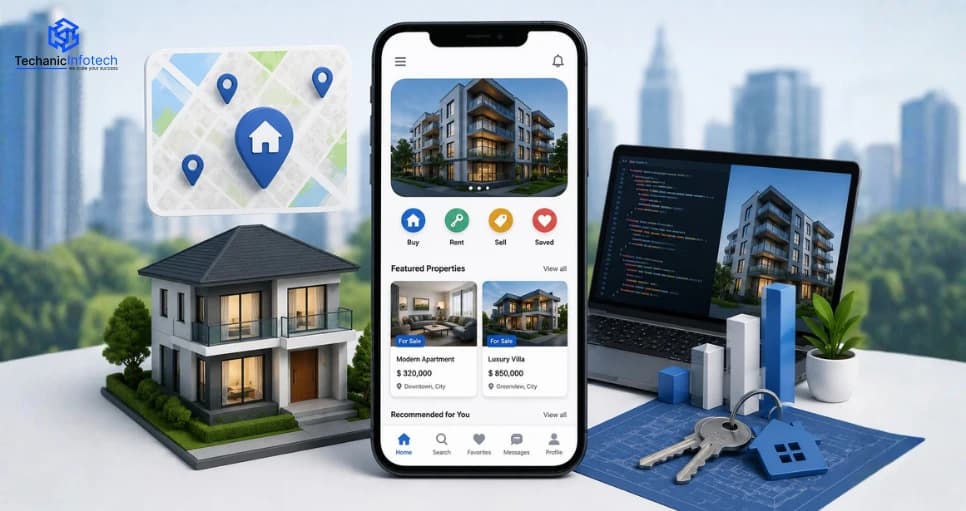
Choosing the right real estate mobile app features is essential for delivering a seamless property search experience. These core capabilities improve engagement, simplify transactions, and help businesses build scalable platforms that meet modern buyer and renter expectations.
Successful real estate app development begins with rich property listings that include high-quality images, pricing, amenities, floor plans, and neighbourhood information. Detailed profiles help users compare properties and make informed decisions more confidently.
Users should be able to filter properties by location, price range, property type, square footage, and amenities. Powerful search tools reduce browsing time and improve the overall user experience.
Businesses that want to build a real estate app should include map-based browsing and immersive virtual tours. These features let users explore neighbourhoods and view properties remotely before scheduling visits.
In-app chat and scheduling tools allow buyers, renters, and agents to communicate directly and arrange property viewings, improving lead conversion and customer convenience.
When companies create a real estate app, saved listings and AI-driven recommendations help users track preferred properties and discover homes that match their unique needs and preferences.
Building a successful platform becomes easier when you follow a proven real estate app development guide. Each development stage helps reduce risk, control costs, and create a scalable solution for buyers, renters, agents, and property businesses.
Understanding how to hire mobile app developers starts with researching your market and competitors. This step identifies user expectations, feature opportunities, and gaps that can help shape a stronger and more competitive real estate application.
Clear objectives are essential for property management app development and other real estate solutions. Documenting user roles, workflows, and technical requirements helps teams prioritize features, timelines, and budgets more effectively.
A strong mobile app design guide also considers how the platform will generate revenue through subscriptions, featured listings, commissions, or advertising, ensuring the app supports long-term profitability.
Successful real estate app development depends on intuitive wireframes and user-friendly interfaces that simplify property searches, virtual tours, messaging, and appointment scheduling across all devices.
Planning for property listing app development involves choosing the right frameworks, databases, cloud services, and APIs to ensure scalability, security, and reliable performance.
Following a mobile app tech stack guide helps developers build responsive user interfaces and robust server-side systems for authentication, search, listings, and communication features.
Professional real estate app development services often include integrations with maps, payment gateways, CRM platforms, analytics tools, and push notifications to expand functionality and improve user experience.
Thorough mobile app testing identifies bugs, security issues, and performance bottlenecks before launch, ensuring the application runs smoothly across devices and usage scenarios.
Businesses that want to create a real estate app must publish it to app stores and production servers while monitoring performance and user activity from the first day.
The ongoing real estate app development process includes updates, security patches, and new features that keep the application competitive and aligned with changing business needs.
Understanding mobile app development cost is essential when budgeting for a property platform. A basic real estate MVP typically starts at around $9,000, and the cost breakdown below shows how each development component contributes to the total investment and where your budget is allocated.
|
Development Component |
Estimated Cost (USD) |
Description |
|
Discovery and Requirement Analysis |
$400–$520 |
Business analysis, feature planning, and technical documentation. |
|
Market Research and Competitor Analysis |
$700–$840 |
Research on target users, competitors, and monetisation opportunities. |
|
UI/UX Design |
$900–$1,050 |
Wireframes, prototypes, and responsive interface design. |
|
User Registration and Profiles |
$950–$1,120 |
Sign-up, login, profile management, and authentication. |
|
Property Listings and Search |
$820–$980 |
Listings, filters, and advanced property search tools. |
|
Maps and Virtual Tours Integration |
$980–$1,150 |
Google Maps, location services, and 360-degree property views. |
|
Messaging and Appointment Scheduling |
$760–$910 |
In-app chat and property viewing booking features. |
|
Payment and Subscription Integration |
$700–$860 |
Secure payments for featured listings and subscriptions. |
|
Testing and Quality Assurance |
$880–$1,030 |
Functional, performance, and security testing. |
|
Deployment and Launch Support |
$1,000–$1,540 |
Production setup, app store publishing, and launch assistance. |
Planning for long-term growth starts with understanding real estate app development cost and scalability requirements. A future-ready platform should support increasing users, expanding listings, and evolving features while maintaining excellent performance, security, and user experience.
Learning how to build a minimal viable product helps teams create a modular codebase where features remain independent. This structure makes it easier to add new functionality, improve performance, and maintain the application as the platform grows.
Following a proven real estate app development guide helps businesses select cloud infrastructure that provides on-demand resources, automated backups, and high availability to support growing traffic without major infrastructure changes.
Keeping pace with mobile app development trends requires efficient database design and indexing so property searches, user activity, and analytics remain fast even as listings and users increase significantly.
Encryption, secure authentication, and regular monitoring protect user data and transactions while helping the platform maintain compliance and build long-term trust with buyers, renters, and agents.
Performance dashboards and automated workflows help businesses track engagement, manage leads, and make informed improvements that enhance operational efficiency over time.
Partnering with a reliable real estate application development company ensures regular feature enhancements, bug fixes, and technology upgrades that keep the platform competitive and aligned with changing market expectations.
Building a successful real estate app in 2026 requires a clear strategy, thoughtful feature planning, and a scalable development approach.
From market research and UI/UX design to testing, deployment, and ongoing maintenance, every stage plays an important role in creating a reliable and engaging platform.
Understanding development costs, which can start at around $9,000 for a basic MVP, helps businesses plan budgets more effectively and prioritize essential functionality.
By focusing on features such as property listings, virtual tours, advanced search, and secure messaging, companies can deliver exceptional user experiences.
Most importantly, designing for scalability ensures the platform can support growing user demand and evolving business goals.
A well-executed real estate app can streamline transactions, generate quality leads, and provide a strong competitive advantage in the rapidly expanding PropTech market.
The cost of developing a real estate app typically starts at around $9,000 for a basic MVP and increases depending on features, integrations, design complexity, and scalability requirements.
Businesses can create property listing apps, rental marketplaces, property management platforms, agent-buyer communication apps, and investment analysis tools
Core features include property listings, advanced search filters, maps, virtual tours, secure messaging, appointment scheduling, and personalized recommendations.
Development timelines vary by complexity. A basic MVP may take a few weeks, while advanced platforms with custom integrations can take several months.
Growing digital property search behavior, expanding PropTech adoption, and increasing user demand make real estate apps a valuable investment opportunity.
Yes. Virtual tours and 360-degree property views help users explore homes remotely and improve engagement and conversion rates.
Common monetization models include featured listings, subscriptions, commissions, advertisements, and premium agent tools.
Developers often use Flutter or React Native for mobile apps, cloud infrastructure for scalability, and APIs for maps, payments, and analytics.
Yes. A minimum viable product helps validate your idea, reduce initial investment, and gather real user feedback before adding advanced features.
Using modular architecture, cloud infrastructure, strong security, analytics, and continuous updates helps real estate apps grow with user demand and market changes.


Abhishek Jangid is the CEO of Techanic Infotech, with extensive experience in mobile app and web development. He specializes in helping businesses turn innovative ideas into scalable digital solutions through strategic planning and modern technology.