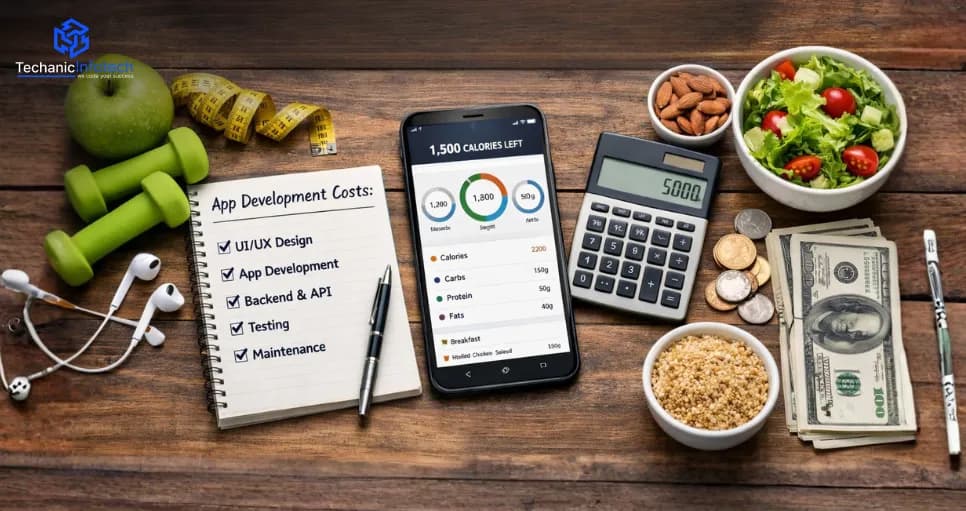
A calorie-counting app is a digital tool that helps users track daily food intake, monitor calories, and achieve health goals like weight loss, muscle gain, or balanced nutrition.
These apps often include features such as food databases, barcode scanning, personalized diet plans, and progress tracking.
In 2026, fitness and health apps are booming due to growing awareness of lifestyle diseases, increased smartphone usage, and a shift toward preventive healthcare.
People are prioritizing wellness more than ever, driving demand for smart health solutions.
This surge creates strong market demand and lucrative business opportunities, as startups and enterprises invest in innovative features like AI-based recommendations, wearable integration, and real-time health analytics to attract users.
Advanced features in modern apps enhance user engagement, personalization, and functionality, but they significantly increase AI fitness app development complexity, time, required expertise, and overall project costs.
This feature uses machine learning and computer vision to identify food items from images.
It requires training large datasets, high processing power, and continuous accuracy improvements, increasing development time, infrastructure needs, and maintenance costs significantly.
Delivering tailored diet plans involves analyzing user data, preferences, and health goals.
It requires sophisticated algorithms, possibly AI models, and secure data handling, making minimum viable product development complex, time-intensive, and costly due to customization and accuracy requirements.
Connecting with wearable devices requires working with multiple APIs, handling real-time data synchronization, and ensuring compatibility across devices.
This adds complexity, testing efforts, and maintenance overhead, ultimately increasing development and integration costs.
Implementing chatbots or live coaching features involves natural language processing, real-time response systems, and possibly AI integration.
Ensuring accuracy, responsiveness, and scalability demands advanced development resources, raising both initial and ongoing costs to build a fitness app.
Building community systems includes user profiles, feeds, messaging, and moderation tools.
It requires scalable backend infrastructure, security measures, and continuous monitoring, making it resource-intensive and increasing both development and operational expenses.
Gamification requires designing reward systems, tracking user progress, and maintaining engagement logic.
It involves additional backend logic, UX design, and analytics integration, which adds to development complexity, testing, and long-term maintenance costs.
The mobile app development cost of a calorie-counting app generally ranges from $8,000 to $50,000+, depending on feature complexity, design quality, technology stack, and development location.
A basic calorie-counting app typically costs between $8,000 and $25,000, covering essential features for a fitness app like user registration, calorie tracking, and a simple food database.
It is ideal for startups aiming to launch a minimum viable product quickly and cost-effectively.
Mid-level apps usually fall within the $25,000 to $50,000+ range and include enhanced features such as meal planning, progress analytics, push notifications, and improved user interfaces.
These apps demand more robust backend systems and a longer mobile app development timeline.
Advanced calorie-counting apps cost $50,000+ due to the integration of AI-driven features such as food image recognition, personalized diet recommendations, and wearable connectivity.
These mobile app features require complex algorithms, high-performance infrastructure, and continuous optimization for accuracy.
Individual modules influence the overall cost: UI/UX design ($5k–$10k), backend development ($15k–$30k), AI capabilities ($30k+), and third-party integrations ($10k–$20k).
Each added feature increases development effort, testing requirements, and long-term maintenance expenses.
Development costs vary by region, with India ranging from $8,000 to $50,000, the US from $50,000 to $150,000+, and Europe from $40,000 to $120,000+.
Choosing the right region can significantly impact the budget without compromising quality.
Several key factors directly influence the overall cost of developing a calorie-counting app, including its complexity, design standards, mobile app tech stack choices, integrations, and long-term scalability needs.
The number and sophistication of features significantly impact development cost.
Basic tracking features are affordable, while advanced functionalities like AI recommendations, real-time analytics, and integrations increase development time, technical requirements, and overall budget.
Choosing between Android, iOS, or cross-platform development affects cost.
Native apps for each platform require separate development efforts, while cross-platform solutions reduce costs but may involve trade-offs in performance and customization.
High-quality UI/UX design enhances user engagement but increases costs.
Custom animations, intuitive navigation, and visually appealing interfaces require skilled designers, extensive prototyping, and user testing, all contributing to higher mobile app development expenses.
Integrating external services such as payment gateways, nutrition APIs, or fitness trackers adds to development complexity.
Each integration requires setup, testing, and ongoing maintenance, increasing both initial development costs and long-term operational expenses.
The geographical location of the development team greatly influences cost.
Developers in regions like North America charge significantly higher rates compared to those in Asia or Eastern Europe, making outsourcing a cost-effective option.
Post-launch maintenance, updates, and scalability planning add to overall costs.
Ensuring the app can handle growing users, fix bugs, and stay updated with new technologies requires continuous investment and technical support.
Beyond initial development, several hidden costs can impact the total investment in a calorie-counting app, often overlooked during planning but essential for long-term success.
Regular maintenance is necessary to fix bugs, improve performance, and ensure compatibility with new operating system updates.
These ongoing efforts typically cost 15–20% of the initial development budget annually.
Hosting services and databases are essential for storing user data and ensuring smooth performance.
Costs vary based on usage, traffic, and storage requirements, increasing as the app scales and attracts more active users.
Access to reliable nutrition databases often requires paid API subscriptions.
These recurring costs depend on request volume and data access levels, making them a significant ongoing expense for accurate calorie tracking functionality.
Promoting the app through ads, social media, and influencer campaigns requires a dedicated budget.
User acquisition costs can quickly add up, especially in competitive health and fitness markets where visibility is crucial.
Publishing apps on platforms like Google Play and Apple App Store involves fees.
These include one-time registration charges and ongoing commissions on in-app purchases or subscriptions, impacting overall revenue and profitability.
Reducing the cost of building a calorie-counting app requires strategic planning, prioritizing essential features, leveraging efficient technologies, and optimizing resources without compromising core functionality and user experience.
Starting with a Minimum Viable Product helps validate your idea with minimal investment.
By focusing only on essential features, you can reduce initial costs, gather user feedback, and make improvements before scaling the app.
Cross-platform frameworks like Flutter or React Native allow developers to build a single app for multiple platforms.
This approach reduces development time, resource requirements, and overall cost compared to building separate native applications.
Using existing APIs for features like nutrition data or authentication saves time and effort.
It eliminates the need to build complex systems from scratch, significantly lowering development costs and speeding up the launch process.
Outsourcing to experienced development teams in cost-effective regions can reduce expenses without compromising quality.
It provides access to skilled professionals at lower rates, helping businesses stay within budget while achieving desired outcomes.
Prioritizing essential functionalities ensures efficient use of resources.
Avoiding unnecessary features in the early stages helps control costs, simplify development, and create a streamlined app that meets user needs effectively.
Developing a calorie-counting app in 2026 presents a valuable opportunity in the rapidly growing health and fitness market.
The overall cost typically ranges from $8,000 to $50,000+ for basic to mid-level apps, while advanced solutions with AI, wearable integration, and real-time analytics can exceed this range significantly.
The final budget depends on multiple factors such as feature complexity, platform selection, UI/UX quality, and development location.
While initial costs may seem substantial, investing in the right features and scalable architecture ensures long-term success, user retention, and revenue potential.
By starting with an MVP, focusing on core functionalities, and leveraging cost-efficient development strategies, businesses can effectively control expenses while building a competitive and future-ready calorie-counting application.
The cost typically ranges from $10,000 to $120,000+, depending on features, app complexity, platform (iOS/Android), and integrations like AI or wearables.
Major factors include feature set, UI/UX design, platform choice, third-party integrations (nutrition APIs, wearables), AI capabilities, and developer location.
A basic app can take 2–4 months, while an advanced app with AI and integrations may take 6–10+ months.
Essential features include food logging, calorie tracking, a food database, barcode scanning, progress tracking, and user profiles.
Yes, you can integrate devices like smartwatches and fitness bands to track steps, calories burned, heart rate, and more.
AI is not mandatory, but it enhances the app with features like food image recognition, personalized diet plans, and smart recommendations, improving user experience.
Ongoing costs include maintenance, updates, cloud hosting, API subscriptions (food databases), and marketing, typically 15–25% of the initial development cost annually.
Common monetization methods include subscriptions, in-app purchases, ads, affiliate marketing, and premium diet plans.
You can reduce costs by starting with an MVP, using cross-platform development, leveraging third-party APIs, and outsourcing to cost-effective regions.
Yes, if developed properly, these apps use data encryption, secure authentication, and compliance with privacy regulations to protect user health data.


Neha Sharma is a tech expert at heart who loves exploring new technologies and turning complex ideas into easy-to-understand content. With a passion for learning and writing, she enjoys sharing insights on emerging tech, digital products, and innovation that help businesses stay ahead.