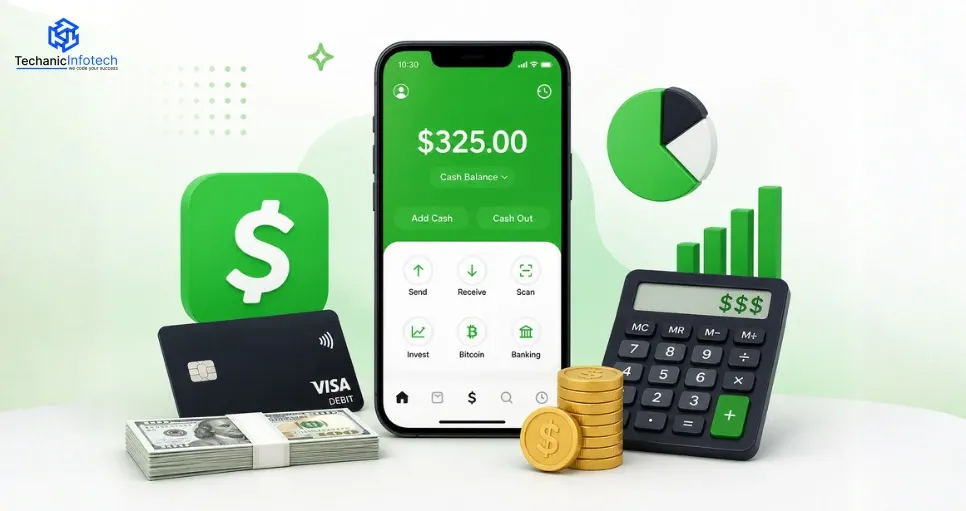
Digital wallets have completely transformed the way people manage money, transfer funds, and make online payments.
From splitting bills to paying merchants instantly, eWallet apps have become a major part of modern financial ecosystems. Among the leading platforms in this industry is Cash App, a digital payment solution known for its smooth user experience, instant money transfers, and advanced financial features.
As demand for digital payment solutions continues to grow, many startups and enterprises are investing in scalable fintech platforms powered by advanced fintech app development services. Businesses are increasingly exploring peer-to-peer payment systems that offer convenience, security, and seamless financial management experiences.
One of the most common questions entrepreneurs ask before entering this market is: How much does it cost to develop an app like Cash App?
The average development cost usually ranges between $15,000 to $130,000+, depending on the complexity of the application, features, platform selection, integrations, and security implementation.
In this blog, we’ll break down the development cost, major pricing factors, monetization opportunities, must-have features, and important strategies to build a scalable eWallet application successfully.
Cash App is a peer-to-peer digital payment platform that allows users to send, receive, and manage money directly from their smartphones. It simplifies online transactions while also offering services like stock investments, Bitcoin trading, and bank transfers.
Its user-friendly interface and seamless payment experience have made it one of the most successful eWallet applications worldwide. The platform has also become a major inspiration for businesses following a modern P2P payment app development guide strategy.
Here’s how Cash App works:
Download and create an account
Link your debit card or bank account
Send money instantly using usernames or phone numbers
Receive payments directly into your wallet
Track transactions and payment history
Invest in Bitcoin and stocks from the app
The increasing popularity of apps like Cash App highlights the growing demand for secure and feature-rich digital wallet solutions. Businesses entering this industry should focus heavily on advanced Ewallet app features and strong eWallet app security systems to ensure user trust and smooth transactions.
The digital payment industry is expanding rapidly as consumers increasingly prefer mobile-first and cashless financial solutions. This creates huge opportunities for startups and enterprises looking to invest in eWallet applications.
Developing an app like Cash App offers multiple business advantages and long-term growth opportunities in the fintech market.
Consumers worldwide now rely heavily on eWallet applications for online shopping, utility payments, money transfers, and financial management.
This increasing demand has encouraged businesses to invest in secure and scalable platforms powered by modern fintech app development services and digital payment technologies.
eWallet apps attract users because of their convenience, speed, and accessibility. Features such as instant transfers, budgeting tools, cashback systems, and payment tracking improve engagement and retention.
Adding innovative eWallet app features can help businesses differentiate themselves in the competitive fintech market.
Traditional banking systems often involve delays, hidden charges, and limited flexibility. eWallet apps provide users with faster transactions and better control over their finances.
This growing preference for digital payment platforms is one of the major reasons behind the rapid expansion of the fintech industry.
Digital wallet apps generate revenue through transaction fees, premium subscriptions, merchant partnerships, and financial services.
Businesses researching how eWallet apps make money often explore monetization models like subscription plans, cashback partnerships, and payment commissions.
Despite increasing competition, the eWallet industry still offers strong growth potential for businesses that prioritize user experience, security, and innovation.
Analyzing platforms like Cost to Develop an App Like Venmo, Cost to Develop an App Like Zelle, and cost to develop an app like PayPal can help businesses better understand market standards and customer expectations.
The average cost to develop an app like Cash App generally ranges between $15,000 and $130,000 or more. The final development budget depends on multiple factors such as app complexity, technology stack, integrations, security implementation, and platform selection.
Here’s a general cost breakdown for eWallet app development:
|
Development Phase |
Estimated Cost |
Description |
|
UI/UX Design |
$3,000 – $10,000 |
Creating intuitive user experiences |
|
Backend Development |
$5,000 – $25,000 |
Server-side infrastructure and databases |
|
Frontend Development |
$5,000 – $20,000 |
User-facing interface development |
|
Mobile App Development |
$5,000 – $25,000 |
Android and iOS app development |
|
Payment Gateway Integration |
$3,000 – $10,000 |
Secure transaction processing |
|
Security & Compliance |
$5,000 – $15,000 |
Encryption and fraud prevention |
|
Testing & QA |
$3,000 – $10,000 |
App performance and security testing |
|
Deployment & Launch |
$2,000 – $5,000 |
App store deployment |
|
Ongoing Maintenance |
$500 – $3,000/month |
Updates and technical support |
The overall budget can increase if you add advanced AI functionality, blockchain integration, analytics systems, or cryptocurrency features. Businesses should also prepare for future scalability and seamless Ewallet API Integration during development.
Working with an experienced eWallet app development company can help businesses optimize costs while ensuring better app performance and long-term scalability.
Several important factors directly impact the total development cost of an eWallet application. Understanding these factors helps businesses plan budgets more effectively.
The number and complexity of features significantly affect development costs. Basic functionalities like account registration and fund transfers require lower investment, while advanced tools increase development time and expenses.
Choosing the right Ewallet App Features is essential for balancing functionality and overall project cost.
Businesses can choose between native and cross-platform development approaches. Native apps offer better performance but require separate development for Android and iOS platforms.
Cross-platform development can reduce overall costs while speeding up the launch process.
A modern and intuitive interface is critical for fintech applications. High-quality UI/UX design improves user engagement, retention, and overall customer satisfaction.
Investing in design can significantly impact the long-term success of the application.
Development rates vary based on the location of the development team. Teams in North America and Western Europe generally charge higher rates compared to developers in Asia or Eastern Europe.
Partnering with a reliable ewallet app development company can help businesses maintain quality while managing development expenses effectively.
|
Region |
Average Hourly Rate |
|
USA |
$100 – $250 |
|
UK |
$80 – $150 |
|
Western Europe |
$80 – $120 |
|
Eastern Europe |
$50 – $80 |
|
Asia |
$30 – $50 |
Security is one of the most important aspects of fintech app development. Features such as data encryption, fraud detection, two-factor authentication, and compliance systems increase development complexity and cost.
Implementing strong Ewallet App Security measures is essential for protecting user data and building customer trust.
Selecting the right Ewallet App Tech Stack is important for scalability, app performance, and future upgrades. Advanced technologies like AI, cloud infrastructure, and blockchain can increase development costs but improve long-term efficiency.
After launch, businesses must continuously update the app, improve features, fix bugs, and maintain security standards.
Long-term eWallet app development challenges often include scalability improvements, regulatory compliance, and evolving customer expectations.
Developing an eWallet application can be expensive, but businesses can strategically reduce eWallet app development costs without compromising quality.
Start with essential functionalities such as registration, transfers, payment tracking, and account management. Additional features can be introduced later based on user feedback.
A Minimum Viable Product (MVP) helps businesses validate their app idea before investing heavily in advanced functionality.
This approach minimizes risks while helping businesses understand real user needs.
Cross-platform frameworks allow developers to use a single codebase for Android and iOS applications, reducing development time and expenses.
Too many integrations can increase app complexity and maintenance costs. Businesses should prioritize only essential services during the initial launch phase.
Careful Ewallet API Integration planning helps improve scalability while reducing unnecessary development expenses.
Automated testing tools help identify bugs early and improve deployment efficiency, reducing long-term operational costs.
A successful eWallet application should include sustainable monetization strategies that support long-term growth and profitability.
Charging small fees on transactions is one of the most common monetization models used by payment apps.
Businesses can offer advanced features such as analytics, enhanced security, or financial insights through subscription plans.
Collaborating with merchants and businesses creates additional revenue opportunities through commissions and affiliate marketing.
Large user bases can generate revenue through sponsored promotions and non-intrusive advertisements.
Reward systems encourage repeat usage by offering cashback, discounts, and referral bonuses to users.
Understanding How Ewallet Apps Make Money is essential for building a profitable and scalable fintech platform.
Building an app like Cash App can be a profitable opportunity in today’s rapidly growing digital payments market. However, businesses must carefully understand development costs, scalability requirements, security implementation, and feature planning before starting the project.
From selecting the right Ewallet App Features to implementing advanced security systems and scalable infrastructure, every decision directly impacts the success of the platform. Businesses should also prepare for long-term updates, maintenance, and changing user expectations in the fintech industry.
With the right development strategy and technology approach, businesses can create secure and user-friendly eWallet applications that deliver seamless digital payment experiences while supporting long-term growth and profitability.
The average cost to develop an app like Cash App ranges between $15,000 to $130,000+, depending on features, app complexity, platform selection, security systems, and third-party integrations.
Some essential features include user registration, bank account linking, instant money transfer, payment history, QR code payments, notifications, and advanced Ewallet App Security features like encryption and two-factor authentication.
The development timeline can range from 3 to 9 months based on the project scope, UI/UX complexity, backend infrastructure, and custom feature requirements.
A modern Ewallet App Tech Stack may include Flutter or React Native for frontend development, Node.js for backend services, cloud platforms like AWS, and secure databases such as PostgreSQL or MongoDB.
Security is critical because eWallet apps handle sensitive financial and personal information. Features like data encryption, fraud detection, biometric authentication, and secure APIs help protect user data and transactions.
Ewallet API Integration helps connect the app with banking systems, payment gateways, KYC verification services, notifications, and third-party financial tools for seamless functionality.
Businesses researching How Ewallet Apps Make Money often use monetization models such as transaction fees, subscription plans, merchant partnerships, affiliate marketing, and premium financial services.
Some common challenges include regulatory compliance, fraud prevention, scalability, secure payment processing, user trust, and maintaining app performance during high transaction volumes.
The Cost to Develop an App Like Venmo is quite similar to Cash App because both platforms require secure payment systems, real-time transfers, scalable backend infrastructure, and compliance-focused fintech development.
Yes, partnering with an experienced ewallet app development company can help startups build scalable, secure, and user-friendly fintech applications while reducing technical risks and development challenges.


Abhishek Jangid is the CEO of Techanic Infotech, with extensive experience in mobile app and web development. He specializes in helping businesses turn innovative ideas into scalable digital solutions through strategic planning and modern technology.