Key Takeaways
Basic telemedicine apps cost less, while advanced features like video calls, AI diagnostics, and EHR integration increase the overall development budget significantly.
Apps must follow regulations like HIPAA or GDPR to ensure patient data security and privacy, making compliance a critical part of development.
A simple, intuitive interface for both doctors and patients improves engagement, retention, and overall satisfaction with the app.
Choosing the right technologies impacts app performance, scalability, and long-term maintenance costs.
Regular updates, bug fixes, and feature enhancements are necessary to keep the telemedicine app secure, functional, and competitive.
The demand for digital healthcare is growing fast, but how can startups tap into this opportunity? Telemedicine app development is transforming how patients connect with doctors, making healthcare more accessible, faster, and cost-effective.
For startups, this space offers strong growth potential, recurring revenue models, and a scalable business approach.
In this guide, we’ll break down everything you need to know, including key features, development steps, costs, and common challenges.
You’ll also learn how telemedicine app development can create long-term value, attract users, and boost ROI.
If you’re planning to enter the healthcare tech space, this guide will help you understand the process and make smarter, profit-driven decisions from day one.
Telemedicine is reshaping healthcare delivery, creating strong opportunities for startups to build scalable, tech-driven solutions. Investing in telemedicine and doctor-on-demand app development offers long-term growth, recurring revenue, and high market demand.
Patients increasingly prefer virtual consultations for convenience and faster access, driving continuous user growth and strong demand for telehealth app development solutions.
Subscription plans, consultation fees, and in-app services create steady income streams, making telemedicine apps financially sustainable. The market is projected to reach $806.89 billion by 2035.
Telemedicine apps can easily scale across regions without heavy infrastructure, allowing startups to expand quickly and reduce operational costs.
Healthcare providers save on infrastructure and staffing, making telemedicine solutions attractive for partnerships and long-term adoption. The telehealth market is expected to reach $1.36 trillion by 2035.
A successful telemedicine app depends on the right telemedicine app features to ensure smooth communication, security, and user satisfaction. These features help create a reliable, scalable, and user-friendly healthcare experience.
To develop a telehealth application, start with simple user registration using email or social logins. Profiles should store medical history, preferences, and personal details for a seamless, personalised experience.
Enable high-quality video and audio calls for real-time doctor consultations. This feature should support stable connections, low latency, and clear communication to ensure accurate diagnosis and better patient engagement.
Let users book, reschedule, or cancel appointments easily. Include calendar integration, time-slot selection, and automated reminders to reduce no-shows and improve overall efficiency for patients and providers.
Doctors should share digital prescriptions and maintain patient records securely. This improves treatment accuracy, helps track medical history, and ensures easy access for future consultations and follow-ups.
Integrate multiple payment options like cards, wallets, or insurance support. Ensure encrypted transactions to provide users with a safe, smooth, and trustworthy in-app payment experience.
Building a telemedicine app requires a clear, step-by-step approach to ensure performance, security, and scalability. This guide to telemedicine app development walks you through each stage, helping you create a reliable solution that meets both patient and provider needs.
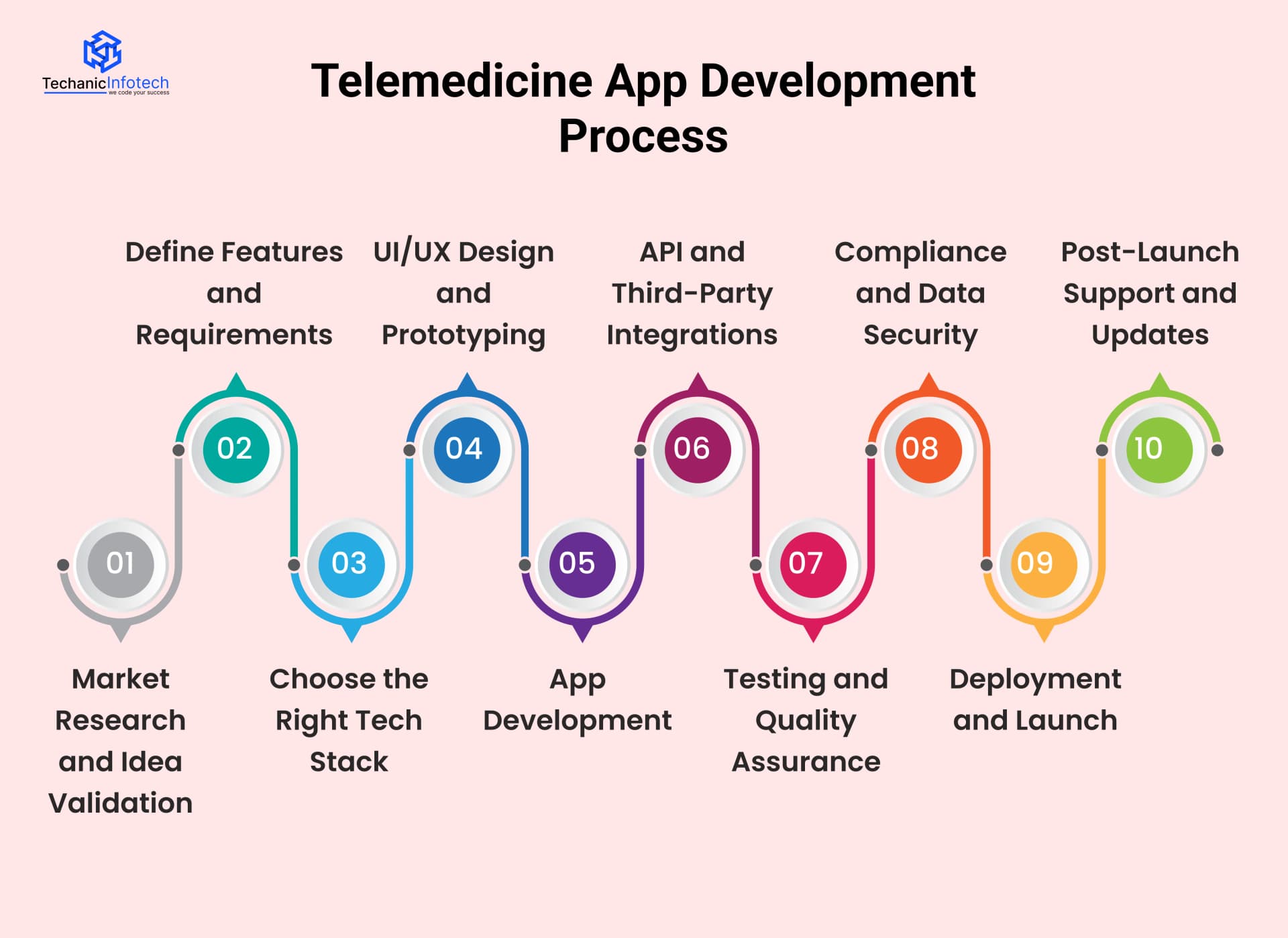
Start by understanding your audience, competitors, and market gaps. A solid guide to building an AI therapy app also emphasises validating your idea early, ensuring your telemedicine solution solves real problems and delivers clear value.
Outline essential features like video calls, scheduling, and payments. When you plan to build a telemedicine mobile app, a clear requirement document helps streamline development and ensures all stakeholders align on goals and functionality.
Select tools and frameworks based on scalability and security. Understanding the right tech stack in mobile app development helps you choose reliable backend systems, databases, and cloud services for smooth and efficient performance.
Design intuitive interfaces with simple navigation. If you want to create a telemedicine app in 2026, focus on user-centric design, accessibility, and seamless experiences that meet modern healthcare expectations and improve engagement.
Develop core features using modern frameworks. Following the latest trends in mobile app development ensures your telemedicine app stays competitive, responsive, and capable of delivering a smooth user experience across devices.
Integrate video, payment, and notification services. Leveraging AI in telemedicine app development can enhance features like chatbots, diagnostics, and automation, improving efficiency and overall user experience.
Conduct thorough testing to ensure performance, security, and usability. A strong telemedicine app development process includes fixing bugs, speeding up, and ensuring the app meets healthcare standards before launch.
Implement encryption and secure authentication. Using AI tools for mobile app development can also help detect vulnerabilities, enhance data protection, and ensure compliance with healthcare regulations like HIPAA.
Launch your app on major platforms with proper monitoring. A well-planned remote healthcare app development strategy ensures smooth deployment, minimal downtime, and a seamless experience for early users.
Continuously improve your app with updates and feedback. Following a mobile app development timeline guide helps you plan feature upgrades, maintain performance, and keep your telemedicine app aligned with evolving user needs.
Understanding the cost of building a telemedicine app is crucial for proper planning and budgeting. The estimated cost of mobile app development in 2026 depends on the features, complexity, tech stack, and team structure you choose.
|
Component |
Description |
Estimated Cost (USD) |
|
Market Research & Planning |
Research, competitor analysis, and project planning |
$3,000 – $8,000 |
|
UI/UX Design |
Wireframes, prototypes, and user interface design |
$5,000 – $15,000 |
|
Frontend Development |
User-side development for web/mobile interfaces |
$10,000 – $30,000 |
|
Backend Development |
Server, database, APIs, and core functionality |
$15,000 – $40,000 |
|
Video/Audio Integration |
Real-time consultation features |
$8,000 – $20,000 |
|
API & Third-Party Integrations |
Payment gateways, notifications, and EHR systems |
$5,000 – $15,000 |
|
Testing & Quality Assurance |
Functional, security, and performance testing |
$4,000 – $12,000 |
|
Compliance & Security Setup |
HIPAA compliance, data encryption, and secure systems |
$6,000 – $18,000 |
|
Deployment & Launch |
App store deployment and initial setup |
$2,000 – $6,000 |
|
Maintenance & Updates (Yearly) |
Ongoing support, updates, and improvements |
$10,000 – $25,000 |
Telemedicine apps offer huge potential, but they also come with technical, regulatory, and user-experience challenges. Understanding these issues is essential in doctor-on-demand app development to avoid costly mistakes and build secure, scalable, and reliable healthcare solutions.
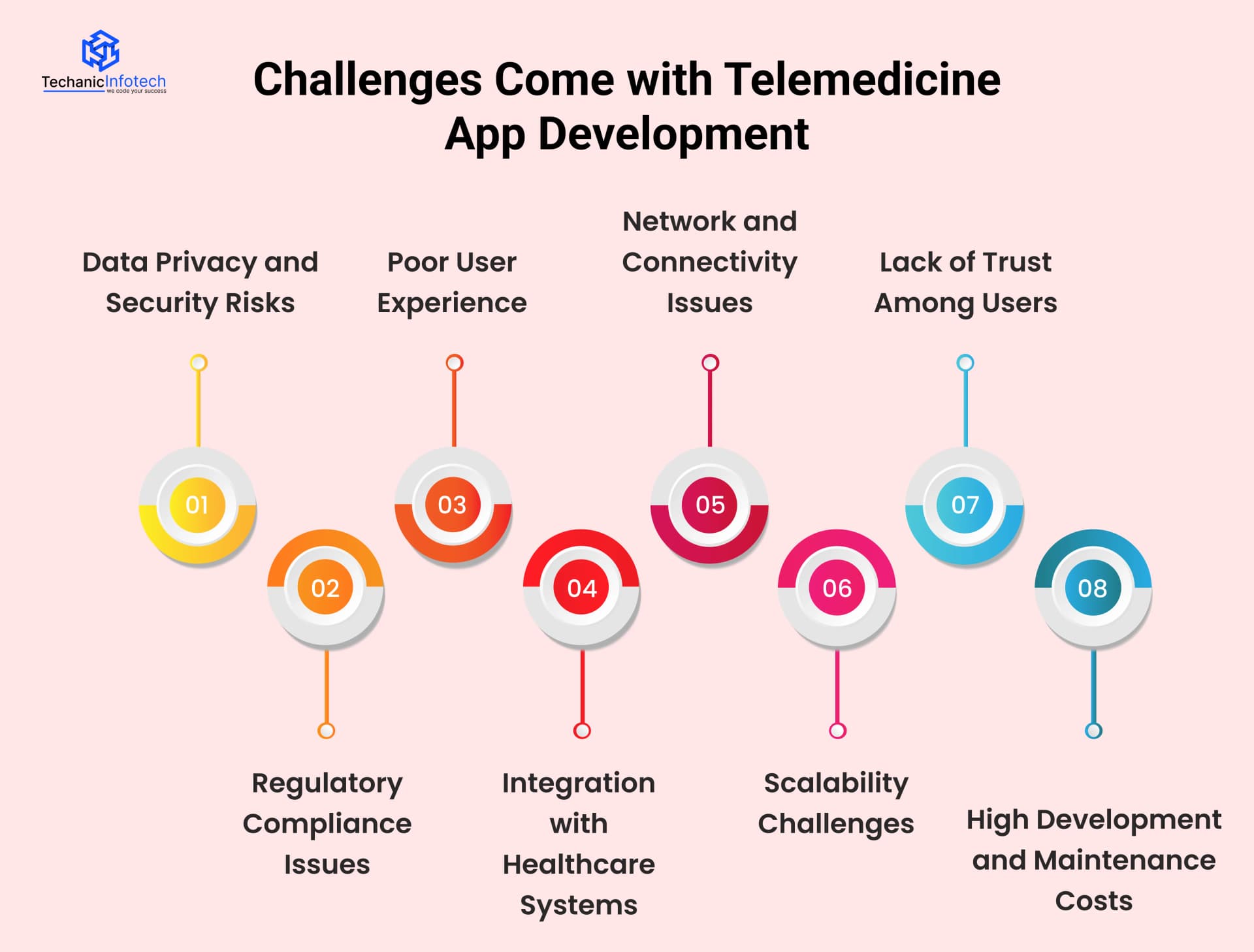
Handling sensitive patient data while the development of an appointment booking app increases the risk of breaches, cyberattacks, and unauthorised access. Ensuring strong data protection is critical for building trust and maintaining compliance across platforms.
How to Solve: Use end-to-end encryption, secure APIs, and multi-factor authentication while following HIPAA guidelines to protect patient data and ensure compliance.
Healthcare apps must follow strict regulations like HIPAA and GDPR. When you build a telemedicine mobile app, non-compliance can lead to legal penalties, loss of trust, and operational disruptions across different regions.
How to Solve: Work with legal experts, follow region-specific laws, and implement compliance frameworks early in the development process.
A complicated interface can confuse users, especially patients who are not tech-savvy. Poor navigation, slow loading, and unclear flows reduce engagement and increase drop-offs.
How to Solve: Focus on simple UI/UX design, conduct usability testing, and continuously improve based on user feedback.
Integrating third-party tools, EHRs, and payment systems is a key challenge in telemedicine app development. Poor integration can lead to delays, errors, and reduced system efficiency.
How to Solve: Use reliable APIs, ensure compatibility, and test integrations thoroughly to maintain smooth data flow across systems.
Telemedicine apps rely on stable internet connections. Weak networks can disrupt consultations, affecting communication and overall user satisfaction.
How to Solve: Optimise performance for low bandwidth, enable adaptive video quality, and provide backup options like chat or voice calls.
As your user base grows, your app must handle higher traffic without performance issues. Ignoring scalability can lead to crashes and poor user experience. Following steps to build a minimum viable product helps manage growth effectively.
How to Solve: Use cloud infrastructure, scalable architecture, and load balancing to ensure consistent performance during peak usage.
Patients may hesitate to trust virtual consultations due to concerns about accuracy and reliability, impacting user adoption and engagement.
How to Solve: Offer verified doctor profiles, secure systems, transparent policies, and positive reviews to build trust and credibility.
Building and maintaining a telemedicine app requires significant investment in technology, compliance, and updates, which can challenge startups. Partnering with a reliable mobile app development company can help manage costs effectively.
How to Solve: Start with an MVP, prioritise core features, and scale gradually while optimising resources and development strategies.
Telemedicine is no longer a future concept; it’s a fast-growing reality reshaping modern healthcare.
For startups and businesses, telemedicine app development offers a powerful way to deliver accessible, efficient, and scalable medical services.
From understanding core features to managing costs and overcoming challenges, every step plays a key role in building a successful solution.
By focusing on user experience, compliance, and the right technology, you can create a platform that builds trust and drives long-term growth.
As demand for virtual care continues to rise, investing in telemedicine app development can help you stay competitive, unlock new revenue streams, and make a meaningful impact in the healthcare industry.
Telemedicine app development typically takes three to nine months, depending on features, complexity, and integrations. A simple MVP takes less time, while advanced apps with AI and compliance require longer timelines.
The cost usually ranges from $40,000 to $150,000 or more, based on features, design, tech stack, and development team location. Complex apps with integrations and compliance requirements cost significantly more.
Yes, telemedicine apps can be highly secure when built with encryption, secure APIs, and compliance standards like HIPAA. Strong security measures protect sensitive patient data from breaches and unauthorised access.
Key features include user registration, video consultations, appointment scheduling, e-prescriptions, secure payments, and medical records. These features ensure smooth communication, a better user experience, and efficient healthcare service delivery.
Yes, startups can benefit greatly from telemedicine app development due to high demand and scalability. Starting with an MVP helps reduce costs, validate ideas, and gradually expand features as the user base grows.


Neha Sharma is a tech expert at heart who loves exploring new technologies and turning complex ideas into easy-to-understand content. With a passion for learning and writing, she enjoys sharing insights on emerging tech, digital products, and innovation that help businesses stay ahead.