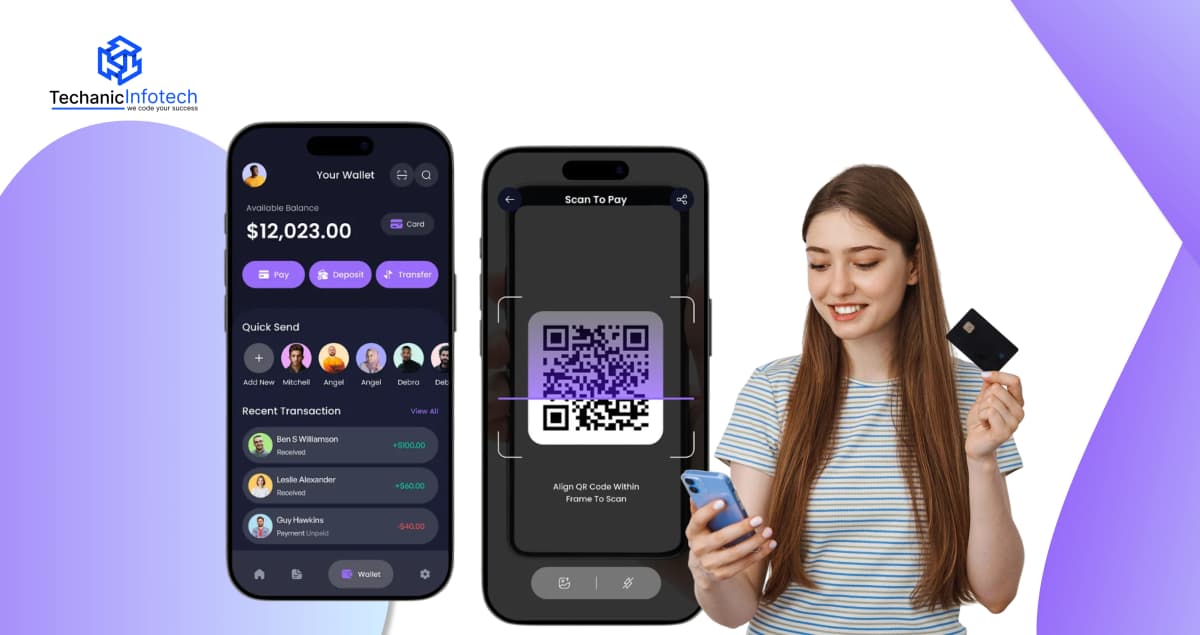
Understanding the eWallet app MVP cost is essential when planning your fintech product’s first launch.
An MVP allows you to validate your concept, test real user behavior, and attract early investors without overspending on full-scale development.
In today’s fast-moving digital payments market, businesses need to release a secure, user-friendly, and reliable eWallet solution quickly while staying within a realistic budget.
Factors like essential features, design complexity, security standards, backend infrastructure, and development location all play a major role in determining your final investment.
By starting with an MVP instead of a complete app, you can save money, reduce risks, and accelerate time-to-market while gathering valuable insights that shape your next development phase.
The cost to launch an eWallet app MVP depends on several technical and market-driven factors that shape development effort, security needs, and feature scope.
Market statistics show that demand, compliance, and fintech trends strongly influence overall MVP budgeting.
Feature & functionality complexity: More advanced elements like QR/NFC payments and analytics raise costs.
Security & compliance: Encryption, PCI DSS, KYC/AML add time and technical effort.
Design & UX requirements: Unique interfaces and custom flows increase development hours.
Third-party integrations: Payment gateways, bank APIs, and KYC services influence pricing and complexity.
Development team location: U.S. or Western Europe teams cost more than offshore alternatives.
Understanding the eWallet app development cost is essential before planning your product roadmap.
Each core feature contributes to the overall budget and complexity, shaping the performance and scalability of your MVP.
Below is a breakdown of 10 key features and their estimated starting costs between $30,000 and $130,000, helping you plan with clarity.
A secure onboarding experience sets the stage for reliable access and compliance.
This feature defines part of your eWallet MVP development cost, including account creation, OTP login, and biometric authentication workflows to maximize safety and user trust.
|
Item |
Estimated Cost |
|
Basic Email/OTP Login |
$800–$1,500 |
|
Biometric Authentication |
$500–$1,000 |
|
User Session Management |
$300–$700 |
The dashboard showcases balance, spending, and quick actions, directly affecting the build of an eWallet app MVP cost.
It requires optimized UX, fast APIs, and secure data fetching to guarantee a seamless and responsive user experience.
|
Item |
Estimated Cost |
|
UI/UX Design |
$600–$1,200 |
|
Balance & Overview API |
$500–$1,000 |
|
Dashboard Integration |
$400–$800 |
Integrating top-up capabilities enhances the usefulness of eWallet app features by allowing users to load funds securely.
It involves payment gateway integrations, bank linking, and transaction authentication to ensure smooth and reliable top-up operations.
|
Item |
Estimated Cost |
|
Payment Gateway Integration |
$1,200–$2,000 |
|
Bank/Card Linking |
$800–$1,500 |
|
Transaction Validation |
$500–$900 |
P2P transfers support fast and flexible money movement, a crucial part of the MVP cost for a digital wallet app.
Building this requires robust transaction routing, fraud checks, and ledger management to maintain accuracy and user confidence.
|
Item |
Estimated Cost |
|
Transfer Module |
$1,000–$2,000 |
|
Wallet Ledger System |
$700–$1,500 |
|
Fraud Checks |
$500–$900 |
Supporting bill payments enhances convenience and increases user engagement.
This feature strengthens your minimum viable product for the eWallet app by enabling recurring payments and integrating with major utility providers for essential services.
|
Item |
Estimated Cost |
|
Third-Party APIs |
$1,000–$2,500 |
|
Payment Workflow |
$800–$1,400 |
|
Recurring Billing |
$600–$1,000 |
QR functionality boosts in-store and offline transaction capabilities.
This aligns with building a minimum viable product that supports fast retail payments using QR generators, scanners, and merchant validation systems.
|
Item |
Estimated Cost |
|
QR Generator |
$600–$1,200 |
|
QR Scanner |
$700–$1,400 |
|
Merchant Validation |
$500–$900 |
Accurate records and transparent filtering options contribute to effective eWallet MVP budget estimation.
Users rely on transaction logs for clarity, so building a secure history module with optimized database queries is essential.
|
Item |
Estimated Cost |
|
History UI |
$500–$900 |
|
Data Filters |
$300–$600 |
|
API & Database Setup |
$700–$1,200 |
Notifications improve engagement and communication.
This feature affects the time to develop an eWallet app due to the need for template creation, real-time triggers, and integrations with major notification services.
|
Item |
Estimated Cost |
|
Notification Setup |
$400–$800 |
|
Trigger Logic |
$300–$700 |
|
Template Creation |
$200–$400 |
KYC compliance is required for financial apps and can influence the eWallet startup app development cost.
It includes identity verification, OCR, document uploads, and third-party API integrations to maintain regulatory alignment.
|
Item |
Estimated Cost |
|
KYC API Integration |
$1,000–$2,000 |
|
Document Upload Flow |
$600–$1,200 |
|
Verification Workflow |
$500–$900 |
A robust admin system helps monitor transactions, manage disputes, and track users effectively.
As a vital governance tool, it plays a direct role in the overall eWallet app MVP cost by supporting scalable operations.
|
Item |
Estimated Cost |
|
Dashboard Setup |
$1,000–$2,000 |
|
User/Transaction Management |
$800–$1,500 |
|
Reporting Tools |
$600–$1,200 |
Your eWallet app tech stack plays a major role in shaping development cost.
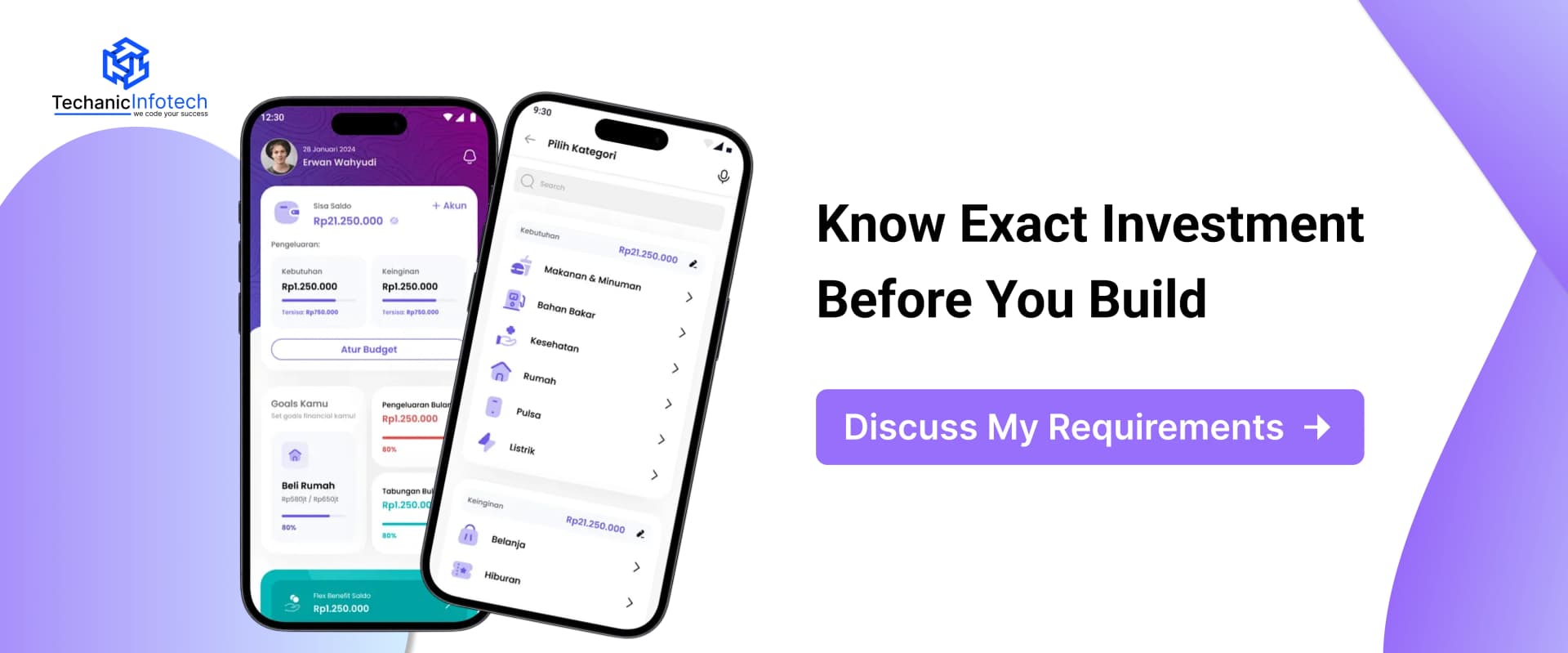
Each framework, language, and backend choice affects overall spending, performance, scalability, and long-term maintenance requirements for your eWallet MVP.
Selecting the right frontend framework directly influences eWallet MVP development cost.
Cross-platform tools like React Native or Flutter reduce time and expense, while native apps require separate builds, increasing development hours and overall budget.
A strong backend not only supports performance but also impacts eWallet app monetization strategies.
Scalable microservices cost more up front but enable smoother future growth, while monolithic architectures reduce initial spending but limit long-term flexibility
Choosing a database impacts performance and the eWallet MVP pricing breakdown.
PostgreSQL, MongoDB, or Firebase each offer different capabilities in handling real-time transactions, storage scalability, and security factors that directly affect pricing and development effort.
Integrated payment gateways shape functionality, reliability, and cost. More APIs require increased backend work, compliance steps, and licensing fees.
The more advanced the integration, the higher the development time and overall investment.
Cloud choices such as AWS, Azure, or Google Cloud influence hosting efficiency and the overall eWallet app development timeline.
High-availability structures and automated scaling enhance performance but add ongoing cloud expenses and setup complexity.
Implementing top-tier security like PCI-DSS compliance, encryption, and fraud detection raises development costs.
These protections are essential for financial data safety, increasing build time, and long-term monitoring needs.
Third-party tools, such as KYC, analytics, SMS, or fraud detectionn speed up development but add integration time and licensing fees.
Their impact is long-term, influencing both upfront MVP cost and ongoing operational expenses.
Understanding the eWallet app development cost for MVP helps you choose the right approach for your budget.
A basic MVP covers essential features, while an advanced version adds deeper security, automation, and integration, raising costs but improving scalability and long-term user engagement.
|
Feature/Element |
Basic MVP |
Advanced MVP |
|
User Authentication |
Standard email/OTP login |
Biometric login, multi-factor authentication |
|
Wallet Dashboard |
Balance + simple UI |
Real-time insights, AI-based spending analytics |
|
Add Money / Top-Up |
Single payment gateway |
Multi-bank, multi-gateway, tokenized payments |
|
P2P Transfers |
Basic sending/receiving |
Smart routing, instant settlements, fraud detection |
|
Bill Payments |
Limited number of billers |
Large utility network + recurring auto-pay |
|
Security |
Basic encryption |
PCI-DSS, tokenization, anti-fraud engine |
|
Admin Panel |
Simple user management |
Advanced reporting, analytics, and transaction monitoring |
Understanding the eWallet app development cost for MVP goes beyond core features.
Several hidden expenses appear during deployment, compliance, and scaling. Knowing these early helps you budget smarter and avoid costly surprises after launch.
Regulatory compliance, KYC, AML, PCI-DSS, and data privacy requirements often add unexpected costs.
These include legal consultations, audits, verification tools, and paperwork. Many startups underestimate how time-consuming and expensive compliance becomes before an eWallet MVP is approved for launch.
Most eWallet platforms rely on APIs for payments, identity verification, fraud detection, and SMS delivery. These services come with integration effort and recurring charges.
Following best practices for eWallet app security often requires additional premium tools and monitoring services.
Cloud expenses increase rapidly as real users begin transacting. Auto-scaling, backups, load balancing, and multi-region hosting raise operational costs.
As your database grows, storage and compute demand expand making cloud fees a long-term, unavoidable investment.
After launch, ongoing tasks like bug fixes, security patches, OS updates, and performance tuning become recurring expenses. New features also require development time.
Consistent maintenance ensures stability and keeps the platform competitive against rapidly evolving fintech technologies.
Ongoing fraud detection, anomaly tracking, and real-time risk tools generate continuous operational costs.
These systems are crucial for financial platforms. Any founder researching how to start an eWallet business must budget for active monitoring, emergency response, and security enhancements.
Building a modern digital wallet requires expertise, innovation, and a deep understanding of the fintech landscape.
Partnering with Techanic Infotech means working with an eWallet app development company that understands how to translate business goals into secure, scalable, and user-friendly payment solutions.
Their team focuses on crafting powerful app architectures, intuitive UI/UX, and airtight security, ensuring your eWallet can handle real transactions with speed and reliability.
From core features like P2P transfers and bill payments to advanced capabilities such as biometric authentication, multi-gateway integrations, and AI-driven insights, Techanic Infotech delivers solutions tailored to fast-growing fintech needs.
Whether you're launching an MVP or a full-scale platform, they help you build a competitive, future-ready eWallet product designed for long-term success.
Understanding the eWallet app MVP cost is essential for building a product that’s both financially feasible and scalable from day one.
As the digital payments market continues to grow, startups must balance feature priorities with long-term sustainability.
A well-planned MVP helps reduce unnecessary spending, validates product-market fit faster, and sets the stage for future upgrades.
Whether you’re adding advanced security, improving user experience, or integrating multiple payment channels, smart budgeting ensures you stay competitive without compromising quality.
By mapping out development expenses, hidden costs, and long-term maintenance needs, you create a clearer roadmap for growth. With the right team and strategy, your eWallet MVP can become a high-performing, revenue-generating fintech solution.
The cost to build an eWallet MVP typically ranges from $30,000 to $130,000. The final amount depends on features, tech stack, security requirements, integrations, and design complexity. Adding advanced capabilities or banking APIs increases the overall budget.
The cost to build an eWallet MVP typically ranges from $30,000 to $130,000. The final amount depends on features, tech stack, security requirements, integrations, and design complexity. Adding advanced capabilities or banking APIs increases the overall budget.
Most eWallet MVPs take 12–20 weeks to develop. Timelines vary based on features, development team size, API integrations, and security layers. Complex functions like biometric login, multi-gateway support, or fraud detection can extend the development schedule.
Most eWallet MVPs take 12–20 weeks to develop. Timelines vary based on features, development team size, API integrations, and security layers. Complex functions like biometric login, multi-gateway support, or fraud detection can extend the development schedule.
A strong eWallet MVP includes user registration, wallet balance dashboard, add money/top-up, P2P transfers, bill payments, transaction history, and basic security. These foundational features allow fast launch while keeping the platform scalable for future upgrades or advanced capabilities.
A strong eWallet MVP includes user registration, wallet balance dashboard, add money/top-up, P2P transfers, bill payments, transaction history, and basic security. These foundational features allow fast launch while keeping the platform scalable for future upgrades or advanced capabilities.
Not always. Some eWallet MVPs use third-party payment gateways and verification tools to avoid direct banking partnerships early on. However, full-scale eWallets typically require banking relationships, compliance approvals, and additional integrations to support broader financial services.


Abhishek Jangid is the CEO of Techanic Infotech, with extensive experience in mobile app and web development. He specializes in helping businesses turn innovative ideas into scalable digital solutions through strategic planning and modern technology.